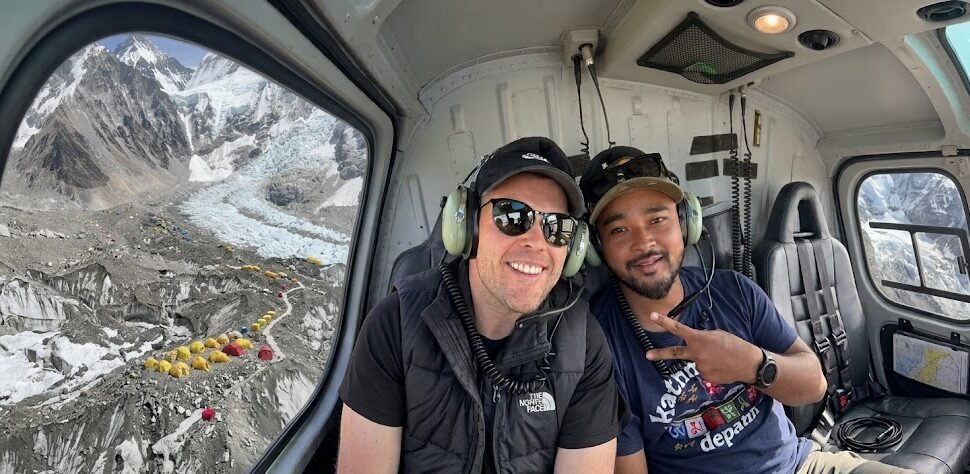
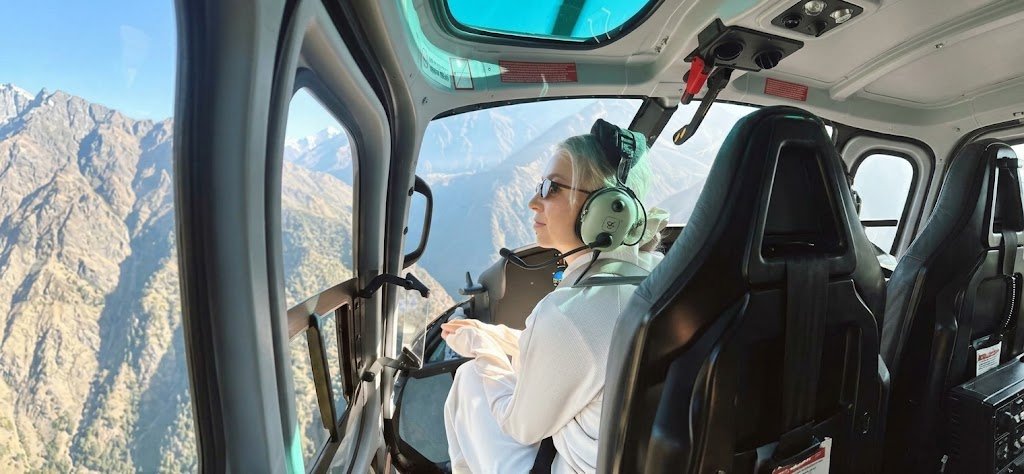
There is a specific moment that almost everyone who has flown to Everest by helicopter describes in almost the same way. The cabin goes quiet. Someone points. And there, filling the windscreen, is the summit of the world, sitting above a wall of ice and rock that no photograph ever quite prepares you for. People who have seen a hundred pictures of Mount Everest still say the real thing knocked the breath out of them.
We have spent time going through what travelers actually say after landing back in Kathmandu, on review platforms, in trip report threads, and in the kind of honest conversations that happen at the airport gate afterward. The patterns repeat themselves closely enough that they are worth writing down properly, not as a sales pitch, but as an honest account of what the experience is really like, what tends to surprise people, and what past flyers say they would have done differently if they had known beforehand.
This guide pulls those patterns together: the weather gamble, the cold, the way Everest actually feels to see up close, the breakfast that turns out to be more memorable than expected, the photography mistakes people make, and the one upgrade that shows up again and again in the list of things travelers say they regret skipping. If you are planning your own Everest Base Camp helicopter tour, this should help you book with fewer surprises and a clearer sense of what you are actually paying for.
What the Flight Actually Involves
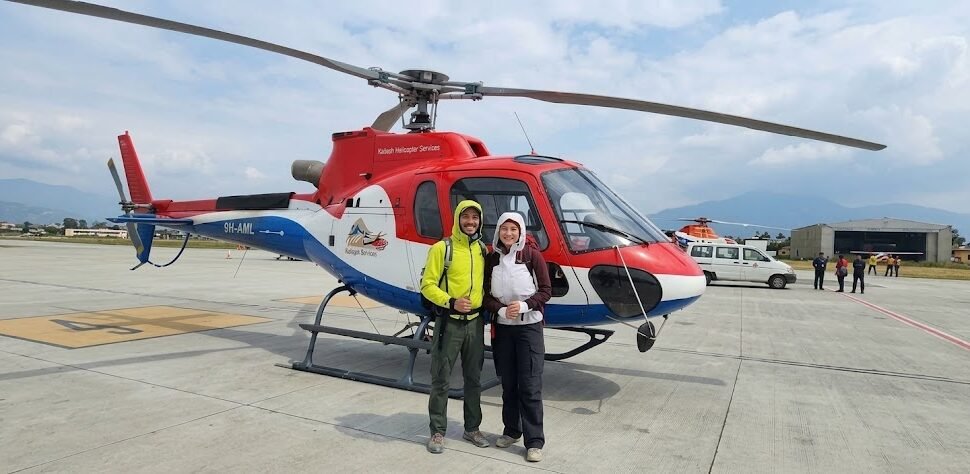
Before getting into the traveler feedback, it helps to be clear about what the standard Everest helicopter experience actually covers, because a surprising number of first time flyers book without fully understanding the shape of the day. The tour begins with a hotel pickup in Kathmandu, sitting at around 1400 meters above sea level. From there the helicopter climbs north and east, tracing a route that follows the same general corridor that trekkers walk for close to two weeks on foot.
Within the first stretch of the flight you pass near Lukla, the small mountain airstrip at roughly 2860 meters that most Everest trekkers know as their starting point. The helicopter continues up the Khumbu Valley, climbing steadily as the terrain rises beneath it, until it reaches the aerial pass above Everest Base Camp itself, at about 5364 meters, directly over the Khumbu Glacier and the broken ice towers of the Khumbu Icefall. This is the section almost every traveler describes as the most visually overwhelming part of the flight, because the scale of the ice field only becomes obvious once you are looking straight down at it.
From there the helicopter descends to Syangboche, at about 3780 meters, and lands at Hotel Everest View for a breakfast stop with a direct, unobstructed view of Everest itself. This hotel holds the Guinness World Record for the highest placed hotel with a direct view of Everest, and it is one of the few points on the entire route where you get to step outside, breathe the thin mountain air, and simply look at the mountain rather than watching it go past a window. After breakfast, the aircraft returns to Kathmandu, and the whole journey, door to door from hotel pickup to hotel drop off, generally runs about four to five hours.
Trekkers who walk to the same base camp spend somewhere between 12 and 14 days doing it on foot, dealing with altitude acclimatization, tea house accommodation, and long daily walks. The helicopter version compresses a similar geographic journey into a single morning. That compression is exactly why the experience feels so intense to people, and it is also the source of a few common misunderstandings that are worth clearing up before you book.
Weather and Visibility: The Part Nobody Fully Controls
If there is one theme that comes up more than any other in traveler accounts of Everest helicopter tours, it is weather. Reviewers who flew on a clear morning describe visibility that stretches for what feels like the entire Himalayan range, with Everest, Lhotse, Nuptse, Makalu, and Ama Dablam all standing out sharply against a blue sky. Reviewers who flew into haze, high cloud, or thin mountain mist describe a flight that still covered the same route but delivered noticeably less of the payoff, sometimes with the highest peaks partly wrapped in cloud.
This is not a flaw specific to any one operator. It is simply the nature of flying at altitude in a mountain range that generates its own weather. Mornings are almost always calmer and clearer than afternoons, which is why helicopter tours fly early, typically departing at first light before the sun has had time to heat the valleys and stir up wind and cloud. Travelers who arrived in Kathmandu with some flexibility in their schedule, rather than trying to fly on one fixed date regardless of conditions, consistently report better outcomes, because operators can shift a departure by a day when a system moves through.
Seasonal timing also shows up repeatedly in traveler feedback. Late autumn tends to bring the clearest, most stable mornings of the year, and spring offers strong visibility too, though with more chance of haze building later in the day. The monsoon months bring cloud cover that can make flying difficult or unpredictable, and travelers who booked during that stretch and got a hazy, cloud filled flight are the ones most likely to leave feedback describing regret about the timing of their trip rather than the tour itself. If you want a full breakdown of which months tend to deliver the clearest views, our month by month weather and visibility guide goes through the patterns in detail, and it is worth reading before you lock in your dates.
The practical takeaway that shows up again and again in traveler advice to future flyers is simple: book with a little slack in your schedule if you can, choose a season known for stable mornings, and treat an early departure time as a feature rather than an inconvenience. The single best predictor of a traveler rating their flight as spectacular rather than merely good is whether the sky was clear that morning, and the single best way to improve your odds of a clear morning is choosing the right season and flying as early as the operator allows.
The Emotional Impact of Seeing Everest Up Close
It would be easy to assume that after seeing thousands of photographs of Everest, the real thing might feel familiar, even a little anticlimactic. Traveler accounts consistently say the opposite. People describe an almost physical reaction, a kind of stunned silence in the cabin, when the summit comes into view and the scale of the surrounding peaks becomes clear. Many describe it as the most memorable few minutes of a much longer trip to Nepal, and some call it the high point of years of travel, not just of that particular holiday.
Part of this seems to come from the sheer speed of the reveal. On the ground, trekkers spend nearly two weeks slowly working their way up the valley, gaining perspective gradually as ridgelines shift and new peaks appear day by day. From a helicopter, the transition happens in minutes. You go from the ordinary rooftops of Kathmandu to a wall of eight thousand meter peaks in under half an hour, and that abruptness appears to intensify the emotional response rather than diminish it.
Reviewers frequently mention an unexpected sense of scale once the helicopter is close to the Khumbu Icefall. Photographs of the icefall from ground level, or from a trekking trail, tend to flatten its size. Seen from the air, hovering directly above the crevasses and ice towers that climbers must weave through on their way to the higher camps, the same terrain looks genuinely dangerous and genuinely huge, and this is one of the moments that tends to produce the strongest reaction in the cabin. Several accounts describe passengers going quiet, cameras briefly forgotten, just looking.
There is also a quieter, slower emotional layer that shows up once the helicopter lands at Hotel Everest View. After the intensity of the flight past base camp, stepping out onto solid ground with Everest sitting calmly in the near distance gives people a chance to actually process what they just saw, rather than experiencing it only through a window at speed. Many travelers describe this second, calmer viewing as just as meaningful as the dramatic flyover itself, simply because it gives the moment room to sink in.
Physical Sensations: Cold, Altitude, and Turbulence Over the Khumbu
The emotional side of the flight gets most of the attention in reviews, but the physical experience matters too, and it is one of the areas where past travelers most often say they wish someone had briefed them better beforehand.
Cold
Temperatures drop steadily as the helicopter climbs, and by the time you are near Everest Base Camp or stepping outside at Hotel Everest View, it can be genuinely cold, even on a sunny day, especially with wind at that altitude. Travelers who dressed in light city clothing and only brought a thin jacket tend to mention the cold as an unwelcome surprise. Those who layered up properly, with a warm jacket, gloves, and a hat, generally report being comfortable throughout, including during the walk from the helicopter to the hotel dining room at Syangboche.
Altitude
Because the whole tour is completed in a single morning without the days of gradual acclimatization that trekkers get on foot, some travelers feel the altitude briefly once the aircraft is near base camp or while standing at Hotel Everest View at nearly 3780 meters. Common sensations described include lightheadedness, a slightly faster heartbeat, or mild breathlessness after walking even a short distance. For the vast majority of healthy adults these sensations pass quickly and are not dangerous, since the tour does not involve overnight exposure at that altitude, but travelers with existing heart or lung conditions, or older travelers, are consistently advised to check with a doctor before booking and to mention any medical history to the operator in advance. Our detailed guide for senior travelers covers age and health considerations specifically, and it is worth a read if this applies to you or someone you are booking for.
Turbulence and Motion
The Khumbu Valley is not flat, and the air moving through it is not either. Travelers frequently mention noticeable bumps and short drops in the helicopter as it moves through the valley, particularly where the terrain narrows or where thermal currents rise off sunlit slopes. This is normal for mountain flying and is well within the operating envelope of the aircraft, but it can catch first time helicopter flyers off guard if they were expecting something closer to the smoothness of a commercial airplane. People prone to motion sickness are often advised, in traveler feedback, to take a preventive medication before departure rather than waiting to see how they feel once airborne, and to keep their eyes on the distant horizon rather than on anything close inside the cabin during bumpier stretches.
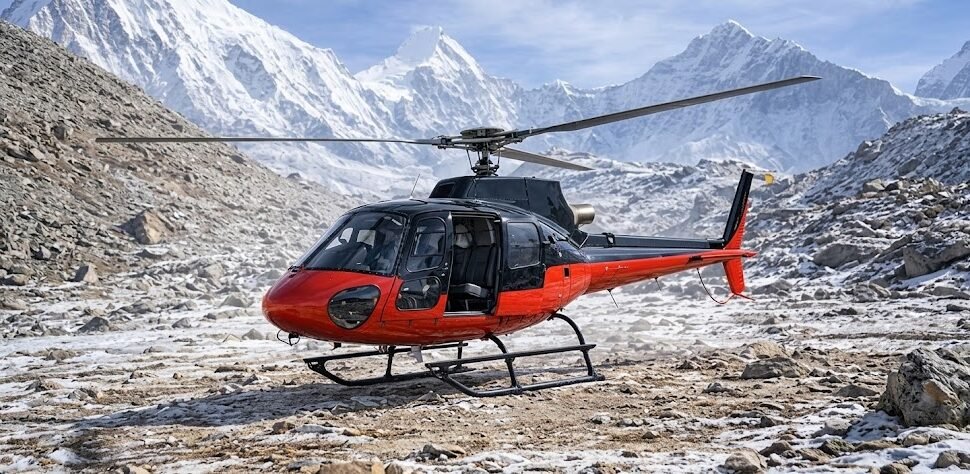
The aircraft used for this route, the Airbus H125, is a single engine helicopter specifically known for strong performance at high altitude, and it is the type most widely used across Nepal for mountain tourism as well as mountaineering support and rescue work. That reputation for reliable high altitude handling is part of why turbulence, while noticeable, is rarely described by travelers as frightening once they understand it is a normal part of flying through mountain air rather than a sign of anything wrong with the aircraft. For a closer look at how these tours are actually operated and what the real safety picture looks like, our article on whether the Everest helicopter tour is safe goes into more depth.
What Surprises First Time Flyers
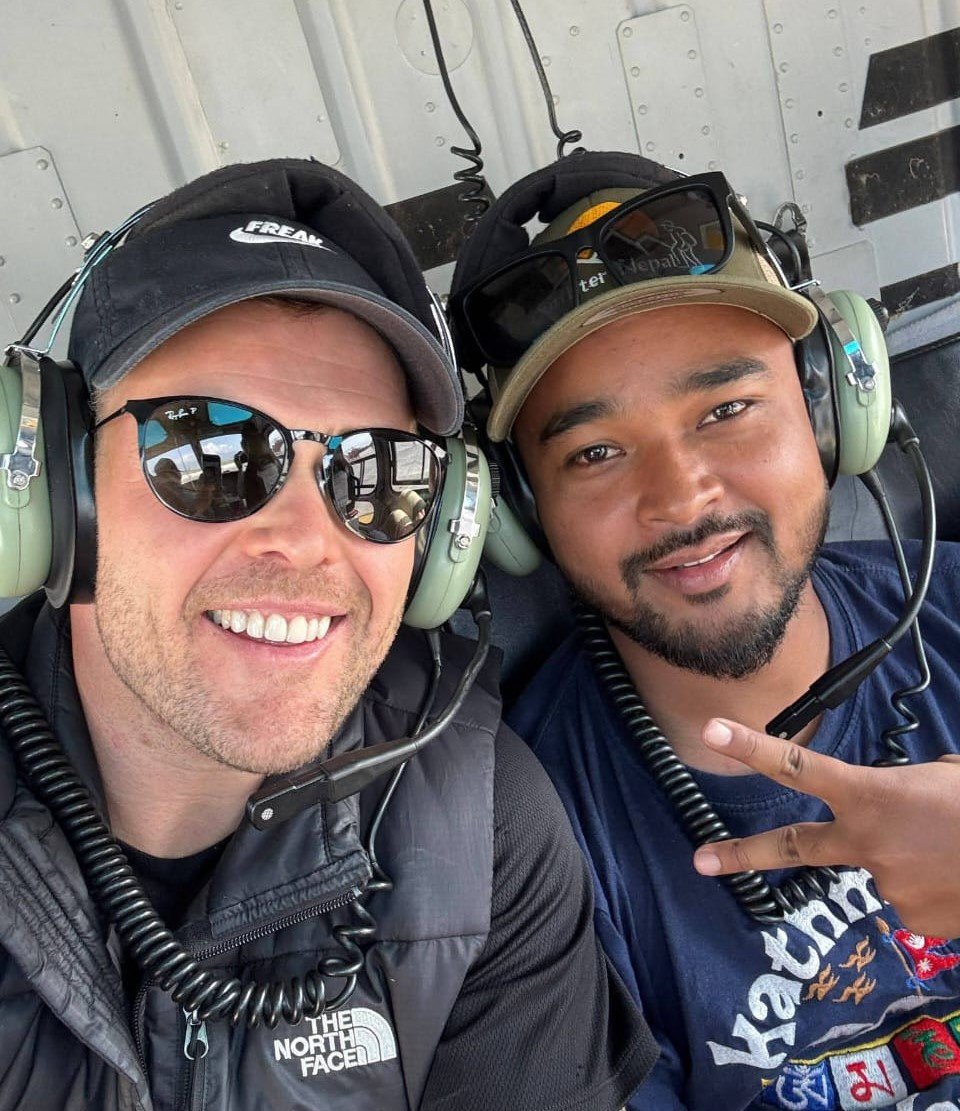
Beyond the big, expected highlights, a handful of smaller details show up again and again in traveler accounts as things nobody mentioned to them in advance. Noise is one. The cabin of a helicopter is louder than most people expect, and while headsets are provided and cut most of it, conversation during the flight tends to happen through the intercom rather than by shouting over engine noise. Space is another. Depending on the package, you may be sharing the cabin with other travelers rather than flying privately, and seating position affects your view more than people initially realize, since a window seat on one side of the aircraft sees different terrain than a window seat on the other.
The short duration of the base camp flyover itself surprises some travelers, particularly those who imagined a long, lingering pass. The section directly over the Khumbu Icefall and the aerial point above Everest Base Camp takes only a few minutes, though it tends to feel both shorter and more intense than expected in the moment. The breakfast stop at Hotel Everest View, by contrast, often ends up feeling longer and more substantial than anticipated, since it gives everyone a chance to properly look at the mountain, eat, use the facilities, and take photographs at a relaxed pace rather than through a moving window.
Another common surprise is just how quickly the whole outing is over relative to how much it delivers. Many first time flyers expect a helicopter tour to feel like a minor add on to a Nepal trip, and are caught off guard by how much of an impression a four to five hour outing leaves. Several travelers describe telling friends afterward that it was the single most talked about part of their entire trip, well ahead of longer, more expensive activities elsewhere in their itinerary.
| What travelers expected | What travelers actually reported |
|---|---|
| A quick, forgettable sightseeing add on | The most memorable single experience of their Nepal trip |
| A smooth ride similar to a commercial flight | Noticeable bumps and short drops over the Khumbu Valley, which felt normal once explained |
| Warm conditions since it was sunny in Kathmandu | Genuinely cold air at altitude, especially at Hotel Everest View and near base camp |
| A long, lingering pass over Everest Base Camp | A short, intense flyover lasting only a few minutes |
| A basic breakfast stop | A relaxed, scenic meal with direct Everest views that many rated as a highlight in its own right |
| Guaranteed clear mountain views regardless of date | Visibility that depended heavily on season, timing, and a bit of luck |
Breakfast at Hotel Everest View: More Than Just a Meal
It would be easy to assume the breakfast stop is a logistical necessity, a place to land and refuel before heading back to Kathmandu. Traveler feedback suggests otherwise. Hotel Everest View, sitting at about 3780 meters in Syangboche and holding the Guinness World Record as the highest placed hotel with a direct view of Mount Everest, gives you the one part of the tour where the mountain simply sits still in front of you while you eat.
Reviewers describe the combination of hot tea, a proper breakfast, and an unobstructed Everest view at that altitude as one of the more understated highlights of the day, precisely because it is unhurried. Unlike the flyover past base camp, which moves quickly and asks a lot of your attention in a short window, the breakfast stop allows for a slower kind of appreciation. People walk outside, take photographs without the vibration of a moving aircraft to contend with, and simply look at the mountain for a few minutes before sitting down to eat.
Travelers who arrive expecting a rushed stop tend to be pleasantly surprised by how much time and space they actually get there. It is also, practically speaking, the easiest place on the entire tour to get a genuinely sharp, well composed photograph of Everest, since you are standing on solid ground rather than shooting through a window at altitude with engine vibration working against you.
Photography: What People Wish They Had Known
Photography comes up constantly in traveler accounts, both as one of the main reasons people book the tour and as a source of some of the most common regrets. The single most repeated piece of advice from past flyers is about seating. Because the helicopter cabin has windows on both sides, and the flight path curves through the valley rather than running in a straight line, different seats end up with meaningfully different views over the course of the flight. Travelers who did not think about seating in advance, and who ended up on the less favorable side for a key stretch of the route, are among the most likely to mention it afterward as something they wish they had known to ask about.
Shooting through a helicopter window also comes with its own technical challenges that catch casual photographers off guard. Glare, reflections, and the vibration of the aircraft can all soften a shot if you are not prepared for them. A handful of reviewers specifically mention window cleanliness affecting their photos, which is a reasonable thing to simply ask about at the start of your flight if it matters to you. Fast shutter speeds, pressing the lens gently against the window rather than holding it away, and shooting in burst mode to compensate for vibration are all tips that show up repeatedly in traveler advice to future flyers.
For anyone who wants to go further than casual phone photos, our full photography guide covering camera settings and the best seats is worth reading before your flight, since it addresses exactly these seating and settings questions in detail rather than leaving you to work them out in the moment. The stop at Hotel Everest View, as mentioned above, is where most travelers end up getting their best and most relaxed shots, so it is worth saving a little battery and memory card space for that stage rather than using it all during the flyover.
How Families, Seniors, and Couples Experience the Same Flight Differently
One of the more interesting patterns in traveler feedback is how differently the same basic tour lands depending on who is on board. The route, the aircraft, and the schedule are the same for everyone, but the experience people describe afterward varies quite a bit by group type.
Families
Parents flying with children frequently mention how much easier this format is compared to trekking with kids, since there is no multi day walk, no overnight tea house stays at altitude, and no risk of a child struggling with a long trek partway through. The compressed timeframe, done and back in Kathmandu the same morning, gets mentioned often as the deciding factor that made a family trip to see Everest possible at all. Some families do note that younger children can find the noise and the short bursts of turbulence a little unsettling until reassured, and that the cold at Hotel Everest View catches underdressed kids off guard more than adults. Our dedicated piece on taking an Everest helicopter tour with families goes through age considerations and practical packing advice in more detail.
Seniors
Older travelers, including some who specifically chose the helicopter tour because a trek to base camp was no longer realistic for them, describe a strong sense of relief and achievement at being able to see Everest up close without the physical demands of trekking. The short duration and the fact that no walking is required beyond a short distance at Hotel Everest View are mentioned repeatedly as the reasons this format works well for older flyers. The main practical advice that comes up is checking in with a doctor beforehand regarding altitude and any cardiac or respiratory history, since the aircraft does climb quickly to altitude without a gradual acclimatization period. Our senior travelers age and health guide covers this in detail and is worth reading before booking for an older parent or grandparent.
Couples
Couples, particularly those celebrating an anniversary, engagement, or honeymoon, describe the experience in noticeably more sentimental terms than other traveler groups, often calling it one of the most meaningful shared moments of their trip together. For couples who want a more private, unhurried version of the tour rather than sharing a cabin with strangers, a private charter or the dedicated honeymoon package tends to get mentioned favorably specifically because it removes the sense of being on a shared group outing and turns it into something that feels designed around just the two of you.
| Traveler type | What they consistently report | Recommended option |
|---|---|---|
| Families with children | Relief at avoiding a multi day trek; kids sometimes need reassurance during turbulence and warm layers at altitude | Group tour package |
| Senior travelers | A strong sense of achievement seeing Everest without trekking; value the short duration and minimal walking | Standard Everest Base Camp tour |
| Couples and honeymooners | Describe it in emotional, sentimental terms; prefer privacy over a shared cabin | Honeymoon private package |
| Solo travelers and small groups | Often join a shared flight to reduce cost; value the social atmosphere on board | Shared group tour |
| Photographers and dedicated enthusiasts | Most likely to request the highest possible viewpoint and specific seating | Kala Patthar landing upgrade |
The Most Common Regret: Skipping the Kala Patthar Landing Upgrade
If there is a single, specific regret that surfaces more than any other in feedback about Everest helicopter tours, it is this one. Travelers who booked the standard route, which passes above Everest Base Camp and lands only at Hotel Everest View, quite often describe wishing afterward that they had added the option to land at Kala Patthar, at around 5545 meters, widely regarded as the highest tourist accessible helicopter landing point in Nepal.
The reason this particular regret shows up so often is straightforward. The standard flight gives you an aerial pass above Everest Base Camp and the Khumbu Icefall, which is genuinely spectacular, but it is viewed from inside the aircraft in motion. The Kala Patthar landing, where available and permitted, gives travelers the chance to actually step out of the helicopter at extreme altitude and stand facing Everest, Lhotse, and Nuptse with nothing but open air and ice between you and the summit. People who have done both versions consistently describe the landing option as a meaningfully different experience, not simply a longer version of the same flight.
This landing is subject to weather conditions and government permission on the day, since operating at close to 5545 meters leaves a much smaller margin than the rest of the route, and conditions there can change quickly. When conditions allow, though, it is the part of the tour that travelers most often describe afterward as the moment they will remember longest, ahead even of the base camp flyover itself. If you are already committing to the cost and the once in a lifetime nature of an Everest helicopter tour, this is the upgrade that shows up most often in the category of things people say they should have just paid for the first time, rather than something to consider adding on a future trip. You can read more about what makes this specific viewpoint so highly rated in our piece on the Kala Patthar helicopter landing experience, and book the upgraded route directly through our Everest Base Camp helicopter tour with Kala Patthar landing page.
Other Regrets and Lessons From Past Travelers
Beyond the Kala Patthar question, a handful of other regrets and lessons come up often enough in traveler feedback to be worth listing plainly.
- Booking too far in advance without flexibility. Travelers who locked in one fixed date months ahead, with no ability to shift a day or two around bad weather, are more likely to report a disappointing flight than those who kept a flexible window near the end of their trip.
- Choosing a hazy season to save money. Flights during less stable weather periods can be less expensive, but travelers who flew during hazy stretches consistently mention it as the reason their photos and views did not match what they had seen online.
- Underestimating the cold. Light clothing packed for a warm Kathmandu morning is a repeated regret once travelers reach the colder air near base camp and at Hotel Everest View.
- Not thinking about seating in advance. As covered above, seat position affects the view considerably, and it is one of the easiest things to ask about beforehand.
- Booking the cheapest shared option without understanding what it involves. Some travelers assumed a shared group flight would feel identical to a private charter and were surprised by a fuller cabin, though most still rated the experience highly regardless.
- Not researching the operator or the route in advance. Travelers who understood the geography, the altitude figures, and the general shape of the flight beforehand tend to report a richer experience, since they could recognize Lukla, the Khumbu Icefall, and the individual peaks as they passed rather than watching an unfamiliar blur of mountains go by.
Group Tours, Private Charters, and Honeymoon Packages: How the Experience Changes
The package you choose shapes the experience almost as much as the weather does, and traveler feedback reflects that clearly. A shared group flight, where five or more travelers split a helicopter, brings the cost down considerably and tends to suit solo travelers, friends, or small groups who are comfortable with a fuller cabin and do not mind sharing the moment with strangers who quickly stop feeling like strangers once Everest comes into view. Group feedback consistently mentions the social atmosphere on board as a pleasant, unexpected bonus, with strangers pointing out peaks to each other and sharing in the same reaction.
A private charter, booking the entire aircraft for your own group of roughly five passengers, removes the variable of sharing the flight with people you do not know, and gives you more control over the pace of the day, particularly around the breakfast stop. Travelers who booked a private charter for a family celebration, a special anniversary, or simply because they valued privacy over cost describe the experience as noticeably calmer and more personal, without the mild logistics of coordinating with other passengers.
The honeymoon package is its own category entirely in traveler feedback. Couples describe it less as a sightseeing tour and more as a shared, private milestone, something they specifically chose because it let them experience Everest together without an audience. Some couples going further, arranging a dedicated Everest wedding photo shoot on a private charter for two, describe it as one of the more distinctive things they have ever done to mark the occasion, precisely because so few people ever get wedding photographs with Everest itself as the backdrop.
If you are trying to decide between these formats for your own trip, our comparison piece on choosing between a private and a group Everest helicopter tour walks through the tradeoffs in more depth than we can cover here, including cost, privacy, and scheduling flexibility.
| Package | Approximate price | Best suited for |
|---|---|---|
| Shared group tour (5 or more per helicopter) | 1250 dollars per person | Solo travelers and small groups wanting the lowest per person cost |
| Everest Helicopter Tour Group package | 1100 dollars per person | Larger groups of friends or family traveling together |
| Private helicopter charter (whole aircraft, about 5 passengers) | 4800 dollars total | Families or groups who want privacy and control over the day |
| Honeymoon private couple package | 2800 dollars | Couples wanting a private, intimate flight together |
| Kala Patthar landing upgrade | Around 1250 dollars per person (shared seat) | Travelers who want the highest possible landing experience |
| Everest wedding photo shoot (private charter for two) | 3200 dollars | Couples wanting professional wedding photographs with Everest as the backdrop |
Is It Worth the Money? What the Pattern of Feedback Actually Shows
Given the price of an Everest helicopter tour compared with many other single day activities in Nepal, it is a fair question, and it is one that shows up constantly in traveler discussions before booking. The honest answer, based on the pattern across a large number of reviews and trip reports, is that satisfaction tracks closely with two things: how clear the weather was on the day, and whether the traveler had a realistic sense of what they were paying for going in.
Travelers who flew on a clear morning, understood that this is a genuinely rare, once in a lifetime kind of activity rather than a routine sightseeing trip, and who compare the cost against the twelve to fourteen days of trekking, guiding, permits, and gear that reaching the same base camp on foot would require, overwhelmingly describe the price as justified. The comparison to trekking comes up often and unprompted in traveler feedback, usually framed around time. Someone with a week in Nepal, or someone who is simply not able to trek at altitude for physical reasons, has essentially no other way to see Everest Base Camp and the Khumbu Icefall from this close, and that scarcity is a large part of why the value proposition holds up so well in traveler sentiment even at this price point.
The travelers who rate the experience lower are almost always the ones who ran into poor weather on the day and either did not have flexibility to reschedule, or booked during a season known for haze and cloud to save money. This is not really a reflection of the tour itself so much as a reminder that weather, more than price or package choice, is the single biggest factor in how anyone rates this experience afterward. Our detailed, honest breakdown in is the Everest helicopter tour worth the money covers this question directly, including where the cost actually goes and how it compares to alternatives.
How to Book Smarter Based on What Past Travelers Learned
Pulling all of this together, a few practical conclusions stand out clearly from the pattern of traveler feedback. First, favor a season known for stable, clear mornings over a cheaper but hazier alternative, since visibility affects satisfaction more than almost anything else. Second, keep some flexibility in your schedule if you can, rather than locking into one fixed date with no room to shift around a poor forecast. Third, dress warmer than you think you need to, particularly for the stop at Hotel Everest View. Fourth, think about seating and photography in advance rather than figuring it out mid flight. And fifth, seriously consider the Kala Patthar landing upgrade, since it is the single upgrade past travelers mention wanting most often after the fact.
Beyond that, choose the package that actually matches who you are traveling with. A solo traveler or a small group of friends is usually well served by the standard Everest Base Camp helicopter tour or the group package, while couples marking something significant tend to be happiest with the dedicated honeymoon package. Families and travelers who simply want more control over their day should look closely at a private charter rather than assuming a shared flight is the only option.
Frequently Asked Questions
How long does the Everest helicopter tour actually take?
From hotel pickup in Kathmandu to hotel drop off afterward, the full experience generally takes about four to five hours, including the flight out past Everest Base Camp, the breakfast stop at Hotel Everest View, and the return flight to Kathmandu.
What is the best time of year to book for good visibility?
Late autumn tends to offer the clearest, most stable mornings of the year, with spring a close second, though it can be more prone to haze later in the day. Monsoon months bring the least reliable visibility. Our month by month weather and visibility guide covers this in more detail.
Is the Kala Patthar landing upgrade really worth the extra cost?
Based on the pattern of feedback from travelers who have done both versions, yes, and it is the single most commonly mentioned regret among those who skipped it. Standing at around 5545 meters, facing Everest directly on solid ground, is described repeatedly as a different order of experience compared with viewing the same peaks from inside a moving aircraft.
Will I feel the altitude during the tour?
Some travelers notice mild lightheadedness or breathlessness near base camp or while walking a short distance at Hotel Everest View, since the tour reaches altitude quickly without the days of gradual acclimatization that trekkers get. These sensations are usually brief and mild for healthy adults, though anyone with existing heart or lung conditions should check with a doctor beforehand.
Is the flight rough or turbulent?
Mountain air over the Khumbu Valley does produce noticeable bumps and short drops, particularly where the terrain narrows or thermal currents rise off sunlit slopes. This is normal for helicopter flying in this kind of terrain and well within the aircraft’s normal operating range, though it can surprise first time flyers who expect airplane like smoothness.
What should I wear for the tour?
Dress in warm layers, even if the morning feels mild in Kathmandu. Temperatures drop noticeably at altitude, and it can be genuinely cold stepping out at Hotel Everest View or near base camp. A warm jacket, gloves, and a hat are consistently recommended by past travelers who found themselves underdressed.
Is this suitable for children or older family members?
Yes, and it is often specifically chosen for that reason, since it avoids the days of high altitude trekking that a base camp trip on foot would require. Families and seniors both report positive experiences overall, with the main considerations being warm clothing, brief reassurance for younger children during turbulence, and a doctor’s check for older travelers or anyone with existing health conditions. Our guides on family Everest helicopter tours and senior travelers go into more detail on each.
Should I book a shared group tour or a private charter?
It depends on your priorities. A shared group tour brings the cost per person down and often adds a pleasant social atmosphere on board. A private charter costs more overall but gives you the entire aircraft, more control over pacing, and greater privacy, which many families and couples prefer for a special occasion. Our comparison of private versus group Everest helicopter tours breaks down the tradeoffs fully.
Reading enough traveler feedback about Everest helicopter tours leaves you with a pretty clear picture. The people who came away thrilled generally did three things right: they picked a season known for clear mornings, they packed for the cold, and more often than not, they paid the little bit extra to actually land at Kala Patthar rather than only flying past it. The people who came away with mild regrets almost always trace it back to one of those same three things going the other way. None of it is complicated, and none of it should stop you from booking. If seeing Everest up close, in a single unforgettable morning, is on your list, the smartest move is to book the flight that matches how you want to experience it, choose your season carefully, and consider the landing upgrade while you are at it. You can start by looking at the full details of our Everest Base Camp helicopter tour and picking the departure date that gives you the best shot at the clear, unforgettable view that past travelers keep describing as the highlight of their entire trip to Nepal.
Related Reading
- Everest Helicopter Tour Plus Pokhara and Chitwan: Best Multi Day Nepal Packages
- Everest Helicopter Tour Safety: Pilots, Maintenance and CAAN Standards Explained
- Last Minute Everest Helicopter Tour Booking: Availability, Pricing and What to Know
- Everest Helicopter Tour for First Time Visitors to Nepal: Planning Your Trip From Arrival to Departure