Your plane banks over the Kathmandu Valley, the seatbelt sign chimes, and suddenly you can see terraced hills, temple spires, and a haze covered bowl of a city ringed by mountains you cannot yet name. For a first time visitor to Nepal, that first look out the window is the start of a trip that will, within a matter of days, put you face to face with Everest itself, not after two weeks of trekking, but from the window of a helicopter on a clear morning. That is the promise of the Everest Base Camp Helicopter Tour, and it is a genuinely remarkable thing to be able to offer someone who has never set foot in the Himalayas before.
But getting from the airport to that helicopter, and getting the timing, the visa, the hotel, the money, and your own body ready for a flight into thin air, takes a little bit of planning. Most guides about this tour focus only on the morning itself, the pickup time, the route, the breakfast at altitude. This one is different. It is about everything around that morning: how you get into the country, where you sleep, how many days you should give Kathmandu, when in your trip to schedule the flight, and what else is worth seeing while you are here. Get these pieces right and the helicopter tour becomes the highlight of a smooth, well organized first visit to Nepal rather than a stressful scramble squeezed between flights.
Everything below is written specifically for someone who has never been to Nepal, is coming for the first time, and wants to build a short, high value trip around the Everest helicopter experience, whether that trip is three days long or two weeks long.
Getting Your Nepal Tourist Visa Before You Land
Nepal makes tourist entry fairly simple for most nationalities, and the vast majority of visitors get their visa on arrival at Tribhuvan International Airport in Kathmandu rather than at a Nepali embassy beforehand. There is no need to panic about paperwork weeks in advance, but you do need to know the current fees and the process so you are not caught off guard standing in a jet lagged line at midnight.
As of now, Nepal’s tourist visa on arrival is priced in three tiers based on how long you plan to stay. A fifteen day visa costs thirty dollars, a thirty day visa costs fifty dollars, and a ninety day visa costs one hundred and twenty five dollars. Almost every first time visitor combining a few days of Kathmandu sightseeing with the helicopter tour will want the thirty day option, since it gives you comfortable room even if you decide to extend your stay, add a short trek, or simply relax your schedule once you are on the ground. Fees can be paid in cash US dollars or in Nepalese rupees at the current exchange rate, and increasingly the immigration counters also accept card payment, though carrying cash dollars as a backup is still the safest plan.
A small number of nationalities are not eligible for visa on arrival and must arrange a visa through a Nepali embassy or consulate before flying. This list has included countries such as Nigeria, Ghana, Zimbabwe, Cameroon, Somalia, Ethiopia, Iraq, Palestine, and Afghanistan, though rules can shift, so it is worth a quick check with your nearest Nepali diplomatic mission if your passport falls into an unusual category. Everyone else, including travelers from the United States, Canada, the United Kingdom, Australia, most of Europe, and most of Asia, can simply arrive and apply at the airport.
What You Need at the Visa Counter
Bring a passport valid for at least six months beyond your travel dates, one passport sized photograph, and the visa fee in cash. Many arrival halls now have digital kiosks that photograph you on the spot, so a physical photo is a helpful backup rather than a strict requirement, but do not assume the machine will work smoothly at two in the morning after a long haul flight. Before you fly, it is worth filling out Nepal’s online arrival visa application form on the official immigration website, since this generates a receipt with a barcode that speeds up the airport process considerably. It is not mandatory, but it can save you real time.
How Long the Process Takes and How to Speed It Up
On a quiet arrival, visa on arrival can take fifteen to twenty minutes from the kiosk to the stamp. On a busy afternoon, when three or four wide body flights land close together, it can stretch past an hour. The process generally runs in three stages: you first use a machine or paper form to enter your travel details and get a receipt, then you queue at a payment counter to hand over your fee and receipt, and finally you move to a separate visa stamping counter where an officer checks your passport and issues the stamp. Filling out the online form ahead of time and having exact cash ready are the two biggest time savers. If you are arriving late at night after a long international flight, budget extra patience, since this is often when queues are longest and everyone is tired.
What to Expect When You Land at Tribhuvan International Airport
Tribhuvan International Airport, often shortened to TIA, sits close to the center of Kathmandu, which is convenient but also means the terminal can feel busy and a bit worn compared to some newer regional hubs. This is completely normal and not a sign anything has gone wrong with your trip. After getting off the plane, you will walk toward the visa on arrival area described above, then continue to immigration, where an officer checks your new visa stamp, and then down to baggage claim.
Once you have your bags, you will pass through a customs check, which for most tourists is a simple walk through rather than a bag search, unless you are carrying something unusual like professional camera equipment in large quantities or restricted items. After customs, you step out into the arrivals hall, which is where things can feel overwhelming for a first timer: drivers holding signs, currency exchange counters, SIM card vendors, and a wall of noise and movement after a long flight.
If your hotel in Kathmandu has arranged an airport pickup, look for a driver holding a sign with your name, usually just past the exit doors. This is the easiest and least stressful way to handle your first hour in the country, and most Kathmandu hotels, from simple guesthouses to larger properties, can arrange this for a modest fee or sometimes for free with certain bookings. If you have not arranged a pickup, licensed prepaid taxi counters inside the terminal are a safer and more predictable option than negotiating with drivers outside, and they post fixed prices to different parts of the city, including Thamel.
It is worth changing a small amount of money at the airport counter just to cover your taxi fare and initial expenses, even though the exchange rate is usually a little better once you reach Thamel. A local SIM card, from either Ncell or Nepal Telecom, is inexpensive and can be bought right in the arrivals area, and having local data from the moment you land makes everything else, from messaging your hotel to looking up a restaurant, considerably easier.
Choosing Where to Stay in Kathmandu: Why Thamel Makes Sense for First Timers
Kathmandu is a sprawling valley city with several distinct areas that suit different kinds of travelers, but for someone visiting Nepal for the first time and building a trip around the Everest helicopter tour, Thamel is almost always the right base. Thamel is the historic tourist quarter of the city, a dense maze of narrow lanes packed with guesthouses, trekking gear shops, restaurants serving everything from Nepali thakali sets to pizza and pasta, bookshops, bars, and travel agencies. It grew up specifically to serve travelers, which means the infrastructure around a visitor’s needs, currency exchange, SIM cards, gear rental, cafes with reliable internet, is genuinely convenient in a way that saves you time and stress.
Staying in Thamel also puts you within easy walking or short taxi distance of Kathmandu Durbar Square, one of the city’s most important historic sites, and it is a reasonable base for reaching Swayambhunath and other landmarks without long drives through valley traffic. Hotel pickups for the Everest Base Camp Helicopter Tour typically run smoothly from Thamel hotels, since drivers know the area well and pickup logistics are simple. Accommodation options in Thamel range widely, from simple budget guesthouses charging a small amount per night to comfortable boutique hotels and larger international style properties, so travelers on almost any budget can find something suitable.
Other Areas Worth Considering
If Thamel’s energy sounds like too much, especially after a long flight, a few alternatives are worth knowing about. Lazimpat and the area around it offer a quieter, more residential feel while still being close to the center, with several well regarded hotels that cater to business and leisure travelers who want a calmer base. Boudha, in the eastern part of the valley, sits right beside the enormous Boudhanath stupa and has a distinctly different, more contemplative atmosphere, popular with visitors interested in Tibetan Buddhist culture, though it is a longer drive from central sightseeing. Patan, across the Bagmati river, has its own beautiful Durbar Square and a slower pace, appealing to travelers who want charm without Thamel’s crowds. For a first visit built around a tight schedule that includes the helicopter tour, though, Thamel’s central location and traveler friendly services usually make it the most practical choice.
How Many Days to Budget in Kathmandu
This is one of the most common questions from first time visitors, and the honest answer is that you can make the Everest helicopter tour work in as little as two full days in Kathmandu, but three to four days gives you a far more comfortable and enjoyable trip. Remember that the flagship helicopter tour itself, from hotel pickup to hotel drop off, takes only about four to five hours and fits entirely into a single morning, which leaves the rest of that day completely free for sightseeing, resting, or shopping in Thamel.
A useful way to think about it is this: trekkers spend twelve to fourteen days walking to reach Everest Base Camp on foot, dealing with long days, teahouse lodging, and a slow, staged acclimatization process. The helicopter tour compresses a similar visual journey, past Lukla, up the Khumbu Valley, over the Khumbu Glacier and Icefall, and past Everest Base Camp itself, into one morning. That efficiency is exactly why it appeals so strongly to travelers who do not have two weeks to spare, but it also means your Kathmandu schedule around it can be surprisingly compact if needed.
That said, we generally recommend a minimum of three nights in Kathmandu for a first visit: one day to arrive and recover from travel, one day for the helicopter tour plus an afternoon of sightseeing, and one additional day as a buffer in case weather pushes the flight back, plus time to see the major Kathmandu landmarks properly rather than rushing through them. If you can stretch to four or five nights, you gain breathing room for a possible day trip to Patan or Bhaktapur, more relaxed sightseeing, and a genuine cushion against the one variable nobody can control here: mountain weather.
A Sample First Nepal Itinerary With the Everest Helicopter Tour
The table below shows a realistic four day plan for a first time visitor whose main goal is the Everest Base Camp Helicopter Tour along with a solid taste of Kathmandu’s culture and history. Adjust it freely based on your arrival time and how many extra days you have.
| Day | Focus | Details |
|---|---|---|
| Day 1 | Arrival | Land at Tribhuvan International Airport, get your visa on arrival, transfer to your Thamel hotel, rest, exchange money, buy a local SIM, take an easy evening walk through Thamel to adjust to the altitude and time change. |
| Day 2 | Everest Helicopter Tour plus Durbar Square | Early hotel pickup for the Everest Base Camp Helicopter Tour, flight past Lukla and over the Khumbu Glacier and Icefall to an aerial pass above Everest Base Camp, landing for breakfast at Hotel Everest View in Syangboche, return flight to Kathmandu by late morning. Afternoon free to explore Kathmandu Durbar Square. |
| Day 3 | Swayambhunath, Boudhanath, and Pashupatinath | Full day covering the three major religious landmarks of the valley, with time in the afternoon for shopping or relaxing in Thamel. |
| Day 4 | Buffer day or extra sightseeing | Use as a weather buffer if the helicopter tour was rescheduled, or spend it on a day trip to Patan or Bhaktapur, or simply rest before departure. |
Notice that Day 2 is deliberately early in the trip rather than saved for the end. That is a scheduling decision worth taking seriously, and we come back to it later in this guide.
Weather and the Best Time of Year to Visit Nepal
Nepal has four fairly distinct seasons, and the season you choose affects both your general comfort in Kathmandu and, more importantly, your odds of clear mountain visibility on the helicopter tour. Autumn, running roughly from September through November, is widely considered the best all around season. The monsoon rains have washed the haze and dust out of the sky, days are generally dry and stable, and views of Everest, Lhotse, Nuptse, Makalu, and Ama Dablam tend to be at their sharpest. This is also the busiest tourist season, so booking your hotel and your helicopter tour ahead of arrival is a smart move.
Spring, from roughly March through May, is the second strongest season. Temperatures are pleasant, rhododendrons bloom across the hillsides, and trekking conditions are excellent, though haze can build up later in the afternoon and occasionally reduce mountain clarity compared to autumn mornings. Booking your flight for the early morning during spring is a good strategy, since visibility is typically best before midday.
Winter, from December through February, brings cold temperatures, especially at altitude, but the air is often remarkably clear and rain free, making for excellent photography conditions on a helicopter flight even though it is genuinely cold when you step out at Syangboche or on the ground at Kathmandu in the early morning. Pack accordingly.
The monsoon season, from June through August, is the trickiest window for this specific tour. Heavy cloud cover and daily rain, even if it usually falls overnight or in short bursts, mean a higher chance of delayed or rescheduled flights, since helicopter operations in Nepal depend heavily on visual flying conditions in narrow mountain valleys. It is not impossible to fly during monsoon, and clear windows do open up, but if your schedule is tight and inflexible, this is the season where a spare buffer day matters most. For a full month by month breakdown of expected weather and visibility, our month by month weather and visibility guide goes into far more detail than we can cover here.
Altitude and Health Considerations, Even for a Few Hours in the Sky
It is easy to assume that because the Everest helicopter tour lasts only a few hours, altitude is not something you need to think about. That assumption is not quite right, and it is worth taking seriously, especially for a first time visitor who has just arrived from sea level.
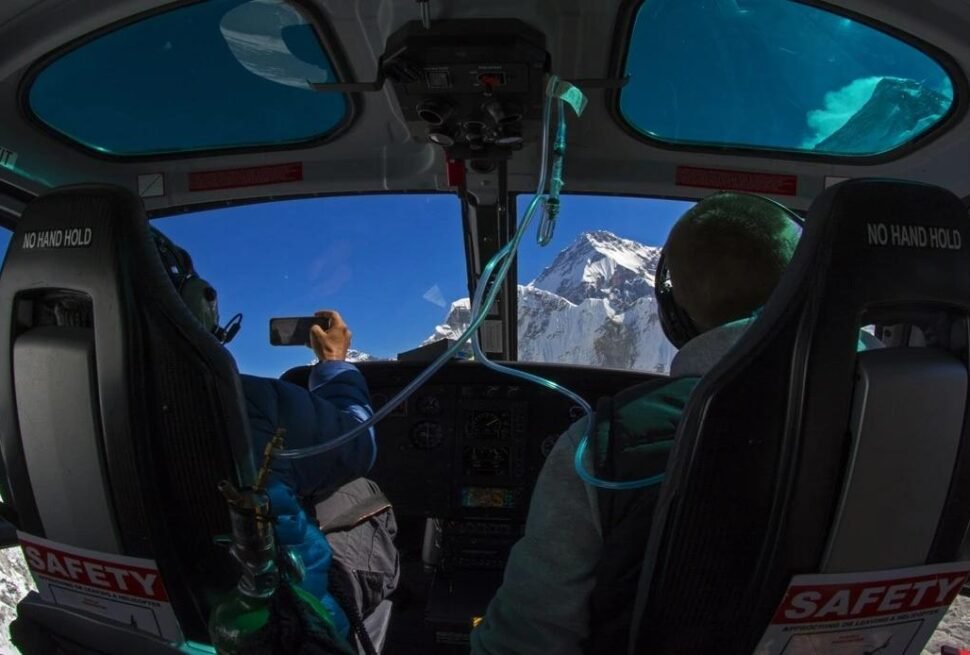
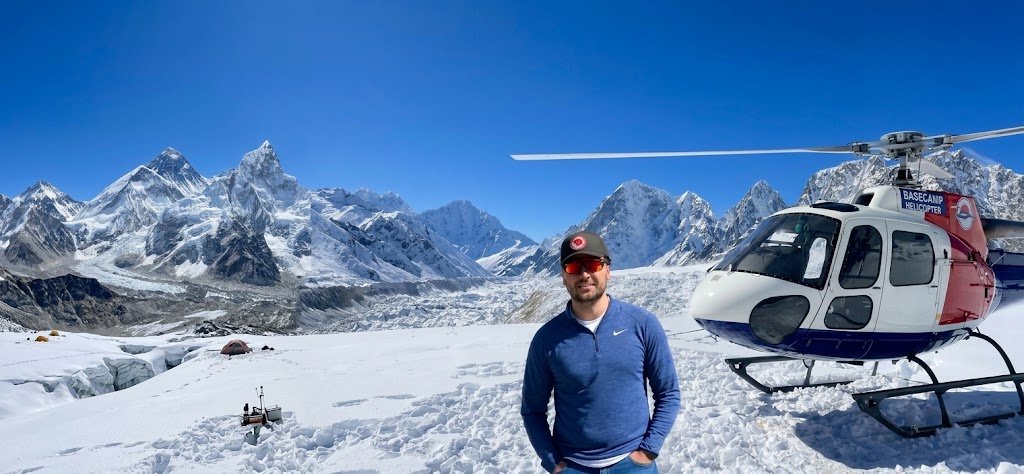
Kathmandu itself sits at about 1,400 meters, which is high enough that some travelers feel mildly short of breath or notice a faster heartbeat for the first day or two, particularly if they flew in directly from a low elevation city. During the helicopter tour, you pass Lukla at 2,860 meters, fly on toward Everest Base Camp at 5,364 meters for an aerial pass over the Khumbu Glacier and Icefall, and land for breakfast at Hotel Everest View in Syangboche, which sits at 3,780 meters and holds the Guinness World Record as the highest hotel with a direct view of Everest. If you choose the Kala Patthar landing upgrade, you land even higher, at 5,545 meters, the highest tourist accessible helicopter landing point in Nepal.
The good news is that a brief exposure to altitude, measured in minutes rather than the days or weeks trekkers spend gradually climbing higher, carries meaningfully less risk of altitude sickness than a slow trek to the same elevations. Your body is not living and sleeping at that height, and the helicopter descends again quickly. Still, a small number of people, especially those with existing heart or lung conditions, or those prone to headaches and nausea at altitude, can feel lightheaded, mildly nauseated, or short of breath during the landing stop. This is why we ask every guest a few basic health questions before the flight and why we recommend arriving in Kathmandu at least one full day before the tour rather than flying straight from a long haul international flight into the helicopter the same morning.
Simple precautions help a great deal: sleep well the night before, avoid heavy drinking the evening prior, stay hydrated, and eat a light breakfast rather than a heavy one before an early pickup. If you have a pre existing heart or respiratory condition, mention it to your doctor before you travel and let our team know when you book. For a much deeper look at symptoms, prevention, and how our pilots and guides handle altitude related concerns during the tour, read our dedicated guide on altitude sickness and the Everest helicopter tour.
Money Matters: Currency, Cash, and Cards in Kathmandu
Nepal’s currency is the Nepalese rupee, and it is what is sometimes called a closed currency, meaning you generally cannot buy rupees outside the country before you arrive. You will exchange money once you land, either at the airport or, for slightly better rates, at one of the many licensed exchange counters in Thamel. Exchange rates move, but as a rough point of reference, one US dollar has recently traded for somewhere around one hundred forty Nepalese rupees, so it is worth checking a current rate shortly before your trip rather than relying on an old number.
ATMs are widely available throughout Kathmandu and accept Visa and Mastercard, though most machines cap withdrawals at a set amount per transaction, commonly the equivalent of a couple hundred dollars, and charge a flat withdrawal fee. If you are withdrawing a larger sum for your trip, expect to make more than one withdrawal or to look for banks known for higher limits. Credit cards are accepted at larger hotels, some restaurants, and travel agencies in Thamel, but many smaller shops, local eateries, and taxis operate on cash only, so keeping a reasonable amount of rupees on hand at all times is simply practical.
For the Everest helicopter tour itself, pricing is quoted in US dollars, which is standard practice across Nepal’s mountain tourism industry, and payment can typically be arranged in dollars, by card, or through a deposit and balance system depending on how you book. If you want a full breakdown of what drives the price differences between our packages, our 2026 cost and price guide lays out every option in detail. It is also worth carrying a small reserve of cash dollars for tipping your pilot and ground crew, which is customary and appreciated, though never mandatory.
What Else to See in Kathmandu Beyond the Helicopter Tour
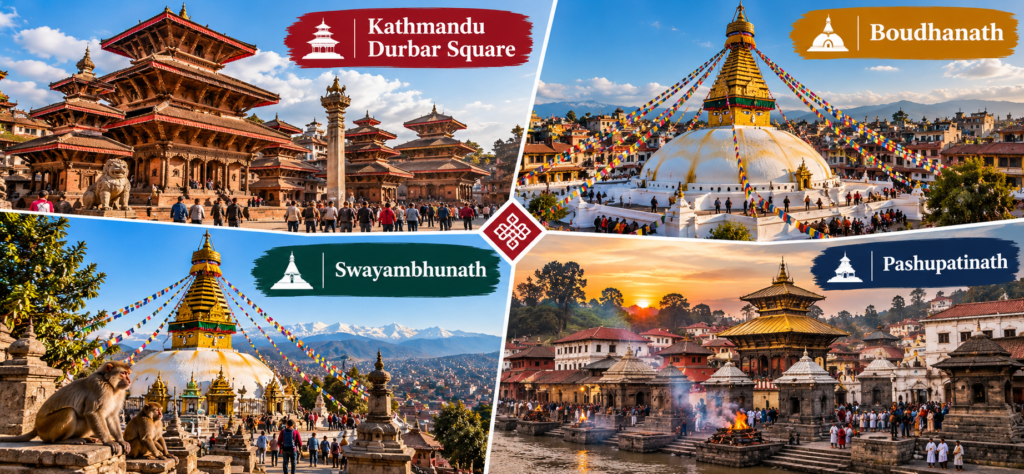
Kathmandu Valley holds seven UNESCO World Heritage sites within a fairly small area, and even a short first visit should include a few of them alongside your helicopter tour. These sites are not filler between the main event, they are genuinely among the richest cultural experiences in Asia, and combining them with the tour is what turns a single spectacular morning into a full, well rounded trip.
Kathmandu Durbar Square
The old royal palace complex at the heart of the city, Kathmandu Durbar Square is a dense cluster of temples, courtyards, and carved wooden buildings dating back centuries, some damaged in the 2015 earthquake and since carefully restored. It is an easy stop from Thamel, walkable in twenty to thirty minutes or a short taxi ride, and gives a strong first impression of Newar architecture and the layered history of the Kathmandu Valley’s old kingdoms.
Swayambhunath
Known widely as the Monkey Temple for its resident population of monkeys, Swayambhunath is one of the oldest and most sacred Buddhist sites in Nepal, perched on a hill on the western edge of the city. The climb up its stone steps is rewarded with sweeping views across the Kathmandu Valley, and the giant painted eyes on the central stupa are one of the most recognizable images associated with Nepal. Sunset and early morning are particularly good times to visit, both for light and for a calmer atmosphere.
Boudhanath
One of the largest stupas in the world, Boudhanath anchors a neighborhood that has become the center of Tibetan Buddhist life in Kathmandu, with monasteries, prayer wheel lined walkways, and rooftop cafes overlooking the stupa itself. Walking a slow clockwise circuit around the base, alongside pilgrims and monks doing the same, is one of the more memorable quiet experiences available in the city, in contrast with the noise of Thamel.
Pashupatinath
A major Hindu temple complex on the banks of the Bagmati river, Pashupatinath is one of the most important Shiva temples in the world and remains an active cremation site, which makes it a place to visit with a respectful, observational attitude rather than as a typical tourist stop. Non Hindus cannot enter the main temple itself, but the surrounding ghats, shrines, and riverside terraces are open and offer a striking, sometimes intense window into Nepali Hindu ritual life.
Fitting the Everest Helicopter Tour Into Your First Nepal Trip
Here is the single most practical piece of scheduling advice in this entire guide: book the Everest Base Camp Helicopter Tour early in your trip, not on your last available day. Mountain weather in the Khumbu region can change quickly, and helicopter operations depend on clear visual conditions through narrow valleys. Reputable operators, including ours, will always choose safety over schedule, which means a flight can occasionally be pushed to the next morning if conditions are not right.
If you schedule the tour for your final day in Nepal with no room to spare, a weather delay can mean missing it entirely, a genuinely disappointing outcome for something that is often the whole reason someone planned a Nepal trip in the first place. Schedule it instead on your second or third day, ideally with at least one, and preferably two, spare days remaining afterward. That buffer means a delay simply shifts your sightseeing around rather than threatening the flight itself. Our own step by step booking guide walks through exactly how reservations, deposits, and rescheduling work if weather does intervene.
Choosing the Right Package for Your Group
Once the timing is settled, the next decision is which version of the tour fits your group and budget. We offer several formats, and the right one depends on how many people are traveling together and how much flexibility and privacy matters to you.
| Package | Best For | Approximate Price |
|---|---|---|
| Shared Group Tour (5 or more per helicopter) | Solo travelers and small groups wanting the lowest per person cost | $1,250 per person |
| Everest Helicopter Tour Group Package | Groups of friends or family booking together | $1,100 per person |
| Private Helicopter Charter (whole aircraft, about 5 passengers) | Families or groups wanting full privacy and flexible timing | $4,800 total |
| Honeymoon Private Couple Package | Couples wanting a private, romantic flight | $2,800 total |
| Kala Patthar Landing Upgrade (5,545m) | Travelers wanting the highest possible landing point in Nepal | Around $1,250 per person, shared seat |
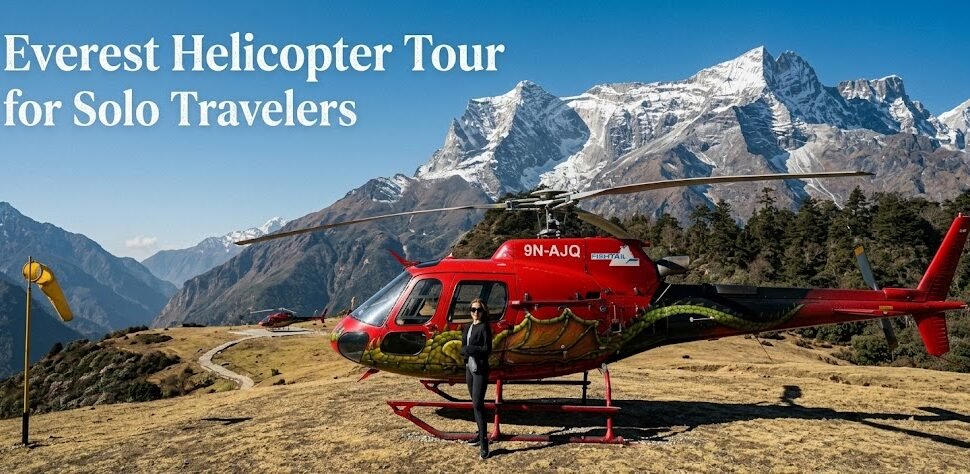
The private charter and honeymoon packages fly the whole Airbus H125 helicopter, a single engine aircraft known for strong performance at high altitude and widely used across Nepal’s mountain tourism industry, for your group alone, with no other passengers and generally more flexibility on exact timing. The shared group and group package options put you alongside other travelers in the same aircraft at a lower cost per seat, which suits most solo travelers, couples not seeking a private experience, and small groups of friends. If seeing the highest point a helicopter can legally and safely land in Nepal matters to you, the Kala Patthar landing upgrade, at 5,545 meters, adds that extra altitude and an even more dramatic sense of scale above the Khumbu Glacier. Full details on every package, including the standard Everest Base Camp Helicopter Tour and the Kala Patthar landing version, are available on our booking pages.
If you are weighing whether the cost is justified at all compared to trekking or simply skipping the mountains altogether, our honest breakdown on whether the Everest helicopter tour is worth the money lays out the comparison plainly, including what a twelve to fourteen day trek costs in time, physical effort, and money versus a single morning flight covering much of the same ground.
The Morning of the Flight: A Quick Word on Preparation
Once your dates are booked, the morning itself is well documented elsewhere on our site, including a full account of what happens from the early hotel pickup through to your return, minute by minute, in our day by day guide to exactly what happens on tour day. In short: expect an early pickup, often around five in the morning, a short drive to the airport, a safety briefing, the flight itself past Ama Dablam, Lhotse, Nuptse, and Makalu toward Everest, a landing at Hotel Everest View in Syangboche for breakfast with a direct view of the mountain, and a return flight, with the whole experience wrapped up and you back at your hotel within four to five hours.
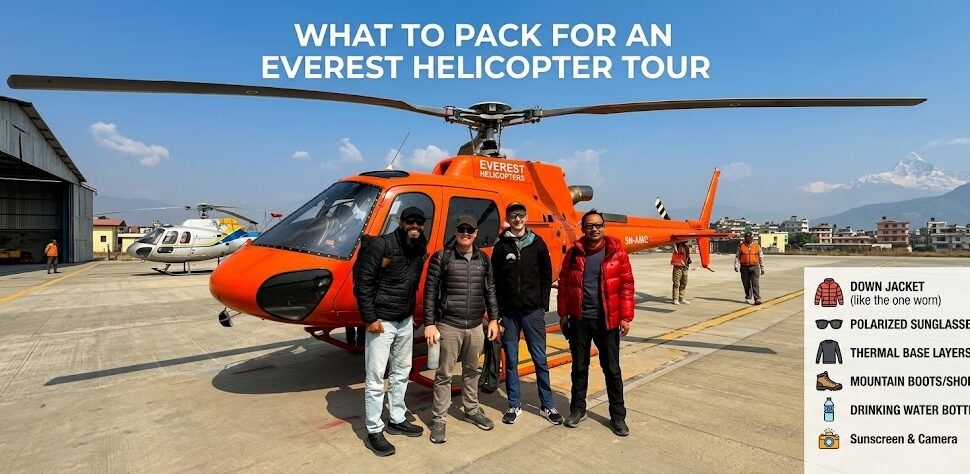
What you should pack matters more than most first timers expect, since temperatures at 3,780 meters or higher at dawn can be sharply colder than Kathmandu at sea level in comparison. Warm layers, a good pair of sunglasses given the glare off snow and glacier ice, and a fully charged camera or phone are the essentials. Our detailed packing guide for the Everest helicopter tour covers everything else you might not think of, from battery behavior in the cold to what to leave behind entirely.
Frequently Asked Questions
Do I need to arrange a Nepal visa before I arrive?
Most nationalities do not need to arrange a visa in advance. You can apply for a visa on arrival at Tribhuvan International Airport in Kathmandu, choosing a fifteen, thirty, or ninety day visa depending on your plans. A small number of nationalities are required to obtain a visa from a Nepali embassy beforehand, so check your specific passport’s status before you travel, and consider filling out the online arrival form ahead of your flight to save time at the airport.
How many days should I plan for a first Nepal trip that includes the Everest helicopter tour?
A minimum of three nights in Kathmandu works, but four or five nights is more comfortable and gives you a genuine buffer against weather delays. The helicopter tour itself only takes about four to five hours from hotel pickup to hotel drop off, leaving the rest of that day free, so the extra days are really about seeing Kathmandu properly and protecting your schedule from the one thing nobody can control, mountain weather.
Is the Everest helicopter tour safe for someone who just landed in Kathmandu?
Yes, for the vast majority of travelers, though we recommend spending at least one full day in Kathmandu before the flight rather than going straight from a long international journey into the helicopter the same morning. Brief altitude exposure during the tour carries considerably less risk than a multi day trek to similar elevations, since you are not sleeping at height, but simple steps like resting, staying hydrated, and telling us about any existing heart or lung conditions when you book make the experience smoother and safer.
What is the best time of year to book the Everest helicopter tour?
Autumn, from September through November, generally offers the clearest skies and best mountain visibility, followed closely by spring, from March through May. Winter can also produce very clear, cold mornings. The monsoon season, from June through August, brings a higher chance of cloud related delays, so if you are traveling then, build in extra spare days around your booked flight date.
Can I pay for the helicopter tour in cash, and do I need US dollars or Nepalese rupees?
Our packages are priced in US dollars, which is standard across Nepal’s mountain tourism industry, and payment can generally be arranged in dollars or by card depending on how you book, often with a deposit at the time of booking and the balance settled closer to your tour date. It is still worth carrying some Nepalese rupees for daily expenses, taxis, and tipping your pilot and ground crew.
What happens if the tour gets rescheduled because of weather?
Safety always comes first, and if visibility or wind conditions in the Khumbu region are not suitable, we will move your flight to the next available window rather than fly in unsafe conditions. This is exactly why we recommend booking the tour early in your trip rather than on your final day, so a short delay simply rearranges your Kathmandu sightseeing instead of costing you the flight altogether. Our step by step booking guide explains how rescheduling and deposits work in more detail.
Should I book the shared group tour or the private charter?
It depends on your group size and priorities. Solo travelers and small groups usually choose the shared group tour or the group package for a lower cost per seat. Couples or families wanting complete privacy, flexible timing within the day, and the whole Airbus H125 to themselves generally choose the private charter or, for couples specifically, the honeymoon package. Neither option changes the route or the views, both fly the same spectacular pass over Everest Base Camp and the same breakfast stop at Hotel Everest View.
Do I need travel insurance for the Everest helicopter tour?
We strongly recommend it. Travel insurance that covers high altitude activities and helicopter travel protects you against trip interruptions, medical costs, and the general uncertainty that comes with any mountain based activity. It is a small cost against genuine peace of mind for what is likely to be one of the most memorable mornings of your entire trip.
Ready to See Everest for Yourself
A first trip to Nepal can feel like a lot to organize from thousands of miles away, but broken into pieces, none of it is complicated: get your visa on arrival at the airport, choose a Thamel hotel as your base, give yourself three to five days in Kathmandu, book your helicopter flight early in that window rather than at the end, and let the rest of your schedule flex around it. Handled this way, you get the best of both worlds, the ancient temples and living culture of the Kathmandu Valley on the ground, and the highest mountains on earth from the air, all without needing two weeks free for a trek. When you are ready to lock in your dates, take a look at the full details of the Everest Base Camp Helicopter Tour and book the morning that will end up anchoring your entire first visit to Nepal.
Related Reading
- Everest Helicopter Tour Experience: What Past Travelers Wish They Knew Before Booking
- Everest Helicopter Tour Plus Pokhara and Chitwan: Best Multi Day Nepal Packages
- Everest Helicopter Tour Safety: Pilots, Maintenance and CAAN Standards Explained
- Last Minute Everest Helicopter Tour Booking: Availability, Pricing and What to Know