Why Timing Is Everything on an Everest Helicopter Tour
The Everest Base Camp helicopter tour is one of the few adventure travel experiences in the world where the conditions on a single morning can make the difference between a transcendent panoramic encounter with the world’s highest peaks and a flight largely through cloud. Unlike trekking, where you have 12 to 16 days to work with varying weather and find your best views, the helicopter tour delivers everything in a single morning, which means the weather on that morning matters enormously. Understanding Nepal’s mountain weather patterns across the year is therefore essential preparation for anyone planning this experience.
The Himalayas sit at the junction of two major weather systems: the South Asian monsoon, which brings heavy rainfall from the Bay of Bengal between June and September, and the continental weather patterns from the Tibetan Plateau, which produce cold, dry conditions in winter. These two systems interact to create a distinct seasonal rhythm in the Khumbu region that experienced helicopter pilots and operators use to plan operations throughout the year. Here is a complete month-by-month breakdown of what to expect from the weather and visibility on an Everest helicopter tour, along with an honest assessment of the trade-offs in each season.
The Two Peak Seasons: Spring and Autumn
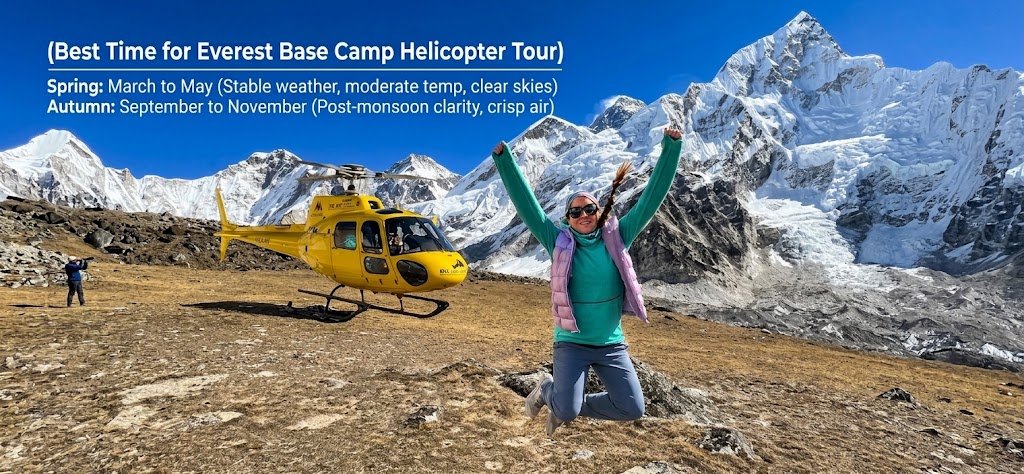
Before diving into the month-by-month breakdown, it is worth establishing the overall framework: Nepal has two primary seasons for Himalayan tourism, and they coincide with the periods of most stable weather in the Khumbu region. Spring (March to May) and autumn (September to November) are the peak seasons for both the EBC trek and the helicopter tour, for reasons that are deeply grounded in meteorology rather than simply tourism marketing. During these two windows, the Himalayan atmosphere is typically clear of monsoon clouds, the jet stream winds that batter the high peaks in winter have either not yet arrived or have retreated, and early morning conditions in the Khumbu consistently provide the clear-sky windows that helicopter operations require.
All flights operate in the early morning, typically departing Kathmandu between 5:00am and 7:00am, for a reason that has nothing to do with airline scheduling: morning is when the mountain weather is most stable and visibility is most reliable. As the day progresses, solar heating of the mountain slopes drives convective activity that builds cumulus cloud around the high peaks, typically starting mid morning. By noon, much of the Khumbu is often in cloud even in the peak season. The early morning flight window is not a tourist preference, it is a meteorological necessity that the best helicopter tour operators design their operations around rigorously.
Month-by-Month Guide to Everest Helicopter Tour Weather
January: Crystal Clear and Very Cold
January is deep winter in the Khumbu. The monsoon departed months ago, the atmosphere is exceptionally dry, and the visibility of the high peaks on clear mornings is often the best of the entire year. The Everest massif stands in razor-sharp definition against deep blue skies, unobscured by the haze that sometimes affects spring and the cloud that dominates summer. Photographers in particular prize January light on the Himalayan peaks.
The trade-off is temperature. At the Kala Patthar landing (5,545m) in January, temperatures are typically well below -10°C, with wind chill driving the effective temperature much lower. Passengers who are not dressed appropriately will find the ground stop brief and uncomfortable. The solution is proper layering: a high quality down jacket, thermal base layers, gloves, a warm hat, and a neck gaiter are all essential in January. The helicopter itself is warm, so the cold is only experienced at the landing sites.
January weather windows for the early morning flight are frequent and reliable. January is an excellent month for the helicopter tour for travellers who dress appropriately and prioritise maximum visibility over comfortable temperatures.
February: Excellent Visibility, Easing Cold
February continues the excellent visibility of January with gradually moderating temperatures, particularly toward the end of the month. High pressure systems that dominate winter Himalayan weather remain reliable in February, and clear early morning windows for the helicopter flight are consistently available. The Everest region begins to see the first hints of spring at lower elevations, rhododendrons start to bud in the lower Khumbu valleys, while the high peaks remain deeply snow-covered and dramatically sharp against blue winter skies.
February is genuinely one of the best months for the helicopter tour: the crowds of the peak spring and autumn seasons have not yet arrived, so flight availability is better, prices may be slightly lower, and the Kathmandu helicopter terminal is less busy. The cold at the landing sites is real but manageable with proper clothing. For travellers with flexibility in their schedule, February is an underrated option that delivers excellent photography conditions, fewer crowds, and reliable flight windows.
March: Spring Begins, Excellent Conditions Return
March marks the start of the spring trekking and climbing season. Temperatures begin rising noticeably, the rhododendron forests at lower altitudes burst into extraordinary colour, and the Khumbu skies remain generally clear with excellent early morning conditions for helicopter operations. The atmosphere in March still has much of winter’s clarity before the pre-monsoon haze and afternoon cloud that characterise April and May begin to develop.
March is one of the most beautiful months for the helicopter tour. The landscape below is at its most colourful, a striking contrast between the green-and-red rhododendron lower valleys and the white-and-grey high peaks, and temperatures at the landing sites, while still cold, are more comfortable than January or February. Expedition teams begin arriving at Base Camp in March, making the flight more likely to show the vivid orange tents of climbing expeditions dotted across the Khumbu Glacier. This is a dramatic sight from the air and one of March’s unique attractions for the helicopter tour.
April: Peak Season at Its Best
April is the single most popular month for the Everest helicopter tour, and with good reason. Conditions are outstanding: the weather is consistently clear in the mornings, temperatures are comfortable even at altitude, the Everest climbing season is in full swing with expedition camps established all the way up the South Col route, and the Khumbu landscape is at its liveliest. Visibility in April is excellent, though not always as sharp as the dead of winter, and the slightly warmer temperatures make the Kala Patthar landing particularly comfortable.
The main consideration in April is demand. This is the busiest month for helicopter tours, which means flights book out quickly and last minute availability cannot be relied upon. We recommend booking your April helicopter tour at least two weeks in advance, and ideally three to four weeks for the most popular dates. Despite the demand, April delivers consistently excellent results: the vast majority of April flights operate successfully on the first scheduled date, and the combination of conditions makes it the most reliable month for a successful tour.
May: Still Excellent, Pre-Monsoon Builds
May continues the spring peak season but with increasing signs of the approaching monsoon. In the first two weeks of May, conditions are generally excellent and helicopter tours operate with high success rates. By the third and fourth weeks of May, pre-monsoon moisture begins building in the atmosphere, and afternoon cloud cover arrives earlier and is more extensive. Morning flights in late May can still be excellent, but the weather window for operations is narrower and less reliable than March or April.
May is also the month when Everest summit attempts are concentrated, most expeditions target the mid-May weather window for their summit push, which means the Base Camp area is at its most active. For those who specifically want to see an active climbing season from the air, late April to early May is the best window.
June and July: Monsoon Season, Limited Flights
June and July are the heart of the South Asian monsoon in Nepal. Heavy rainfall, pervasive low cloud, and dramatically reduced visibility affect the entire Himalayan region, and helicopter tour success rates drop significantly during these months. Flights are not impossible, there are still clear morning windows, particularly in the early morning before cloud builds, but cancellations and reschedulings are far more frequent than in the dry seasons.
We do not recommend June or July as preferred months for the helicopter tour. Travellers with flexible schedules should postpone to the autumn. However, those who can only visit Nepal in June or July should still book and attempt the tour: on good weather days, monsoon-season helicopter tours operate with excellent results, and our policy of rescheduling at no charge on weather-cancelled days means you will eventually get your flight if you can remain in Kathmandu long enough. We always attempt the flight on the earliest available morning window.
August: Late Monsoon, Some Windows Emerging
August is still monsoon season but begins to show glimpses of the post monsoon clarity that characterises September. Clear days are more frequent in August than June or July, particularly in the second half of the month, as the monsoon begins its retreat from the Himalayas. Early morning flights in August can be dramatic, the freshly washed atmosphere after monsoon rain produces extraordinarily clear air, and the Khumbu is lush and vivid with vegetation at its peak.
August is an unpredictable month: some days are completely socked in with cloud, others are crystal clear. The key is to book early in your Nepal stay so there are multiple days available for weather rescheduling. August travellers who arrive in Kathmandu with three or four days of flexibility usually succeed in getting their helicopter tour completed.
September: Post-Monsoon Magic Begins
September is when the Khumbu weather dramatically transforms. As the monsoon retreats, the atmosphere clears rapidly and the mountain views become extraordinarily sharp and vivid. The post monsoon atmosphere in September has a quality of light and clarity that many photographers and experienced Himalayan visitors consider the very best of the year, the fresh-washed air, the snow-covered peaks, and the blue-black skies create images of exceptional quality.
September is also less crowded than October, as many trekkers and tourists arrive later in the autumn season. This means better flight availability, easier booking, and a slightly more relaxed atmosphere at the Kathmandu helipad. For travellers who prioritise photographic quality and value relative quiet over the full peak-season buzz, September is an outstanding choice for the helicopter tour. The EBC with Gokyo Heli Tour in September, with its extended coverage of the Gokyo Lakes district, delivers particularly dramatic results as the monsoon retreats and the entire Khumbu landscape emerges in post monsoon freshness.
October: The Golden Month
October is widely considered the single best month for the Everest helicopter tour. The post monsoon atmosphere is fully established, producing consistently clear skies with exceptional mountain visibility. Temperatures are comfortable at all altitudes, cool but not cold at the Kala Patthar landing, mild and pleasant in Kathmandu. The Khumbu landscape has the golden tones of Himalayan autumn, with rich yellows and reds at lower elevations and the dramatic contrast of snow capped peaks above. The light in October mornings is dramatic, soft enough in the golden hour after sunrise to produce glowing, warm-toned mountain photography, yet clear enough for full distance visibility across the entire Himalayan range.
The only downside of October is demand. This is the most popular month for Nepal tourism broadly, and helicopter tour flights are in very high demand. Early booking, ideally three to four weeks in advance for specific dates, is essential in October. Last-minute booking in October is unlikely to find availability on preferred dates. For travellers who can plan ahead, October rewards the effort with the most consistently excellent conditions of the year.
November: Excellent Autumn Continues
November continues the excellent autumn conditions of October, with temperatures gradually cooling toward winter levels as the month progresses. Early November offers conditions very similar to October, and the demand pressure eases slightly as the peak tourist month wanes. Late November begins the transition toward winter conditions, colder at the landing sites, but with the increasingly sharp winter clarity beginning to develop.
November is an excellent month for the helicopter tour and often overlooked by travellers who schedule around the October peak. Flights are easier to book, the mornings remain clear and excellent, and the Khumbu landscape takes on progressively more dramatic winter character. For travellers who have flexibility in their Nepal travel dates, early to mid-November offers a sweet spot of excellent conditions with better availability than October’s absolute peak.
December: Winter Begins, Premium Clarity
December marks the start of winter in the Khumbu but also the return of the premium winter clarity that makes January and February excellent for the helicopter tour. The first weeks of December still have comfortable temperatures from the autumn season transitioning to winter chill, while the atmosphere rapidly achieves the razor-sharp clarity of dry-season Himalayan weather. December is a genuinely excellent month for the helicopter tour and benefits from much lower demand than the October-November peak.
Christmas and New Year week does see a surge in Kathmandu visitors, so the very last days of December and first days of January can be busy. Otherwise, December is one of the most accessible months for booking, with good availability and competitive pricing for both the standard EBC helicopter tour and the honeymoon package.
Season Comparison Table: At a Glance
| Month | Visibility | Temperature at Landing | Crowd Level | Success Rate | Overall Rating |
|---|---|---|---|---|---|
| January | Exceptional | Very cold (-15°C to -5°C) | Low | High | ★★★★☆ (dress warm) |
| February | Exceptional | Cold (-10°C to 0°C) | Low | High | ★★★★★ |
| March | Excellent | Cool (-5°C to 5°C) | Medium | Very High | ★★★★★ |
| April | Excellent | Cool (0°C to 8°C) | Very High | Very High | ★★★★★ |
| May | Good Excellent | Mild (5°C to 12°C) | High | High (early); Medium (late) | ★★★★☆ |
| June | Poor Fair | Cool to mild | Low | Low | ★★☆☆☆ |
| July | Poor | Cool to mild | Very Low | Low | ★★☆☆☆ |
| August | Fair Good | Mild to cool | Low | Medium | ★★★☆☆ |
| September | Excellent | Cool (0°C to 8°C) | Medium | Very High | ★★★★★ |
| October | Exceptional | Cool (-2°C to 6°C) | Very High | Very High | ★★★★★ |
| November | Excellent | Cold (-5°C to 2°C) | Medium | High | ★★★★★ |
| December | Exceptional | Cold (-10°C to -2°C) | Low | High | ★★★★☆ |
How Altitude Affects What You See in Each Season
The altitude of the Khumbu region means its weather does not simply mirror lowland Nepali conditions. Kathmandu at 1,350 metres and Kala Patthar at 5,545 metres can experience very different conditions simultaneously, and understanding this vertical dimension is important for managing expectations.
The Khumbu peaks above 6,000 metres are often in the jet stream during winter, which produces the famous plumes of snow that stream from Everest’s summit, the “death zone wind” that climbers fear and photographers love. These summit plumes are most visible and dramatic in the winter months and early spring, when the jet stream is positioned directly over the high Himalaya. From the helicopter or the Kala Patthar landing in February or March, you may see Everest’s summit streaming with a plume of ice crystals that extends for kilometres downwind, a extraordinary visual that is specific to the cold dry season and something the summer months cannot produce.
In the post monsoon season, particularly September and October, the peaks are often freshly re-coated in snow from monsoon precipitation, giving the entire Himalayan massif a gleaming white appearance that contrasts dramatically with the deep blue autumn sky. This fresh-snow look is distinct from the wind-scoured grey-and-white of winter and creates a very different aesthetic, lush, vivid, and intensely photogenic.
Understanding these seasonal visual differences helps you choose not just the most reliable flight month but the specific visual aesthetic you want your Everest experience to deliver.
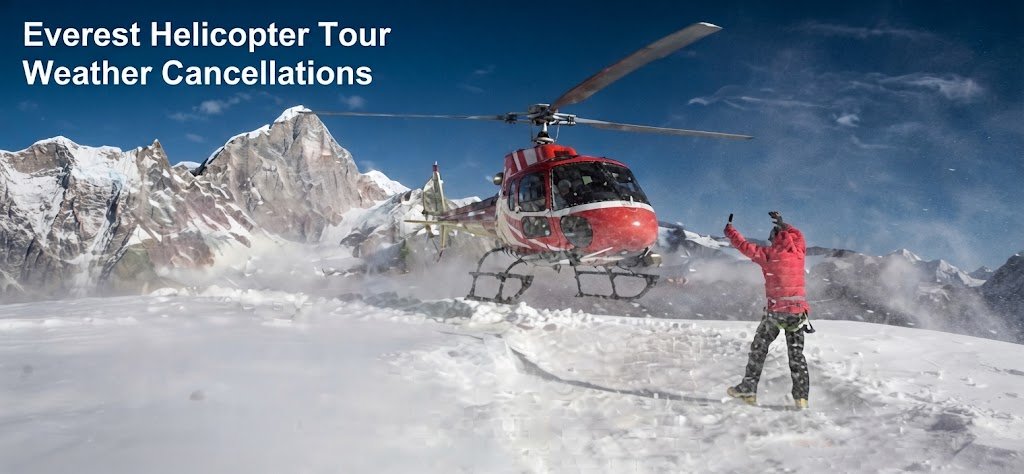
Weather Cancellations and Our Rescheduling Policy
Weather cancellations are an unavoidable reality of helicopter operations in the high Himalayas, and any honest operator will acknowledge this clearly. No helicopter tour company, regardless of how good its weather monitoring is, can guarantee a flight on any specific date. What matters is how the operator handles cancellations and how you plan your trip to allow for rescheduling.
Our policy is simple: if your flight is cancelled due to adverse weather, we reschedule to the earliest available morning on which conditions are suitable, at no additional charge. There is no cancellation fee for weather-rescheduled flights, and we notify passengers as early as possible, ideally the evening before, if the following morning’s conditions look unsuitable. This means we ask all passengers to provide at least one to two additional days of flexibility in their Kathmandu schedule beyond their intended tour date during peak seasons, and two to three additional days in less reliable months. Booking with a flexible itinerary is the single most important practical preparation you can make for the helicopter tour.
Special Considerations by Tour Type
Different helicopter tour products have slightly different best seasonal windows based on what they include and where they go.
The standard Everest Base Camp Helicopter Tour is the most weather-flexible of our products, as it can operate with a slightly wider range of visibility conditions than the more extended tours. It is available and successful in all four non-monsoon seasons.
The Kala Patthar Landing Tour requires clear conditions at 5,545 metres for the landing to proceed safely. This means slightly stricter weather requirements than the basic tour. We recommend booking this tour in April, October, or September for the highest probability of successful Kala Patthar landings.
The EBC with Gokyo Heli Tour, which covers a larger geographic area including the Gokyo Valley, requires good visibility across a wider area and takes longer to complete. This makes it the most weather-dependent of our tours. September, October, and March are the best months for the Gokyo extension tour, as these months consistently deliver the clear cross-valley visibility needed to see the Gokyo Lakes and Ngozumpa Glacier at their best.
The Honeymoon Helicopter Package is available year round. Couples booking for a romantic occasion should aim for April or October for the most reliable conditions and the most photogenic results.
What to Wear in Each Season
Appropriate clothing at the landing sites varies significantly by season, and being underdressed at the Kala Patthar landing in particular can turn a beautiful morning into an uncomfortable experience. Use this guide for each season:
Winter (December, January, February): Heavy down jacket (rated to at least -20°C), thermal base layers top and bottom, fleece mid-layer, insulated waterproof trousers, expedition-weight gloves, thick wool or synthetic socks, insulated boots, balaclava or neck gaiter, and a warm hat. Do not underestimate January at 5,545 metres. Wind chill can drive the effective temperature far below the ambient temperature.
Spring (March, April, May): Down or heavy insulated jacket, warm mid-layer, comfortable trekking trousers, light gloves (heavier for March), warm hat, and layers you can remove as you descend. April is the most comfortable month and many passengers are adequately warm in a good down jacket over normal clothing. March requires heavier layering than April.
Monsoon (June, July, August): Waterproof outer layer, warm layers for the altitude, and good footwear for potentially muddy conditions at the lower landing sites. Rain gear is important for time spent on the ground and during transfers.
Autumn (September, October, November): Similar to spring but with temperatures declining as the season progresses. September and October are comfortable in a warm jacket and layers. November becomes progressively colder and requires similar preparation to March by the end of the month.
In all seasons: UV protection is important at high altitude, polarised sunglasses and high-SPF sunscreen are essential even in winter when the sun reflects intensely off snow at the landing sites.
Our Recommendation: The Best Month for Your Situation
Here is our honest, direct recommendation based on years of helicopter tour operations in the Khumbu region:
Best overall month: October. The combination of exceptional visibility, comfortable temperatures, golden autumn light, and very high flight success rate makes October the single best month for the Everest helicopter tour if you can only come once and want to maximise your chances of a perfect flight.
Best for photographers: February or September. February for the extraordinary winter clarity and summit plumes. September for the post monsoon freshness and vivid post-rain colours.
Best for budget conscious travellers: February or November. Both offer excellent conditions with significantly less demand than the April and October peaks, resulting in easier booking and potentially better value.
Best for viewing the Everest climbing season: Mid-April to early May. This is when expedition camps are fully established and summit attempts are active, making the aerial view of the Base Camp area as dramatic as it gets.
Best if you must visit in summer: Early August or late August, with three or four days of flexibility for rescheduling. Not our recommended window, but successful flights do operate in late August on clear mornings.
Whatever month you choose, book your Everest helicopter tour with enough schedule flexibility for at least one day of weather rescheduling. The Himalayas operate on their own timeline, and the patience to wait for the right morning is always rewarded.
Kathmandu Weather vs Khumbu Weather: Understanding the Difference
One of the most common misunderstandings among first time helicopter tour passengers is the assumption that Kathmandu’s weather predicts Khumbu weather. It does not, or at least, not reliably. Kathmandu sits in a protected valley at 1,350 metres, shielded from the full force of the weather systems that affect the high Himalayas. A perfectly clear morning in Kathmandu does not guarantee clear conditions at 5,000 metres and above in the Khumbu region, and a hazy or overcast Kathmandu morning does not mean the Khumbu is in cloud.
Experienced helicopter pilots monitor specific weather data sources for the high Khumbu: satellite imagery, Namche Bazaar and Lukla weather station readings, pilot reports from early morning flights, and direct radio contact with Lukla airport. This specialised high altitude weather intelligence is far more reliable than the Kathmandu city forecast visible on standard weather apps, and our operations team uses it every morning to make the go/no-go decision for each day’s flights.
We notify passengers of the go/no-go decision as early as 4:00am on their departure day, based on the overnight weather assessment. If conditions look marginal, we may contact you at 3:30am or earlier to advise. We know this is early, but the alternative, driving to the helipad and waiting, is worse. Our communication give you maximum information with minimum disruption to your morning.
How the Light Changes the Everest View Through the Year
For photographers and visually oriented travellers, the quality of light is as important as the presence or absence of cloud. The Himalayan light changes dramatically through the seasons in ways that affect not just the photographic quality of the experience but the emotional tone of the flight itself.
In winter, the low angle of the winter sun in the early morning creates long shadows across the valleys and illuminates the faces of the high peaks in warm golden tones even before full sunrise. The combination of this warm, raking light with the exceptional winter clarity produces images of extraordinary depth and drama. The high contrast between shadow and sunlit snow creates a three dimensional quality in mountain photography that the softer light of the shoulder seasons cannot match.
In spring, the morning light is warmer and more diffuse than winter, with a slightly hazy quality particularly in April and May as the pre-monsoon atmosphere builds. This creates softer, more pastel-toned images of the peaks, less dramatic in contrast but often more romantic and painterly in effect. The spring light on Everest’s South Face in April has a luminous, almost ethereal quality that many visitors find deeply moving.
In autumn, particularly September and October, the post monsoon atmosphere has a clarity and colour saturation that photographers prize highly. The peaks appear more vivid and three dimensional than in any other season, with the deep blue of the post monsoon sky creating extraordinary contrast with the white of freshly snow-covered peaks. October light on the Khumbu is often described as the most photogenic of the year, rich, saturated, and brilliantly clear.
How Advance Booking Varies by Season
The booking lead time you need depends significantly on the month you choose, and planning your booking timeline accordingly make sures you can secure your preferred date without disappointment.
January and February: Booking one week to ten days in advance is generally sufficient. These are low-demand months and flight availability is good. Last-minute bookings are sometimes possible.
March: Booking one to two weeks in advance is recommended. Demand begins building in March as the spring season starts and early climbers arrive. Popular dates in late March fill faster than early March.
April: Booking two to four weeks in advance is strongly recommended. This is the busiest single month of the year for helicopter tours, coinciding with the peak of the Everest climbing season and the highest density of international trekkers and tourists in Kathmandu. Last-minute April availability is rare and unreliable.
May: Similar to April in the first two weeks, book two to three weeks ahead. The final week of May sees declining demand as the pre-monsoon weather arrives and many visitors complete their spring trips.
June to August: Last-minute bookings are often possible in the monsoon season due to lower demand, but we recommend booking at least a few days in advance so we can plan flights around weather windows and communicate changes effectively.
September: Book one to two weeks in advance. Demand builds rapidly through September as the autumn season opens. Mid-September can fill quickly as travellers begin arriving for the autumn trekking season.
October: Book three to four weeks in advance for specific dates. October is the most competitive booking month of the year. Week of travel bookings are almost always unavailable, and even two weeks advance notice may not guarantee specific dates in peak October.
November: Book one to two weeks in advance for early November, a few days for late November. Demand eases through the month as the autumn season winds down.
December: Similar to February, booking one week ahead is generally sufficient except for the Christmas and New Year week, when Kathmandu sees a surge of international visitors and early booking is recommended.
Final Summary: The Ideal Helicopter Tour Scenario
If you could design the perfect Everest helicopter tour scenario from scratch, it would look something like this: arrive in Kathmandu in late September or early October, book your tour two to three weeks in advance to secure your preferred date, allow two days of schedule flexibility for weather rescheduling, dress in warm layered clothing including a quality down jacket, depart in the dark of early morning for the pre dawn drive to the helipad, and lift off as the first light of day touches the Himalayan horizon. Within 60 to 75 minutes you are standing at 5,545 metres on the ridge of Kala Patthar, watching the sun illuminate the South Face of Everest in golden October light, with the Khumbu Glacier spread below you and the entire ring of Himalayan giants visible on the horizon. By 10am you are back in Kathmandu in time for a second breakfast.
That scenario is realistic and regularly achieved by our passengers in the peak seasons. With the right timing, the right preparation, and the right operator, the Everest helicopter tour delivers one of the most extraordinary single morning experiences available anywhere on earth. Choose your month wisely, book ahead, and the Himalayas will reward you beyond expectation.
Ready to plan your visit? Browse our full range of tours including the EBC Helicopter Tour, the Kala Patthar Landing Tour, and the EBC with Gokyo Heli Tour to find the experience that fits your travel dates perfectly.
How Nepal’s Festivals Affect Helicopter Tour Scheduling
Nepal’s major festivals occasionally affect helicopter tour operations and Kathmandu hotel pricing, and being aware of them can help you plan more effectively. The festival calendar is primarily lunar, so dates shift each year, but the key festivals to be aware of are Dashain and Tihar in the autumn season.
Dashain is Nepal’s most important festival, typically falling in October. During the main days of Dashain, many Nepali businesses and government offices operate at reduced capacity, and the volume of domestic travellers moving around Nepal peaks dramatically. Helicopter tour operations are generally not directly affected, flights continue throughout the Dashain period, but Kathmandu airports can be busier than usual and hotel availability in the city tightens significantly. Booking accommodation well in advance is particularly important if your helicopter tour falls during Dashain week.
Tihar, the festival of lights, falls shortly after Dashain (typically late October or early November) and brings five days of celebration to the Kathmandu Valley. The city at night during Tihar is dramatically lit with oil lamps and electric lights, making it an extraordinary time to be in Nepal. Helicopter operations are unaffected during Tihar, and the combination of a helicopter tour during the day with Tihar celebrations in the evening is one of the most culturally rich Nepal experiences possible.
Holi in spring (typically February or March, exact date varies each year) and Buddha Jayanti in May are also significant festival periods in Kathmandu. Neither typically disrupts helicopter operations, but both increase the overall Kathmandu visitor numbers, making advance planning for accommodation and pre-trip activities particularly important.
The Everest Climbing Season and Its Effect on the Helicopter Tour Experience
The spring Everest climbing season, typically March through late May, adds a unique dimension to the helicopter tour experience that is worth specifically mentioning. During this period, the South Col route on Everest is progressively equipped by expedition teams: fixed ropes are installed, camps are established at the South Col, Camp III, Camp II, Camp I, and Base Camp, and the Khumbu Icefall route is managed by the Icefall Doctors who install ladders and ropes through the most dangerous section below Camp I.
From the helicopter, the presence of the climbing season adds visible drama to the flight. The vivid orange and yellow tents of multiple expedition Base Camps are clearly visible on the Khumbu Glacier, and in April and early May it is sometimes possible to see the movement of climbers on the lower slopes of the mountain through the helicopter windows. The scale of the human effort against the scale of the mountain, those tiny dots of colour against the vast white and grey of the glacier system, is a humbling and moving visual element that makes the spring helicopter tour uniquely rich.
The autumn season does not have an active Everest climbing season (though some expeditions do attempt Everest in autumn, they are far fewer than in spring). However, the autumn flight compensates with the exceptional post monsoon visibility and the golden light of October, which many photographers prefer to the spring haze. The choice between spring’s climbing-season drama and autumn’s photographic perfection is a genuinely personal one, both are outstanding, and both deliver an Everest helicopter experience that will stay with you for a lifetime.