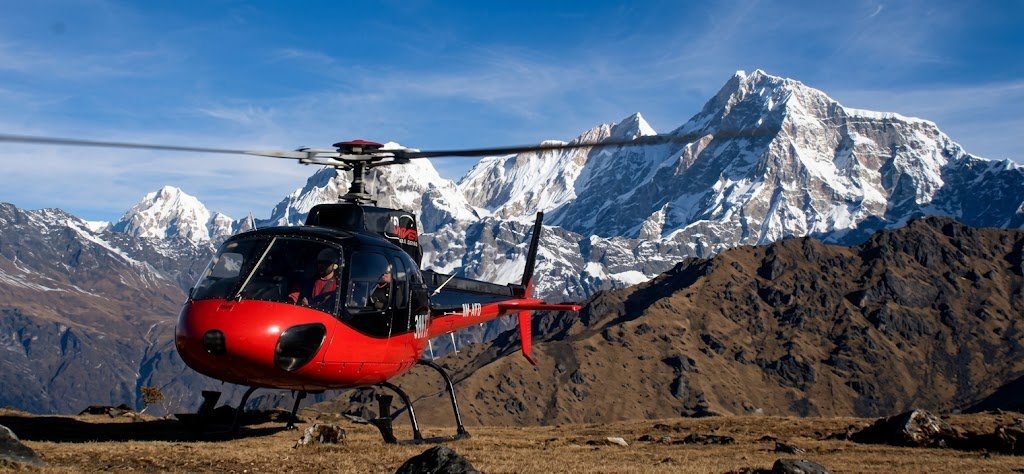
Nepal’s tourism economy includes a well documented subset of fraudulent operators in the helicopter tour market. The specific combination of high prices, complex logistics, a foreign customer base with limited local knowledge, and high demand makes helicopter tour fraud an ongoing issue in Kathmandu and Pokhara. Here is exactly how the most common scams work, what the red flags look like in practice, and how to verify you are dealing with a legitimate operator before handing over money.
How the Most Common Scam Works
The most documented helicopter tour scam in Nepal follows the same structure. A traveler arrives in Kathmandu and is approached by a travel agent, taxi driver, hotel touts, or an unsolicited contact on a tourist street. The contact offers a helicopter tour to Everest Base Camp at a price significantly below market rate. The traveler pays a deposit or the full amount. A booking confirmation is issued. On the morning of the tour, one of several things happens: the traveler is taken not to a helicopter but to a different, lower-quality activity; the helicopter exists but flies nowhere near base camp; the tour is cancelled with a non refundable deposit; or no one shows up at the pickup point at all.
In a variation documented by Nepal tourism authorities, passengers are taken on a genuine helicopter flight but to a different destination than advertised, or to Everest but without any landing, just a flyover. When they complain, the operator argues that the agreed service was provided and refuses refund.
The consistent element across all variations is that the price offered is too low to cover the actual costs of a legitimate Everest helicopter tour. Understanding why allows you to use price as a screening tool.
Why Price Is a Direct Safety Indicator
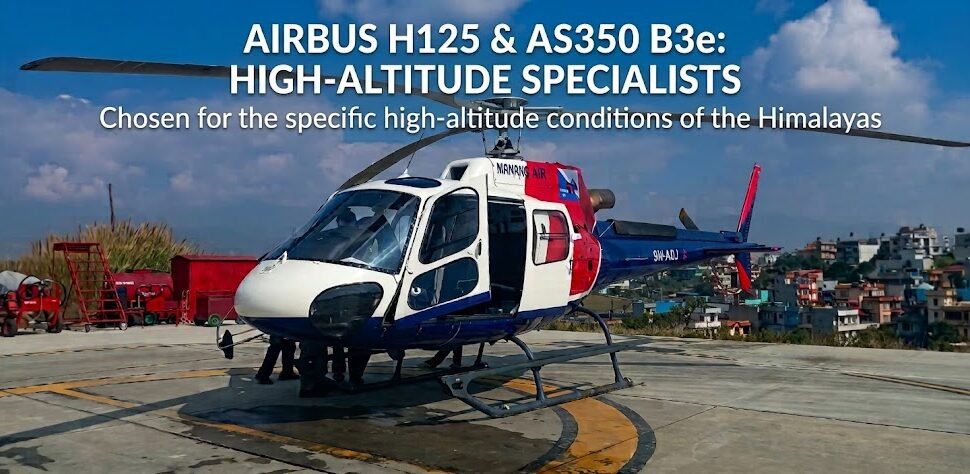
A legitimate Everest Base Camp helicopter tour from Kathmandu has fixed minimum costs. The helicopter itself (typically an AS350 B3 or Airbus H125) burns approximately 200 to 250 litres of jet fuel per hour in high altitude operations. Aviation fuel in Nepal in 2026 costs approximately NPR 120 to 130 per litre. For a 3.5 to 4 hour tour, fuel cost alone is NPR 90,000 to 130,000, or roughly USD 680 to USD 980.
Add to this: the pilot’s fee, the landing fee at Sagarmatha National Park, the national park entry permits for passengers, helicopter maintenance and insurance costs, and the operator’s margin, and a legitimate shared group tour cannot profitably run below approximately USD 950 to USD 1,000 per seat. Private charters with 4 to 5 passengers cannot profitably run below approximately USD 4,000 to USD 4,500 for the aircraft.
An operator quoting USD 500 per person for an Everest Base Camp helicopter tour is either not flying to base camp, not providing the service described, or running a loss that they intend to recoup through other means. There is no legitimate way to offer a full EBC helicopter tour at this price in 2026.
Red Flag: Operators Without CAAN Licensing
The Civil Aviation Authority of Nepal (CAAN) licenses all legitimate helicopter operators in Nepal. The CAAN license number for an operator should be publicly available, either on their website or on request. A legitimate helicopter tour company operates through a licensed helicopter company, either their own fleet or a formal partnership with a licensed operator.
Travel agencies that sell helicopter tours are not themselves helicopter operators. A travel agency can legitimately book you onto a helicopter operated by a CAAN-licensed company. The problem arises when the travel agency is not actually contracted with a real operator but is taking your money and then either booking through a different, unrelated company at the last minute (with no accountability for quality) or not booking at all.
Ask directly: which helicopter company will operate my tour? What is their CAAN license number? Can you show me their operating certificate? A legitimate travel agency booking helicopter tours will have immediate, concrete answers to these questions. Vague responses (we use several operators depending on availability, or our partner is fully licensed, do not worry) are red flags.
Red Flag: Booking Through Street-Level Touts
Legitimate helicopter tour operators in Kathmandu and Pokhara do not employ street-level touts. A person approaching you outside Thamel guesthouses, at the airport arrival hall, or on tourist shopping streets to offer helicopter tours is either working on commission for a third-party booking agent (meaning your money passes through at least one additional hand before reaching any helicopter company) or is operating outright fraud.
Commission-based informal agents are not inherently criminal, but they introduce accountability problems. If something goes wrong with your tour, the person who sold it to you has disappeared into the street, and the booking records may not clearly identify who bears responsibility for the service.
Book directly with the helicopter operator or with an established travel agency with a fixed office address, phone number, business registration number, and a record of operations. These can be checked before payment.
Red Flag: No Written Contract or Booking Confirmation
Every legitimate helicopter tour booking produces a written confirmation that specifies: the tour date, the departure time, the route (specific locations, not vague descriptions like Everest region), the helicopter company operating the flight, the price paid and the price outstanding (if any), and the cancellation and refund policy. This confirmation should come from the operator’s official email address (matching their website domain) or via a documented WhatsApp thread where the company name and contact details are clear.
If you pay a deposit and receive only a verbal confirmation or a handwritten receipt with no company letterhead or contact details, you have a significant documentation problem. This does not necessarily mean fraud is occurring, but it means you have no recourse if the tour does not happen as agreed.
Red Flag: Pressure to Pay in Full Immediately
Standard practice for Everest helicopter tour bookings is a deposit of 20 to 30 percent at booking, with the balance due on the day of the tour or a few days before. An operator demanding full payment immediately, especially in cash, especially from an unsolicited introduction, is applying financial pressure tactics that legitimate businesses do not need to use. A helicopter tour company with real flights to sell and a real calendar to manage does not need your money today without time for you to verify their legitimacy.
How to Verify a Legitimate Operator
Check the Nepal Tourism Board (NTB) licensed operators list. The NTB maintains a registry of registered tourism businesses in Nepal, accessible at their website. The relevant CAAN helicopter operator licenses are also a matter of public record. Cross-reference the company name against both registries.
Search for the company name with the word “review” in English-language travel forums (TripAdvisor, Lonely Planet forums, Reddit r/Nepal). Legitimate operators with several years of operations will have documented reviews. Absence of any online presence for a company offering high-value tours is suspicious. Presence of multiple identical five-star reviews posted within a short time period is also suspicious, as this pattern is associated with purchased reviews.
Check the physical address. A helicopter tour company with a legitimate Kathmandu office has a physical address you can visit before making payment. Google Maps the address. If it does not resolve to a real location or resolves to a residential building with no commercial signage, visit in person before paying.
Pay by credit card when possible. Credit card payments through documented merchant channels create a paper trail and a chargeback mechanism if the service is not delivered. Cash payments, wire transfers, and cryptocurrency payments to unknown parties have no recovery mechanism.
The Legitimate Market in 2026
Nepal has multiple well established, CAAN-licensed helicopter operators with decades of EBC tour operations and documented safety records. These include companies that operate their own aircraft, maintain their own pilots, and have fixed-address Kathmandu offices with English-speaking staff. They charge market-rate prices, provide written contracts, and have documented cancellation policies. They are easy to find through Nepal Tourism Board listings, established travel booking platforms, and major travel review sites.
The price range for legitimate tours makes them accessible for most international tourists who have budgeted for a Nepal trip that includes Everest. The USD 1,000 to USD 1,200 per seat range for a shared group tour, while not inexpensive, is not out of reach for most international visitors, and the cost reflects real operational expenses. Choosing a USD 500 option to save USD 500 to USD 700 is a decision with a documented failure rate that first time Nepal visitors should take seriously.
If You Are Already Dealing with a Suspect Operator
If you have paid a deposit to an operator you are now uncertain about, do not pay the balance until you have independently verified: the CAAN license of the helicopter company, the physical office address of the operator, and a written booking confirmation with specific dates, route, and refund terms. If the operator resists any of these verification steps or cannot provide them, treat the paid deposit as a lesson in due diligence and do not proceed with the balance payment. Report the operator to the Nepal Tourism Board’s complaint mechanism if you believe fraud occurred.
Related reading: Book Directly: Everest Base Camp Helicopter Tour | Complete Booking Guide | Real Pricing Guide 2026 | Safety Standards Guide