Kala Patthar: The Most Famous Viewpoint in the Himalayas
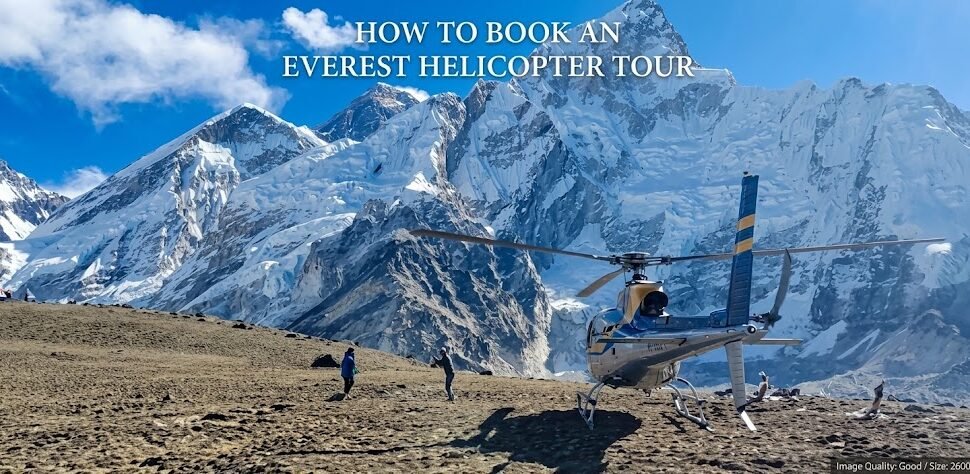
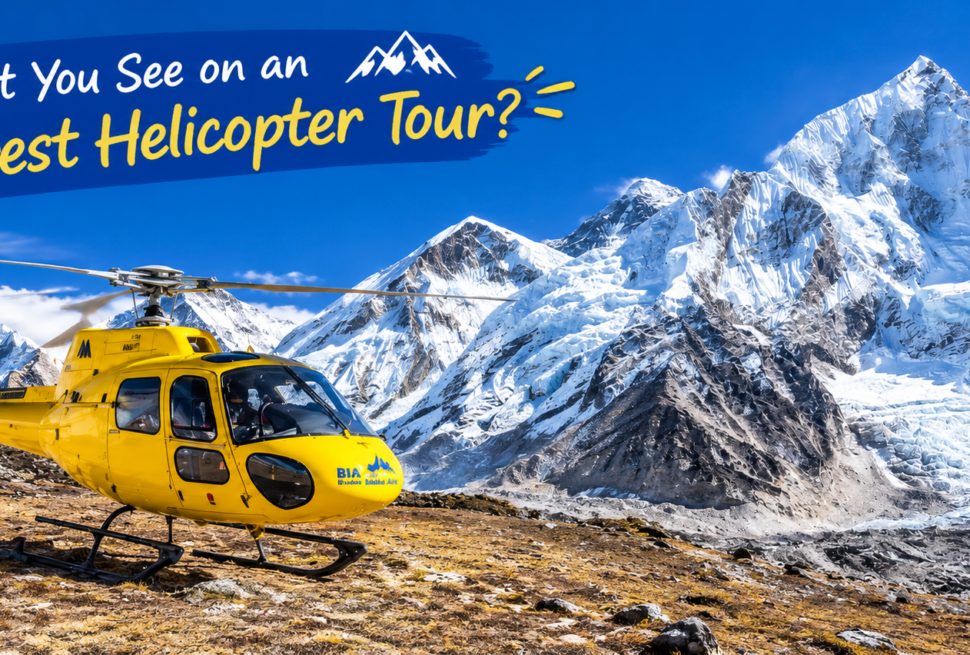
There are many great viewpoints in the Himalayas. Poon Hill in the Annapurna region offers a celebrated panorama. Tiger Hill near Darjeeling is famous for sunrise over Kangchenjunga. Nagarkot above Kathmandu provides an accessible first impression of the Himalayan horizon. But for sheer proximity, altitude, drama, and the specificity of what it shows, the South Face of Mount Everest at close range, no viewpoint in Nepal or anywhere else rivals Kala Patthar. At 5,545 metres on a black volcanic ridge at the foot of Pumori in the upper Khumbu, Kala Patthar is the single most celebrated close range viewpoint of the world’s highest mountain available to non mountaineers. And our Kala Patthar helicopter landing tour brings you there in a single morning from Kathmandu.
The name Kala Patthar means “black rock” in Nepali, a reference to the dark volcanic stone that forms the ridge. The peak itself rises to 5,644 metres, though the standard viewpoint for trekkers and helicopter passengers is the lower ridge at approximately 5,545 metres. This modest difference in altitude between the full summit and the standard viewpoint is irrelevant to the experience: at 5,545 metres, you are standing at a height that exceeds almost every peak in Africa, South America, North America, Europe, and Australia. The only continent with peaks above this elevation is Asia, and you are in the heart of Asian High Asia, looking directly at the highest concentration of extreme altitude on earth.
This full guide explains everything about the Kala Patthar landing experience: what you see, what you feel, what the altitude is like, how the helicopter gets you there, what the landing itself involves, and why this particular viewpoint has captured the imagination of Himalayan travellers for decades.
What You Can See from Kala Patthar: A Complete Panorama Guide
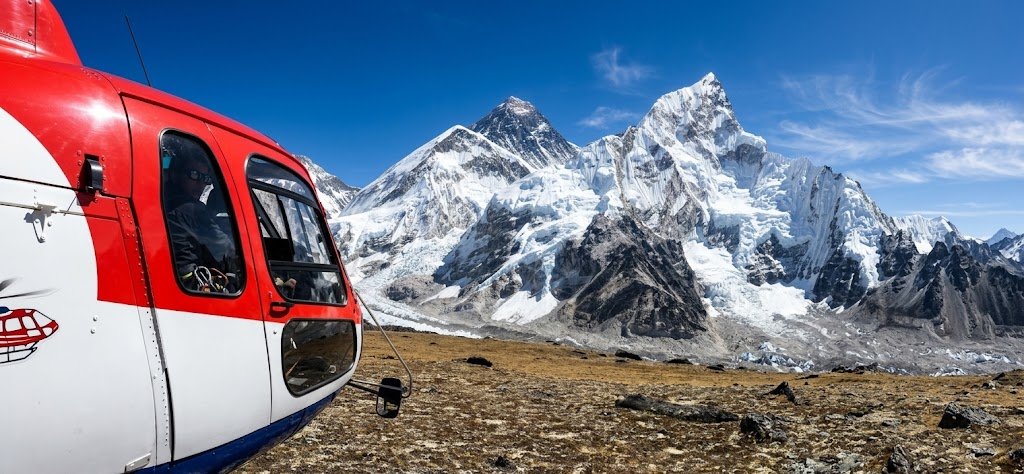
The view from Kala Patthar is the most full close range view of the Everest massif available from any accessible point in the Khumbu region. Understanding exactly what you are looking at, the names, elevations, and positions of the peaks and features visible from the ridge, transforms the experience from an impression of mass and scale into a specific, named encounter with some of the most significant mountains on earth.
| Peak / Feature | Elevation | Direction from Kala Patthar | Significance |
|---|---|---|---|
| Mount Everest (Sagarmatha / Chomolungma) | 8,849m | North-northeast | World’s highest mountain. Summit visible above Lhotse-Nuptse wall |
| Lhotse | 8,516m | East | World’s 4th highest. Forms the right side of the Everest massif |
| Nuptse | 7,861m | East-southeast | Dramatic west ridge forms the near wall of the Khumbu Cwm |
| Changtse | 7,543m | North | North Peak of Everest, in Tibet. Visible above the West Shoulder |
| Pumori | 7,161m | Northwest (directly behind landing area) | Kala Patthar sits at Pumori’s base. The peak towers directly overhead |
| Lingtren | 6,749m | Northwest | Elegant peak adjacent to Pumori |
| Khumbutse | 6,639m | West-northwest | Part of the Pumori-Lingtren-Khumbutse ridge chain |
| Cho Oyu | 8,188m | West | World’s 6th highest. Visible in the far western Khumbu on clear days |
| Gyachung Kang | 7,952m | West | Between Cho Oyu and Everest in the Ngozumpa region |
| Ama Dablam | 6,812m | Southeast | Often called the world’s most beautiful mountain. Visible down valley |
| Thamserku | 6,618m | South-southeast | Distinctive flat-topped peak above Namche Bazaar |
| Kangtega | 6,782m | Southeast | Impressive mass southeast of Tengboche |
| Khumbu Glacier | Begins at ~5,350m | Northeast (below Kala Patthar) | Nepal’s longest glacier, feeds Dudh Koshi river system |
| Khumbu Icefall | 5,350m, 6,000m | Northeast | Most dangerous section of the South Col Everest route; clearly visible |
| Everest Base Camp | ~5,364m | Northeast (on the glacier below) | Southern approach Base Camp. Not easily distinguished from a distance |
Understanding this panorama beforehand, knowing which peak is which, why each matters, and what you are looking at, allows you to use your 20 to 30 minutes on the ridge more intentionally. Many first time visitors spend much of their ground time trying to identify the peaks by instinct; having studied the panorama in advance, you can spend that time simply experiencing the view rather than puzzling over which white summit is which.
The Physical Experience at 5,545 Metres
Standing at 5,545 metres is a genuinely unusual physiological experience, even for a brief period. At this altitude, air pressure is approximately 50 to 52% of sea level, which means the available oxygen in each breath is roughly half of what you are accustomed to. The body compensates by breathing faster and deeper, and the heart rate increases to deliver more oxygen to the tissues. For most healthy adults who arrive at this altitude rapidly by helicopter (without the gradual acclimatisation that trekkers build over 12 to 14 days), the immediate physiological response ranges from mild breathlessness to a more pronounced sensation of altitude awareness.
What most passengers actually experience at Kala Patthar is a combination of three things: the physical sensation of thin air (which manifests as a slight effort with each breath and a light-headedness when moving quickly), the cold (which at 5,545 metres is significant even in the warmest seasons), and the overwhelming visual impact of the view (which overrides the physical sensations and makes altitude feel relevant but secondary). The result is a state of heightened sensory awareness, alert, awake, slightly physically challenged, and completely visually overwhelmed, that creates an intensity of experience unlike almost anything else available in the context of non-technical mountain exploration.
The cold at Kala Patthar is worth specific preparation. Even in April and October, the warmest months for the helicopter tour, temperatures at 5,545 metres rarely exceed 5°C and are often below freezing before 8am. Wind at this exposed ridge can be significant and drives the effective wind-chill temperature much lower than the ambient reading. Passengers who are not dressed appropriately for extreme altitude cold find the ground stop much shorter and less enjoyable than those who are. The investment in a proper down jacket, gloves, warm hat, and thermal layers is the single most important practical preparation for the Kala Patthar landing experience.
The Helicopter Landing at Kala Patthar: How It Works
Landing a helicopter at 5,545 metres is a technically demanding operation that requires extensive experience, careful weather assessment, and a thorough understanding of high altitude rotor performance. The thin air at this altitude means the helicopter rotors generate significantly less lift per revolution than at sea level, requiring the pilot to manage power settings, aircraft weight, and approach angle with great precision. It is one of the highest routine commercial helicopter landings in the world, and only experienced mountain pilots with specific Khumbu authorisation perform these operations.
The approach to Kala Patthar from the Gorak Shep direction comes in from the west, descending over the Khumbu Glacier before climbing the final approach to the ridge landing area. Passengers get their first direct view of the Everest South Face during this approach, the mountain fills the windows as the helicopter climbs toward the ridge, creating a few seconds of complete visual immersion in the Everest massif that many passengers describe as the most viscerally overwhelming moment of the entire morning.
The landing itself is brief and precise. The helicopter sets down on a prepared area of the ridge, the rotors continue spinning throughout the ground stop (the pilot keeps the engine running for rapid departure if conditions deteriorate), and passengers disembark onto the rocky ridge. The crew member accompanies passengers on the ground, monitoring altitude symptoms and weather continuously. The ground stop typically lasts 20 to 30 minutes, long enough for extensive photography and a genuine period of standing at altitude, short enough that cumulative altitude effects remain minimal.
The Kala Patthar helicopter landing has a strong safety record built on consistent conservative operation. If conditions at the ridge are marginal on the day of your tour, higher than acceptable winds, reduced visibility, or instability in the aircraft’s performance at altitude, the pilot will not attempt the landing. This is a non-negotiable safety threshold that we strictly maintain. When a Kala Patthar landing is not possible on a given morning due to conditions, we proceed with the rest of the tour (aerial views, Lukla stop, Hotel Everest View breakfast if included) and attempt to reschedule the Kala Patthar landing on another morning during your Nepal stay.
Kala Patthar vs Gorak Shep: Which Landing Is Higher and Better?
Some helicopter tours that advertise “Everest Base Camp landing” actually land at Gorak Shep (5,140m) rather than Kala Patthar (5,545m). Both are legitimate high altitude landing experiences, but they offer different things and have different altitudes. Understanding the difference matters when comparing tour products.
Gorak Shep is the last permanent settlement before Everest Base Camp on the standard trekking route. It has a small lake (Gorak Shep lake) and several teahouses, and it sits at approximately 5,140 metres. From Gorak Shep, Kala Patthar rises another 400 metres to the northwest. The view from Gorak Shep itself, while high and dramatic, is less direct than from Kala Patthar, the ridge of Kala Patthar partially obstructs the Everest view that the higher ridge provides unobstructed.
Kala Patthar at 5,545 metres provides a view directly into the upper Khumbu Cwm and the Everest South Face without any intervening ridge. The additional 400 metres of altitude makes a noticeable difference to the field of vision, more of the Everest massif is visible from Kala Patthar than from Gorak Shep, and the famous Khumbu Icefall is more completely visible because the higher vantage point looks over obstacles that partially obscure it from Gorak Shep level.
Our Kala Patthar Landing Tour specifically lands at the higher ridge at 5,545 metres, not at Gorak Shep. This distinction is important because it represents a meaningfully different and superior viewpoint experience, and we are transparent about this difference so passengers know exactly what they are booking.
Why Everest Is Partially Hidden from Many Viewpoints (and Why Kala Patthar Is Different)
A common surprise for first time Himalayan visitors is discovering that Everest is often partially obscured from viewpoints that seem, on a map, to be very close to it. This happens because the Lhotse-Nuptse wall, the massive ridge connecting Lhotse (8,516m) and Nuptse (7,861m) to the south of Everest, sits directly between most southern approach viewpoints and the Everest summit. From viewpoints too far south or too low, the Lhotse-Nuptse wall hides most of the Everest South Face, leaving only the summit triangle visible above the wall.
Kala Patthar sits at a position and altitude where the viewer has moved far enough north and high enough in altitude to look over the Lhotse-Nuptse wall and directly into the upper Khumbu Cwm, the glaciated valley between Everest, Lhotse, and Nuptse. From Kala Patthar, the South Face of Everest from the upper Cwm to the summit is clearly visible, as is the complete Khumbu Icefall below the Cwm entrance. This specific viewing geometry, high enough and north enough to see over the Lhotse-Nuptse wall, is what makes Kala Patthar uniquely valuable as a viewpoint and why mountaineers, photographers, and serious mountain travellers have prized it since the first Everest expeditions in the 1950s used it as a reconnaissance viewpoint.
Photography at Kala Patthar: Making the Most of 20-30 Minutes
Twenty to thirty minutes at Kala Patthar is enough time for full photography if you are prepared. Here is a systematic approach to making the most of the ground time photographically.
Arrive prepared. Have your camera ready to shoot before you disembark. The first few seconds after the helicopter lands, as the door opens and the Everest view suddenly fills your field of vision, produce an immediate visual shock that creates some of the most powerful images of the morning. Don’t miss these first seconds fumbling with camera settings.
Shoot wide first, then zoom. Begin with the widest lens you have to capture the full panoramic scale of the view, the 180-degree sweep from Everest through Lhotse, Nuptse, and the surrounding ridges. Once you have the panorama shots, switch to a longer focal length to isolate specific features: the Khumbu Icefall, the South Face of Everest above the Cwm, the summit plume if it is streaming (most dramatic in winter and early spring), and the Pumori peak directly behind the landing area.
Include people for scale. The Himalayan peaks are so large that photographs without scale references can look flat, the viewer has no way to grasp the actual size of what they are seeing. Include fellow passengers, the helicopter, or the rocky terrain of the ridge as foreground elements to give the viewer a reference point for the scale of what is behind them.
Turn around. Most photographers spend all their time facing north toward Everest. But turning south and looking back down the Dudh Koshi valley gives you a completely different photograph: the deep valley dropping away below, with Ama Dablam’s elegant spire visible in the distance and the green lower Khumbu far below. This south-facing view is less commonly photographed than the Everest panorama and creates a distinctive image that captures the depth of the landscape.
Manage your battery. Cold temperatures drain batteries faster than normal. Keep your camera or phone close to your body (in a jacket pocket rather than a backpack) to maintain warmth and battery performance. Consider bringing a power bank as backup.
The Psychological Significance of Being at 5,545 Metres Without Climbing
There is an interesting philosophical dimension to the helicopter access to Kala Patthar that deserves honest examination. Some mountaineers and committed trekkers argue that arriving at high altitude viewpoints by helicopter devalues the experience, that the altitude means nothing unless you have walked to reach it, and that the helicopter creates an artificial summit experience without the effort that gives mountain summits their meaning.
This argument has genuine merit within its own value system, and we do not dismiss it. There is something real about the relationship between physical effort and the depth of experience at a mountain viewpoint, the way hard earned altitude feels different from delivered altitude is something every serious trekker understands intuitively.
But the helicopter tour makes a different and equally valid claim: it is not a substitute for the physical achievement of trekking to Kala Patthar. It is a fundamentally different kind of access to a fundamentally different kind of experience. The helicopter tour passenger at Kala Patthar is not a lesser version of the trekker at Kala Patthar, they are a different kind of visitor, having a different kind of encounter with the same extraordinary landscape. The aerial perspective, the concentrated morning-length intensity of the experience, and the accessibility to people who could never trek there make the helicopter tour a genuine and distinct form of Himalayan engagement rather than a compromise of trekking.
For many passengers, the Kala Patthar helicopter landing is the experience that inspires them to return to Nepal and trek to the ridge on foot, to earn the view they first encountered from the air. This is perhaps the most sincere testament to what the helicopter tour actually achieves: it does not replace the trekking aspiration, it kindles it.
Supplemental Oxygen at Kala Patthar: Should You Use It?
Supplemental oxygen is available at the Kala Patthar landing and on board the helicopter for all passengers. The question of whether to use it is personal and situational, but here is honest guidance.
Most healthy adults who arrive at Kala Patthar by helicopter (rather than trekking over multiple days) experience the altitude as noticeable but manageable. Breathing requires slightly more effort, and you may feel a mild light-headedness when moving around the ridge. For many people, these sensations are part of the experience rather than an impediment to it, being aware of your body working harder at altitude is part of what makes the Kala Patthar ground stop feel genuinely extreme and memorable.
Supplemental oxygen is recommended, and available without hesitation, for passengers who feel significant headache, pronounced dizziness, nausea, or anxiety on the ground. It is also appropriate for passengers over 65, those with any respiratory or cardiac conditions, and those who want to maximise the comfort and enjoyment of their ground time without altitude discomfort. There is no stigma to using it, the crew will offer it proactively if they observe any passenger showing signs of altitude discomfort.
Combining Kala Patthar with the Gokyo Lakes: The Extended Tour
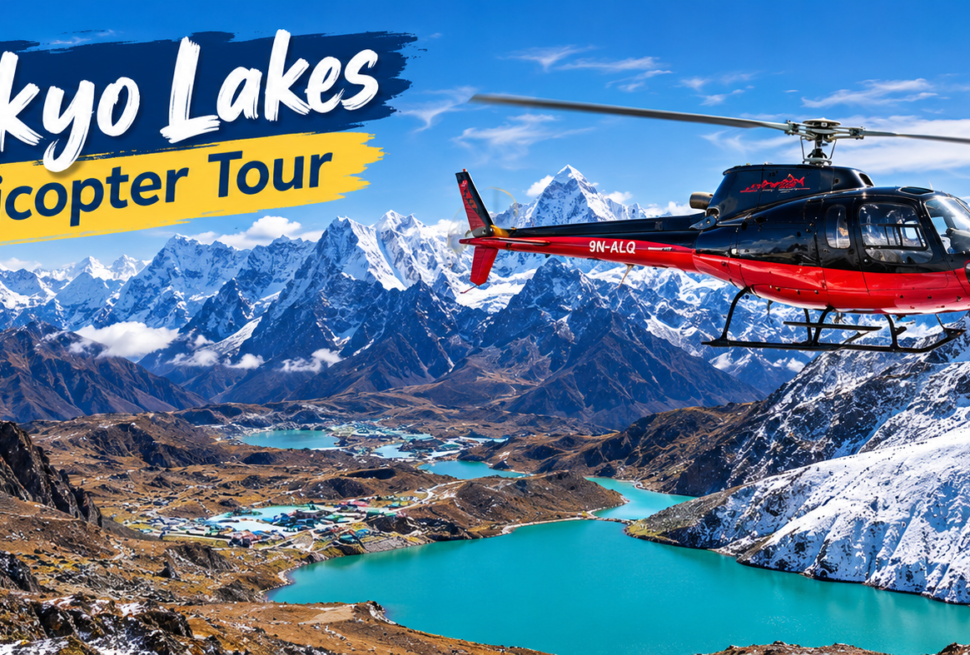
For travellers who want to experience the maximum extent of Khumbu helicopter exploration in a single morning, our EBC with Gokyo Heli Tour combines the Kala Patthar landing with an extended flight over the Gokyo Valley, the Ngozumpa Glacier, and the turquoise Gokyo Lakes at 4,700 to 5,000 metres. This extended tour adds significant visual content to the morning: the Gokyo Valley from the air shows a completely different face of the Khumbu, broader, more expansive, with the immense pale grey of the Ngozumpa Glacier visible in its full length. The combination of Kala Patthar’s dramatic close range Everest encounter and the Gokyo Valley’s sweeping western panorama creates a morning of extraordinary scope that covers more Khumbu geography than most trekkers see on a 16-day expedition.
Booking the Kala Patthar Landing Tour
Our Everest Base Camp Helicopter Tour with Kala Patthar Landing is available on a group sharing basis (joining other passengers in the aircraft) and as a private charter for exclusive use of the helicopter. The group sharing option offers the best value and is the most popular booking type. The private charter provides maximum flexibility, exclusive aircraft use, and the ability to customise the landing duration and route within operational constraints.
We recommend booking two to four weeks in advance during the peak seasons (April and October) and one to two weeks in advance during the shoulder seasons (March, September, November). Weather rescheduling is complimentary on all Kala Patthar tours, if conditions prevent the landing on your scheduled date, we reschedule to the next viable morning at no additional charge.
Also available: our Everest Group Helicopter Tour at $1,100 per person, and the Honeymoon Package for couples seeking a romantic Khumbu morning. Explore all options to find the experience that best matches your group size, budget, and aspirations for the morning.
Kala Patthar is not a destination that requires explanation once you have been there. It explains itself, completely, immediately, and with the simple authority of the world’s highest mountain visible at close range from 5,545 metres above the sea. No description prepares you fully. But knowing what you are going to see, and being ready for it with warm clothing, a charged camera, and an early morning heart, means you will experience every second of those 20 to 30 minutes on the ridge to their fullest.
The History of Kala Patthar as a Viewpoint
Kala Patthar’s status as a viewpoint is directly connected to the history of Everest mountaineering. When the first reconnaissance expeditions for an Everest ascent were organised in the early 1950s, British climbers led by Eric Shipton and later the successful 1953 expedition team under John Hunt used the ridges of the upper Khumbu to observe and plan their routes on the mountain. Kala Patthar, as one of the highest easily reached ridges on the south side of Everest, naturally became a viewpoint and photography platform for these expeditions, the photographs taken from this ridge in the 1950s were among the first close range images of the Everest South Face ever published in Western media.
After the successful summit of Everest by Edmund Hillary and Tenzing Norgay Sherpa on 29 May 1953, interest in the mountain grew exponentially. The opening of the Khumbu to trekkers in the 1960s (the region was restricted to outsiders before then) brought the first non-climbing visitors to the area, and Kala Patthar gradually became recognised as the premier ground level viewpoint for non mountaineers who wanted to see the mountain that Hillary and Tenzing had climbed. By the 1970s, reaching Kala Patthar was established as the standard trekking objective for visitors who wanted to come as close to Everest as possible without technical climbing.
The Sherpa name Khumbutse translates to “near the summit”, an indication of how this entire ridge area was understood by local communities as being in the zone of proximity to the great mountain. The name Kala Patthar (black rock) is specific to the dark volcanic geology of this particular ridge, distinguishing it from the surrounding glacial and sedimentary landscape. These black volcanic rocks, heated by the morning sun against the background of white glacial snow, create one of the characteristic colour contrasts of the Kala Patthar landscape that photographers find so compelling.
Comparing Kala Patthar to Other Famous Mountain Viewpoints
Placing Kala Patthar in the global context of famous mountain viewpoints helps understand why it holds such a singular position in the world of adventure travel. Here is how it compares to other celebrated high altitude viewpoints around the world.
| Viewpoint | Location | Altitude | Main Target Peak | Access |
|---|---|---|---|---|
| Kala Patthar | Nepal, Khumbu | 5,545m | Everest (8,849m) | Trek (12+ days) or Helicopter (1 morning) |
| Poon Hill | Nepal, Annapurna | 3,210m | Annapurna I (8,091m) | 3-4 day trek |
| Tiger Hill | India, West Bengal | 2,590m | Kangchenjunga (8,586m) | Jeep from Darjeeling |
| Everest Base Camp | Nepal, Khumbu | 5,364m | Everest (8,849m) | Trek (12+ days) or Helicopter |
| Riffelhorn | Switzerland | 2,927m | Matterhorn (4,478m) | Cogwheel train to Riffelberg |
| Renjo La Pass | Nepal, Khumbu | 5,360m | Everest from the west | Trek (10+ days) |
| Gokyo Ri | Nepal, Khumbu | 5,357m | Everest and Cho Oyu | Trek (10+ days) |
| Thorong La Pass | Nepal, Annapurna | 5,416m | Annapurna massif | Trek (12-16 days Annapurna Circuit) |
What emerges from this comparison is that Kala Patthar stands out in two specific ways: it is the highest of the commonly reached non-technical viewpoints specifically for Everest, and it provides a closer and more direct view of the Everest South Face than any other accessible viewpoint. Tiger Hill offers Kangchenjunga but from 2,590 metres via road access, there is no comparable altitude drama. Poon Hill is dramatic for the Annapurna sunrise but at 3,210 metres is comparatively low and the target peaks are more distant. Among the Khumbu viewpoints specifically for Everest, Gokyo Ri, Renjo La, Everest Base Camp, Gorak Shep, and Kala Patthar, Kala Patthar provides the closest and highest of the southern views of the Everest summit and upper South Face.
What the Khumbu Icefall Looks Like from Kala Patthar
One of the features that makes the Kala Patthar view uniquely compelling is the direct visibility of the Khumbu Icefall, the broken, chaotic mass of ice blocks, seracs, and crevasses that fills the lower entrance to the Khumbu Cwm between 5,350 and 6,000 metres. The Icefall is the most dangerous section of the South Col route on Everest: climbers must cross it on every rotation between Base Camp and the higher camps, navigating through a constantly moving mass of ice where seracs collapse without warning and crevasses can open overnight.
From ground level at Base Camp or Gorak Shep, the Icefall is seen from the side or in profile, which makes its scale comprehensible but limits the view of its full extent. From Kala Patthar, at the correct altitude and slightly to the west of the direct Icefall line, the complete Khumbu Icefall is visible in three-quarter perspective, you can see both its width and its full vertical extent, from the lower lip where it meets the glacier to the upper entrance to the Cwm. This is the view that expedition photographers most prize: the complete Icefall with the Everest-Lhotse-Nuptse wall behind it, all visible in a single frame.
During the spring climbing season (March to May), the Icefall also shows the route established by the Icefall Doctors: the ladders, fixed ropes, and marked trail through the ice that climbers use on their rotation cycles. These are tiny details at the distance from Kala Patthar, but with binoculars or a telephoto lens they are visible, the physical evidence of human presence in one of the world’s most dangerous environments.
Five Reasons Kala Patthar by Helicopter Is Specifically Worth Experiencing
1. The highest routine commercial helicopter landing in Nepal. Our Kala Patthar landing at 5,545 metres is one of the highest altitude helicopter landings routinely performed for commercial tourism in the world. The combination of extreme altitude and the technical skill required makes this a genuinely exceptional feat of aviation that you are directly part of.
2. Direct face to face with the Everest South Face. Kala Patthar provides the clearest, most unobstructed close range view of the Everest South Face available to non mountaineers. Other viewpoints either require more distance, are partially obstructed, or require technical climbing to reach at comparable proximity. Kala Patthar by helicopter gets you to the best Everest viewpoint with no technical requirements.
3. You stand where the greatest mountaineers have stood. Kala Patthar has been a viewpoint and photography platform for virtually every significant Everest expedition since the 1950s. Standing on that ridge connects you physically to the history of Himalayan mountaineering in a way that few other accessible points do. The names associated with this ridge, Hillary, Tenzing, Messner, Habeler, Boukreev, are the names of the greatest mountain climbers in history.
4. The complete Khumbu panorama in a single gaze. No other accessible viewpoint provides the complete Khumbu panorama, Everest, Lhotse, Nuptse, Changtse, Pumori, Cho Oyu, Ama Dablam, the Khumbu Glacier, and the Khumbu Icefall, all visible simultaneously in a single 180-degree sweep. The spatial fullness of the Kala Patthar view is unmatched anywhere in the Khumbu region.
5. The helicopter approach is itself an extraordinary experience. The final approach to the Kala Patthar landing, flying up the Khumbu Glacier at low altitude before the sudden rise to the ridge, is one of the most dramatic helicopter approaches in commercial aviation. Passengers who have flown in aircraft all their lives describe it as unlike anything they have experienced. The mountain aviation element of the Kala Patthar landing is part of the experience, not just the transport to it.
Book your Kala Patthar helicopter landing tour today. Also explore our standard EBC Helicopter Tour, our EBC with Gokyo Heli Tour, and our group tour at $1,100 per person. The ridge is waiting.
The Sherpa Perspective on Kala Patthar
To understand Kala Patthar fully, it helps to understand how the local Sherpa community relates to the ridge and to the mountains that surround it. For the Sherpa people of the Khumbu, Sagarmatha (as Everest is known in Nepal) is not primarily a sporting challenge or a tourist attraction, it is a sacred mountain, the “Goddess Mother of the World” (Chomolungma in Tibetan), and the entire Khumbu region is considered sacred territory that demands spiritual respect from those who enter it.
Kala Patthar itself holds significance in this context as a ridge that comes closer to Sagarmatha than any other accessible point without requiring technical climbing skills. The prayer flags you see at the landing area, stretched between stone cairns, fading in the high altitude wind, are not purely decorative. They are manifestations of the Sherpa understanding that this landscape is spiritually alive, that the mountains are deities, and that the prayers printed on the flags are carried on the wind to the sky beings that inhabit the peaks.
Many helicopter tour passengers describe an unexpected spiritual dimension to their time on the ridge that surprised them, a sense of presence or significance that goes beyond the merely visual. This experience is not necessarily religious in a formal sense, but it reflects something about the cumulative sacred associations of this place: the decades of Sherpa prayer, the presence of some of the world’s greatest mountains, and the profound sense of being at the edge of human habitation looking into a world that belongs to the mountain gods. The prayer flags moving in the wind at Kala Patthar as you stand on the black volcanic rock are an invitation to understand the Himalaya as the Sherpa people do, as something much more than scenery.
Altitude Sickness at Kala Patthar: Complete Facts
We want to be completely transparent about what altitude feels like at 5,545 metres for helicopter tour passengers who arrive without trekking acclimatisation. This section gives you honest, medically grounded information so you can prepare appropriately and manage your expectations.
At 5,545 metres, healthy adults who have been flown rapidly from Kathmandu (1,350m) will experience what physiologists call “acute altitude exposure.” The body’s acclimatisation systems have had no time to activate, no increase in red blood cell production, no adjustment of breathing regulation, no enhancement of capillary density in the tissues. What happens instead is an immediate response to reduced oxygen: the breathing rate increases, the heart rate rises, and many people experience a mild sensation similar to being slightly dizzy or light-headed. This is completely normal and expected.
Clinical altitude sickness (Acute Mountain Sickness / AMS) can occur in some individuals at this altitude even with short exposure, manifesting as headache, nausea, or pronounced dizziness. The probability of developing symptomatic AMS in a 20 to 30-minute ground stop at 5,545 metres is significantly lower than for trekkers spending a night at the same altitude (who have higher exposure time and are more likely to accumulate fluid in tissues). However, some individuals are more altitude-sensitive than others, and the helicopter tour crew monitors all passengers for signs of distress throughout the ground stop.
Practical steps to minimise altitude discomfort at Kala Patthar: stay well hydrated in the days before your tour (dehydration worsens altitude response), avoid alcohol for 24 hours before the flight, move slowly and deliberately on the ridge rather than rushing, breathe deeply and steadily, and accept supplemental oxygen promptly if the crew offers it or if you feel pronounced symptoms. Most passengers complete the full ground stop without needing oxygen and describe the altitude sensation as interesting rather than distressing. A small percentage require oxygen to manage symptoms comfortably, and an even smaller number need to return to the helicopter earlier than planned. In all cases, the crew make sures a safe and managed experience.
Dawn vs Mid-Morning at Kala Patthar: The Light Difference
Trekkers who camp near Kala Patthar typically make the summit hike in the pre dawn darkness to arrive at the ridge exactly at sunrise, the famous Kala Patthar sunrise is one of the celebrated moments of the EBC trekking experience, as the first light touches the Everest summit and runs down the South Face in a cascade of colour. The helicopter tour, departing from Kathmandu before dawn and reaching the Khumbu by 7:00am to 8:00am, typically lands at Kala Patthar after full sunrise, not at the exact dawn moment that trekkers experience from sleeping nearby, but in the early morning light that still has the quality of low-angle illumination and warm tones.
The difference between the trekker’s dawn experience and the helicopter tour’s early morning experience is real but not as significant as it might initially seem. The dramatic colour of the very first rays on the summit, the famous “alpenglow” that turns the snow to gold and then to pink before settling to white, lasts only a few minutes and requires being on the ridge at exactly the right moment. The early morning light available during the helicopter ground stop, while post-dawn, still has excellent directional quality, long shadows, and warm colouring that produces outstanding photography and a genuinely dramatic visual experience. The absolute best light on Everest from Kala Patthar is the pre dawn trekker experience, but the helicopter tour’s early morning light is a close second and delivers results that the vast majority of passengers find more than satisfying.