If you are on the EBC trek and you want to fly home rather than walk back down, you need to choose a helicopter pickup point. Three options are used regularly by trekkers arranging their exit from the Khumbu: Gorak Shep (5,160m), Dingboche (4,410m), and Namche Bazaar (3,440m). Each has different logistics, different costs, different weather reliability, and a different relationship to where you are in the trek when you book it.
Here is each option in detail so you can choose the right pickup point for your specific situation, whether you are planning the helicopter exit before you leave Kathmandu or figuring it out from a teahouse in Dingboche with patchy WiFi and a flight home in four days.
Gorak Shep (5,160m): The Peak Pickup
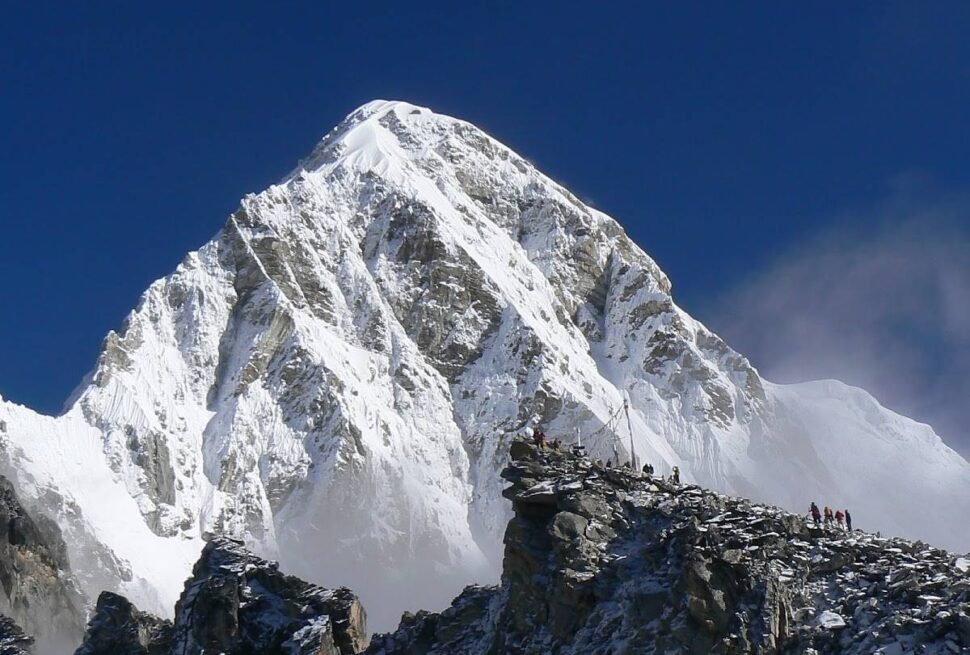
Gorak Shep is the last settlement before Everest Base Camp on the classic trekking route. It sits at 5,160m on the edge of the old glacial lake bed, surrounded by rock and ice with no vegetation. It has two or three teahouses that serve as accommodation for trekkers spending the final night before the base camp visit and Kala Patthar summit. It is not a comfortable place to spend more time than necessary. Altitude at 5,160m makes everything harder: sleep is difficult, appetite is reduced, and the mental fog of extended high altitude exposure is pronounced for most people after several days above 5,000m.
Flying out from Gorak Shep means you do your base camp visit and Kala Patthar summit, sleep one night at Gorak Shep, and board the helicopter the following morning. This is the most efficient format and the one that keeps the departure as close as possible to the emotional peak of the trek. You have just stood on Kala Patthar at sunrise. The following morning you fly home from the same place.
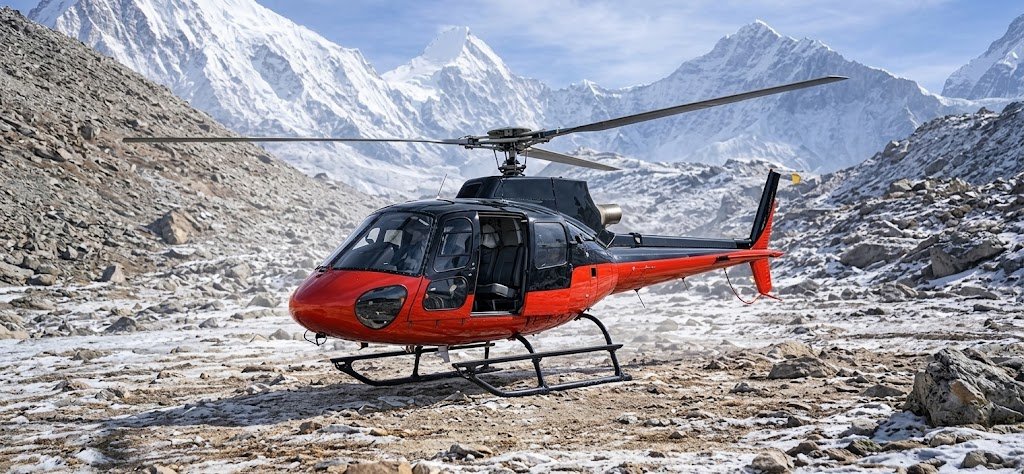
The practical challenges of Gorak Shep pickup are altitude related. At 5,160m, the Airbus H125 is operating near its performance ceiling and is highly sensitive to temperature and air density. Cold temperatures actually help (denser cold air improves helicopter performance at altitude), so early morning pickups in winter are technically reliable. In mid morning during warm spring days, air density drops enough that operators may not be able to land at Gorak Shep at all. This means Gorak Shep pickups are almost always scheduled for dawn to 8am, which is fine in operational terms (the early window is best anyway) but means your final Kala Patthar summit needs to happen the evening before or very early on the morning of pickup before the helicopter arrives.
Cost for a Gorak Shep to Kathmandu shared helicopter: $600 to $800 per person. Private charter: $2,000 to $2,800 for the aircraft. Weather cancellation risk: medium (higher than Namche, lower than mid route locations with less reliable helipads).
Dingboche (4,410m): The Comfortable Middle Ground
Dingboche is the acclimatisation village on the route to base camp, where most itineraries include a rest day at around 4,410m. It is considerably more comfortable than Gorak Shep: lower altitude means better sleep, better appetite, and clearer thinking. The teahouses in Dingboche are among the better accommodation options in the upper Khumbu, with some lodges having solar heated rooms and better food options than the extreme altitude settlements.
Flying out from Dingboche involves descending from Gorak Shep after your base camp and Kala Patthar visits, spending a night at Dingboche at the lower altitude, and flying the following morning. The descent from Gorak Shep to Dingboche takes four to five hours and drops you 750m in altitude. Most trekkers find this descent physiologically restorative. A night at Dingboche after several nights above 5,000m is dramatically better quality sleep and the body’s response to the modest altitude reduction is noticeable.
The Dingboche helipad is a reliable pickup point. At 4,410m, the helicopter’s performance margin is better than at Gorak Shep, which means the morning operating window is slightly wider and weather delays are less common. The shared helicopter pickup from Dingboche to Kathmandu costs $500 to $700 per person, which is slightly less than Gorak Shep due to the lower altitude and shorter effective distance.
The case for Dingboche over Gorak Shep: you sleep better, the helicopter has a better performance margin, the weather window is more reliable, and the cost is slightly lower. The trade is spending an extra half day descending from Gorak Shep to Dingboche rather than flying out directly from the top. For most trekkers, the quality of rest gained in Dingboche more than justifies this. Arriving at Kathmandu airport after a night of actual sleep at 4,410m is a very different experience from arriving after a night at 5,160m where almost no one sleeps properly.
Namche Bazaar (3,440m): Reliable, Social, Lower Cost
Namche Bazaar is the main hub of the Khumbu Valley and the most developed settlement on the EBC route. At 3,440m, it has the widest range of accommodation and food in the upper Khumbu, reliable WiFi, a Himalayan Rescue Association clinic, bakeries, gear shops, and the general infrastructure of a place that serves both trekkers and the large permanent Sherpa community. A night in Namche before flying home is the most comfortable pre departure experience available on the upper route.
Flying out from Namche means descending from Gorak Shep or Dingboche all the way to Namche, which takes one to two additional walking days. The full descent from Gorak Shep to Namche covers about 25 kilometres and drops nearly 2,000m in altitude. For trekkers who have the time and enjoy the walking (and who do not find the EBC descent anticlimactic), this is a reasonable choice. For most people arranging a helicopter exit, the purpose is to avoid exactly this descent, which makes Namche seem illogically far given you need to walk most of the way back anyway.
Where Namche makes sense as a helicopter pickup: when you are cutting a standard trek short due to illness, injury, family emergency, or schedule changes. If you develop altitude sickness above Namche and descend for safety, Namche is where you would stabilise and arrange your helicopter exit. If your schedule shifts unexpectedly and you need to exit the trek faster than planned, Namche has the most reliable helicopter availability and the easiest booking logistics. The HIMC (Himalayan International Mountain Centre) teahouse and several others in Namche regularly assist trekkers in arranging emergency or unplanned helicopter pickups.
Cost for Namche to Kathmandu shared helicopter: $400 to $600 per person. This is the lowest cost helicopter exit option from the Khumbu.
Comparison Table: Pickup Points
| Factor | Gorak Shep (5,160m) | Dingboche (4,410m) | Namche Bazaar (3,440m) |
|---|---|---|---|
| Altitude | 5,160m | 4,410m | 3,440m |
| Helicopter performance risk | High (near ceiling) | Medium | Low |
| Weather window reliability | Good, early morning only | Good, broader window | Excellent |
| Cost (shared, to KTM) | $600 to $800 | $500 to $700 | $400 to $600 |
| Accommodation quality | Basic (extreme altitude) | Good | Excellent |
| Extra walking needed | None after Gorak Shep | Half day descent | 1 to 2 day descent |
| Best for | Maximum efficiency, post Kala Patthar | Best balance of comfort and convenience | Emergency exit, schedule change, budget |
How to Book the Helicopter Pickup
Booking the helicopter pickup from the Khumbu can be done in three ways: before leaving Kathmandu, from the mountain during the trek, or through your guide. Each approach has trade offs.
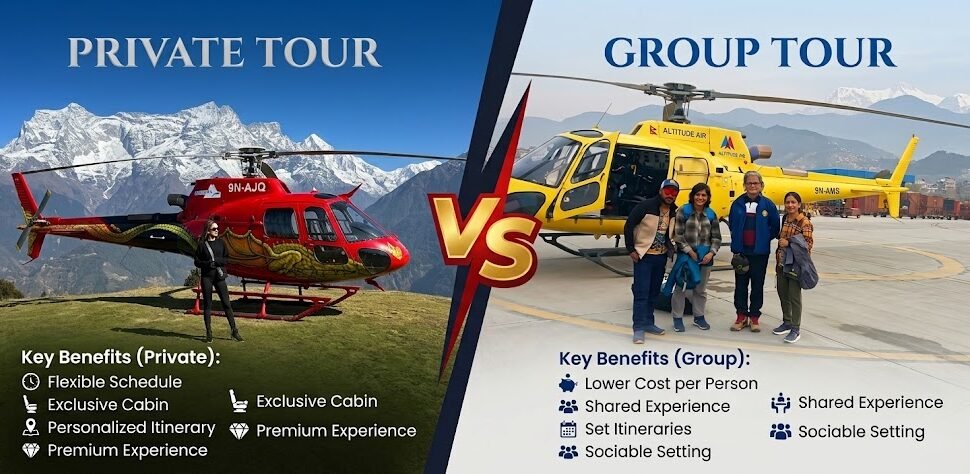
Booking before Kathmandu is the most reliable approach but requires committing to a pickup point and approximate date before you know exactly how your trek will go. Most trekkers find this workable because the EBC itinerary is fairly predictable once you start. Book with a flexible operator who allows you to adjust the pickup date by one to two days at no cost if your trek runs ahead or behind schedule. Confirm the date via WhatsApp or phone once you are in the upper Khumbu and have a clear read on your timing.
Booking from the mountain. Your guide can make calls from Namche or Dingboche in peak season when Nepali mobile networks are available. Many operators have agents or contacts in both Namche and Dingboche who can assist with booking. The disadvantage is that shared seat availability in peak season (April, October) fills fast and waiting until you are on the mountain to book may mean limited options on your preferred date.
Through your trekking agency. If you booked a guided trek through a Kathmandu agency, they often have relationships with helicopter operators and can arrange the pickup as part of the package. This is convenient but typically carries a markup of 15 to 25 percent over direct booking rates. It is worth asking what the agency charges versus what a direct booking from the same helicopter operator would cost.
Weather and Rescheduling: What Happens If the Helicopter Cannot Land
Weather cancellations for Khumbu helicopter pickups are not uncommon, particularly in the transitional weeks at the start and end of the monsoon (late May to June and late September). In peak season the weather is more stable but not immune to bad days.
If the helicopter cannot land on your scheduled pickup day, reputable operators reschedule for the following morning at no cost. In practice this means spending an extra night at your pickup point, which at Dingboche or Namche is manageable. At Gorak Shep, an extra night due to weather is more challenging physiologically, another reason why Dingboche is often the better pickup choice.
If you have a firm international flight out of Kathmandu that you cannot miss, build at least two days of buffer between your planned helicopter pickup date and your departure flight. One weather delay is common. Two consecutive cancelled days are rare but happen. Do not arrange an EBC helicopter exit with only one day of buffer before a non refundable international departure. The mountain is indifferent to your travel plans.
What the Flight Back Feels Like
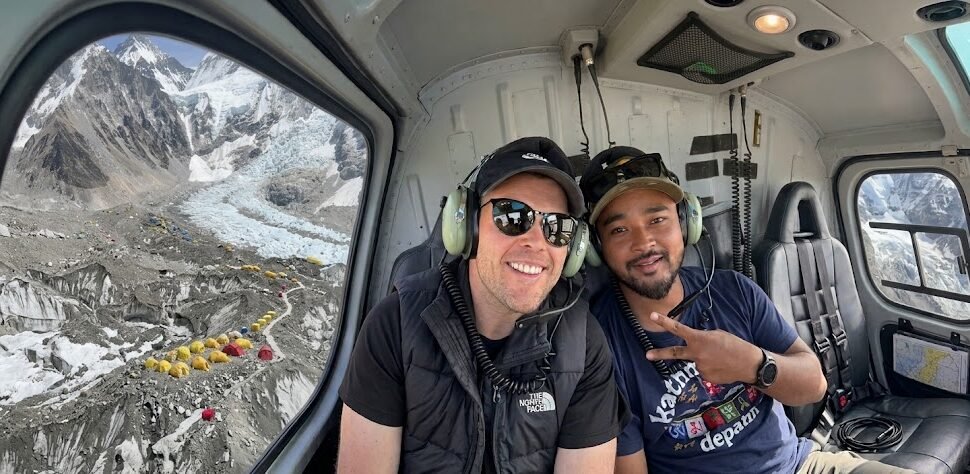
The helicopter flight from the Khumbu back to Kathmandu is not just transport. It is, for most trekkers, the most extraordinary flight of their life seen from the perspective of what is below them.
You have spent eight to twelve days walking the route below. You know what is down there. You know the teahouses where you slept, the ridges where you stopped for photographs, the river crossings and the suspension bridges and the specific places where the mountain came into view for the first time. Seeing all of that compressed into fifty minutes of flight gives you a spatial understanding of the Khumbu that the ground level experience cannot provide. The valley you walked from Lukla to base camp, which felt vast and sequential on foot, reveals itself from above as a coherent geography with a scale you can now see whole.
Many trekkers describe this flight as the moment the trek fully landed for them. Not at base camp. Not at Kala Patthar. But in the helicopter on the way home, looking down at the full length of what they walked, watching it pass below in an hour that took them ten days in the other direction.
Book Your Khumbu Helicopter Pickup
If you are planning or already on an EBC trek and want to arrange a helicopter exit from Gorak Shep, Dingboche, or Namche Bazaar, contact Mt Everest Helicopter Tour to discuss your specific dates, group size, and preferred pickup point. We operate helicopter services throughout the Khumbu and can coordinate your pickup flexibly around your trekking schedule.
For travellers who have not yet trekked and want to experience the Khumbu by air rather than on foot, our Kala Patthar Landing Tour delivers the Khumbu experience from Kathmandu in a single morning. The EBC and Gokyo combined tour extends the route into the Gokyo Valley for the widest aerial perspective on the upper Khumbu region.