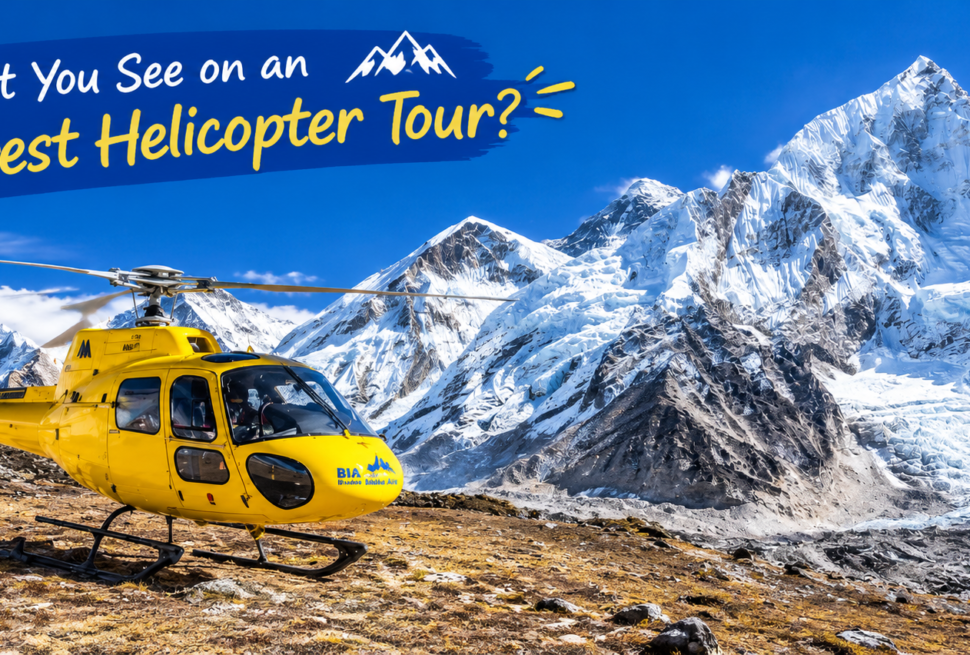
Somewhere over the Dudh Kosi valley, with Ama Dablam sliding past the window and the Khumbu Icefall coming into view ahead, most passengers on an Everest helicopter tour are not thinking about carbon budgets or trail erosion. They are thinking about the mountain. But it is a fair question, and an increasingly common one from travelers who care about where their money goes and what their visit leaves behind: is flying to Everest actually a responsible way to see it, or is it just a shortcut that skips past the people and places that make the Khumbu what it is?
The honest answer is more nuanced than either a marketing brochure or a critic’s op ed would suggest. A helicopter flight is not free of impact. Neither is a trek, and neither is staying home. Every form of travel to a place as remote and fragile as Sagarmatha National Park carries some environmental and social cost, and the real question worth asking is not whether an activity has zero impact, because almost nothing at 5,000 meters does, but whether it is conducted thoughtfully, whether it follows the rules that exist to protect the region, and whether it puts money into the hands of the Sherpa families and businesses who actually live there.
This article tries to answer that question honestly, using real information about Sagarmatha National Park’s status as a UNESCO World Heritage Site, the noise and wildlife debate that has played out in the Khumbu over the last few years, the genuine economic tradeoffs between helicopter tourism and trekking tourism, and the practical steps a traveler can take to make either kind of trip more responsible. We run helicopter tours in this region for a living, so we are not a neutral party. But we would rather give you the full picture, tradeoffs included, than a one sided pitch.
What “Sustainable Tourism” Actually Means in the Khumbu
Sustainable tourism in a place like the Everest region is usually judged against three overlapping questions. Does the activity damage the natural environment, the glaciers, forests, rivers, and wildlife that make Sagarmatha National Park worth protecting in the first place? Does it disturb the people who live there, either through noise and crowding or by pulling economic benefit away from local communities and toward outside operators? And does it comply with the rules that Nepal’s government, the park authorities, and the local rural municipality have put in place specifically to manage tourism in a fragile, high altitude landscape?
No form of tourism in the Khumbu passes all three tests perfectly. Trekking tourism, for all its reputation as the low impact, authentic way to see Everest, brings its own footprint: thousands of trekkers a year burning firewood and kerosene in teahouses, generating solid waste that has to be carried out by porters or yaks, and requiring their own flights in and out of Lukla. Helicopter tourism, for its part, burns aviation fuel and creates noise that can be heard for kilometers in valleys that are otherwise nearly silent. Being honest about both sides of that comparison, rather than pretending one form of travel is pure and the other is not, is the starting point for any real conversation about responsible tourism here.
Comparing the Footprint: A Short Flight Versus a Multiple Day Trek
It helps to look at what each experience actually involves on the ground, because the environmental and social footprint of a trip is not just about the flight itself. It is about everything the trip requires to happen.
What an Everest Helicopter Tour Involves
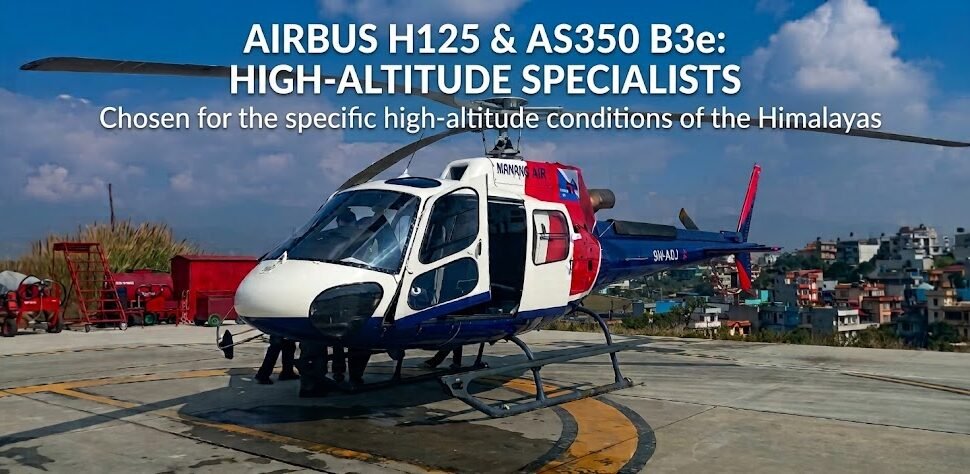
Our flagship Everest Base Camp helicopter tour flies an Airbus H125, a single engine helicopter with strong high altitude performance that is also the aircraft of choice for mountain rescue work in Nepal. A group of passengers leaves their Kathmandu hotel, flies over the Khumbu Valley past Lukla, passes above Everest Base Camp and the Khumbu Glacier, lands for breakfast at Hotel Everest View in Syangboche, and returns to Kathmandu, all in about four to five hours door to door. One aircraft, one flight crew, one short visit to the ground at altitude, and everyone is back in Kathmandu the same day, with no teahouse nights, no multiple day supply chain of food and fuel being carried up the valley, and no cumulative trail impact from repeated footsteps and pack animal traffic.
What a Multiple Day Trek Involves
Reaching Everest Base Camp on foot, by contrast, is typically a twelve to fourteen day round trip, and it is worth being clear that trekkers are not avoiding flights either. Nearly every trekker flies into Lukla’s Tenzing Hillary Airport, one of the more demanding short runway airstrips in the world, on a fixed wing plane, then flies back out again at the end of the trek. Between those two flights sits a long chain of resource use: ten or more nights in teahouses that are heated and lit largely by firewood, kerosene, or increasingly solar and hydropower where available, porters and yaks carrying food, fuel, and gear up and down the valley on repeated trips, and toilets, kitchens, and trail infrastructure supporting a much larger daily flow of people through villages like Namche Bazaar, Tengboche, and Dingboche. None of this is bad. It is simply a very different kind of footprint, spread over two weeks and dozens of people and pack animals rather than concentrated into a few hours and one aircraft.
Our complete comparison guide to the helicopter tour versus trekking goes into more detail on the practical differences between the two, including cost, physical demands, and what you actually see, but the sustainability picture sits alongside those factors rather than replacing them.
| Factor | Everest Base Camp helicopter tour | Full trek to Everest Base Camp |
|---|---|---|
| Typical duration | Four to five hours, same day | Twelve to fourteen days |
| Flights required | One helicopter flight from Kathmandu and back | Two fixed wing flights to and from Lukla |
| Lodging nights in the region | None, or one breakfast stop on the ground | Ten or more teahouse nights |
| Firewood or kerosene use | Minimal, one meal stop | Significant, heating and cooking over many nights |
| Trail and pack animal traffic generated | None | Repeated porter and yak trips carrying supplies |
| Solid waste generated per visitor | Very low, single short visit | Higher, spread across many days of meals and packaging |
| Local jobs directly involved per trip | Pilot, ground staff, Hotel Everest View team | Guide, porters, multiple teahouse owners and staff |
| Noise footprint | Concentrated, brief, along a managed flight path | Minimal from trekkers, but includes rescue and supply helicopter traffic |
It is also worth mentioning the waste and plastic pollution research that has come out of the Everest region in recent years, since it is a reminder that impact is not always about carbon. Researchers studying snow and stream samples on Mount Everest have found microplastic contamination even near the summit, most of it traced back to gear, packaging, and clothing carried up by the huge volume of climbers, trekkers, and support staff who move through the mountain every season, rather than to any single activity. That kind of finding is a useful check on the instinct to treat helicopter emissions as the only environmental question worth asking. Waste management, plastic use, and what gets carried out rather than left behind matter just as much, and they are shaped far more by trekking and expedition volume than by the relatively small number of helicopter passengers who touch the ground for a single breakfast stop.
Neither column in that table is automatically the more responsible choice. A helicopter tour concentrates its impact into a short, controlled window and spreads relatively little foot traffic across the trail network, but it does burn aviation fuel and adds to helicopter noise in the valley. A trek spreads its impact over many days and involves far more people on the ground earning wages along the way, but it also multiplies the cumulative demand for firewood, water, and waste disposal across the whole route. Plenty of travelers choose to combine the two, trekking in and flying out, which is exactly what our hybrid trek with helicopter return guide walks through for people who want the trail experience without committing two full weeks to the return journey.
Noise: The Tradeoff Nobody Should Pretend Away
If there is one issue in this whole conversation that deserves the most honesty, it is noise. A helicopter is loud. There is no way around that, and pretending otherwise would not be fair to trekkers who have walked for days to find quiet, or to the wildlife and livestock that share the Khumbu with them.
Snow leopards, Himalayan tahr, musk deer, and the domestic yaks that Sherpa families depend on for transport and herding can all be affected by repeated low altitude aircraft noise, particularly during feeding, mating, or calving periods. Trekkers who have planned a trip specifically for the stillness of the high Himalaya have every right to be frustrated by frequent overflights, and lodge owners in villages along the main trekking route have raised real concerns about the number of flights passing over on a busy day. This is not a fringe complaint. It has been serious enough that local authorities in the Khumbu region introduced significant restrictions on commercial helicopter flights beyond Lukla starting in January 2025, specifically citing noise, disruption to the fragile alpine ecosystem, and a desire to protect the trekking culture that is central to the region’s identity and economy.
How Flight Paths and Timing Are Used to Reduce Disturbance
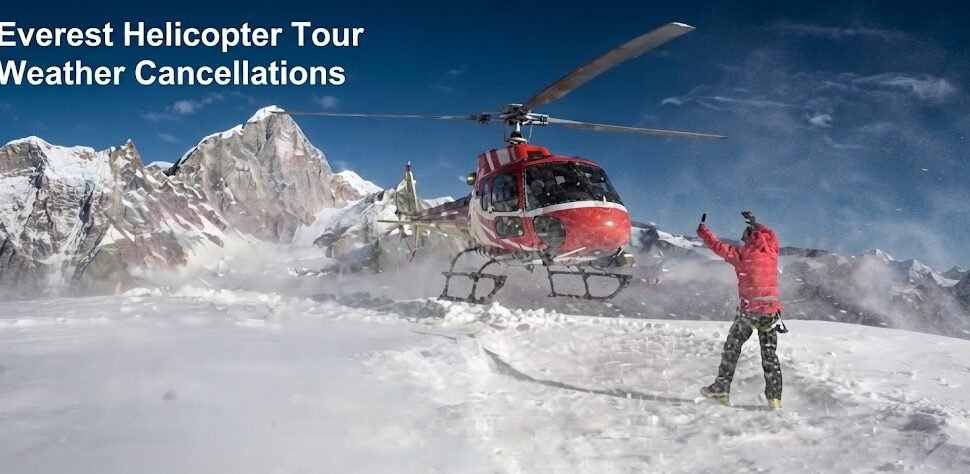
The restrictions that followed were significant enough that commercial sightseeing flights beyond Lukla were suspended entirely for several weeks in early 2025 before being reopened under a more structured framework, and high altitude shared landings at Kala Patthar were separately suspended for nearly three years following a fatal crash near Lobuche in 2023 before shared landings there resumed in 2026 under tighter weather minimums and a two passenger shuttle system rather than full loads. None of this happened because regulators decided helicopter tourism should not exist. It happened because unmanaged, unrestricted flying was creating real problems, and the response has been to manage it rather than eliminate it.
In practice, that management looks like flying at altitude along established corridors rather than weaving low through side valleys, keeping ground time at sensitive landing points short, coordinating with park authorities on which zones require special permission, and concentrating flights within daytime operating windows rather than running dawn to dusk. Responsible operators plan routes that stay high enough, and follow corridors consistent enough, that the noise footprint on any single village or campsite is a matter of a brief pass rather than constant background disturbance. It also means combining passengers into fewer, fuller flights where possible rather than running many partially empty ones, which is part of why shared group departures exist alongside private charters.
Why the Rules Changed and What They Look Like Today
It is worth being upfront about this history rather than glossing over it, because it shows the debate is real and ongoing, not settled. The Khumbu Pasang Lhamu Rural Municipality’s move to restrict commercial flights beyond Lukla in early 2025 was a direct response to complaints from Sherpa communities and trekking dependent businesses about noise and about tourism revenue being diverted away from villages along the trail. Commercial operations above 4,000 meters resumed in February 2025 under a framework that limits landings to designated zones, requires special permission for restricted areas including the airspace directly above Everest Base Camp and other locations inside the national park, and keeps flights under ongoing monitoring for their ecological impact. Kala Patthar reopened to shared helicopter landings in 2026 with tighter weather minimums, shorter ground time limits of around ten to fifteen minutes, and a shuttle style boarding process instead of full capacity loads.
The result is a system that is genuinely more restrictive than it was a few years ago, and that is a reasonable outcome. Flight paths, altitudes, and permitted landing zones are set by the park and civil aviation authorities rather than left to individual operators to decide, and a responsible company works inside that framework rather than around it. If you are researching the aircraft and safety side of how this actually works in practice, including how pilots are trained and how aircraft are maintained to the Civil Aviation Authority of Nepal’s standards, our article on safety, pilots, and aircraft maintenance standards covers that in more depth.
Economic Impact: Who Actually Benefits
This is probably the sharpest edge of the whole debate, and it deserves a straight answer rather than a marketing one. Critics of helicopter tourism have a legitimate point: a passenger who flies directly to Everest Base Camp and back in an afternoon does not spend two weeks buying meals, paying for lodging, and tipping guides and porters in villages like Namche Bazaar, Monjo, Phakding, and Tengboche the way a trekker does. Reporting on the Khumbu helicopter debate has noted that a meaningful share of the revenue from a helicopter charter goes toward aircraft financing, insurance, and operating costs rather than staying in the local economy, and that porters and small trekking lodges along the main route have genuinely lost income as more visitors choose to fly over rather than walk through.
That tradeoff is real, and we are not going to pretend it isn’t. What is also true, though, is that helicopter tourism is not economically weightless for the Khumbu, and the benefit it does provide is concentrated in specific places rather than spread thin along the whole trail. The clearest example is Hotel Everest View in Syangboche, a Sherpa built and Sherpa connected property at 3,780 meters that holds the Guinness World Record for the highest hotel with a direct view of Everest. Every helicopter tour that stops there for breakfast puts money directly into a business, its staff, and its supply chain, in a location that most trekkers only pass near rather than stay at. Our article on breakfast at Hotel Everest View by helicopter describes that stop in more detail, and it is a genuine, direct economic connection between helicopter tourism and a local Sherpa business, not an incidental one.
Helicopter tourism also employs Nepali pilots, engineers, ground handlers, and booking staff based in Kathmandu, and it generates park entry fees, conservation fees, and landing charges that flow through Sagarmatha National Park’s revenue system, a meaningful share of which is directed back into local community programs under Nepal’s national park management framework. It is also worth noting that helicopter tourism and trekking tourism are not strictly separate economies. A significant number of travelers who fly to Everest Base Camp also spend money in Kathmandu on hotels, gear, guides, and tours before and after their flight, and a growing number choose the hybrid approach of trekking partway in and flying back, which keeps trail based spending in the local economy while reducing the physical toll of a full round trip. For travelers weighing the cost against the benefit, both financial and otherwise, our honest look at whether the Everest helicopter tour is worth the money addresses this directly, including who the trip does and does not make sense for.
The fair conclusion here is not that helicopter tourism replaces the economic role of trekking, because it does not, and should not be marketed as if it does. It is that helicopter tourism creates a different, smaller, but real economic footprint, concentrated at specific points like Syangboche and in the aviation sector, and that travelers who care about spreading benefit more widely can combine a helicopter tour with time and spending in Kathmandu, or choose a hybrid itinerary that keeps a trekking component in the trip.
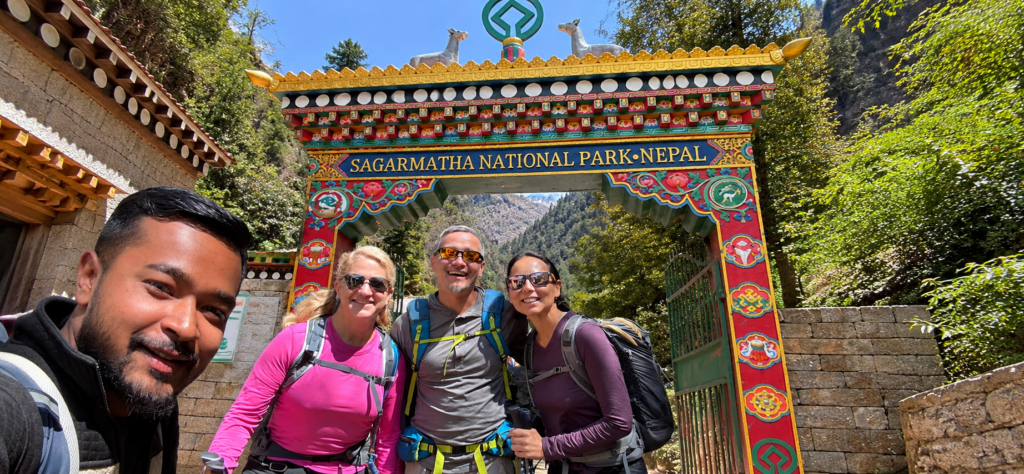
Sagarmatha National Park: The Rules Behind the Flights
Sagarmatha National Park was established in 1976 and inscribed as a UNESCO World Heritage Site in 1979, recognized for the outstanding natural beauty of its glaciers, deep valleys, and the world’s highest peak alongside seven other summits above 7,000 meters. The park covers roughly 124,400 hectares in the Solu Khumbu district, and while most of that area, close to seventy percent, is barren high altitude terrain above 5,000 meters, it also supports rare wildlife including snow leopards and red pandas, along with forest and grazing land at lower elevations. More than 2,500 Sherpa people live within the park, and their Buddhist traditions of respect for wildlife and the landscape have played a real part in the area’s conservation, long before international tourism arrived.
A buffer zone was added around the core park in 2002 to extend protection to surrounding areas, and Nepal’s park management framework directs a significant share of park revenue, around half according to national park policy, back into community programs in the buffer zone. Since visitor numbers grew from around 3,600 in 1979 to well over 25,000 by 2010, and considerably more since, the park authorities have had to balance genuine economic opportunity against the ecological strain of supporting that many visitors in a high altitude environment with limited capacity for waste disposal and infrastructure.
Much of the day to day work of managing that strain falls to the Sagarmatha Pollution Control Committee, a community based organization founded by local Sherpa residents that has served as the lead body managing waste across the Khumbu since the 1990s. The Sagarmatha Pollution Control Committee runs waste segregation and public awareness programs throughout the region, has held a formal contract with Nepal’s Ministry of Culture, Tourism and Civil Aviation since 1997 to maintain climbing routes through the Khumbu Icefall, and verifies climbing permits and waste management compliance at high altitude camps, including Everest Base Camp itself. It works alongside newer initiatives like Sagarmatha Next and waste transport programs that carry nonbiodegradable waste out of the region for recycling and reuse rather than leaving it in the mountains.
Climate change adds another layer to why these protections matter. Glacial retreat, thinning ice on the Khumbu Glacier, and the growing instability of the Khumbu Icefall have been documented by researchers and by UNESCO’s own periodic reporting on the state of the park, and these changes are already affecting both trekking routes and the safety margins climbers and helicopter operators plan around each season. None of that is caused by tourism directly, but it is a reminder that Sagarmatha National Park is a genuinely fragile system under pressure from multiple directions at once, which is exactly why the rules governing tourism activity inside it, whether on foot or by air, exist and are tightened rather than relaxed over time.
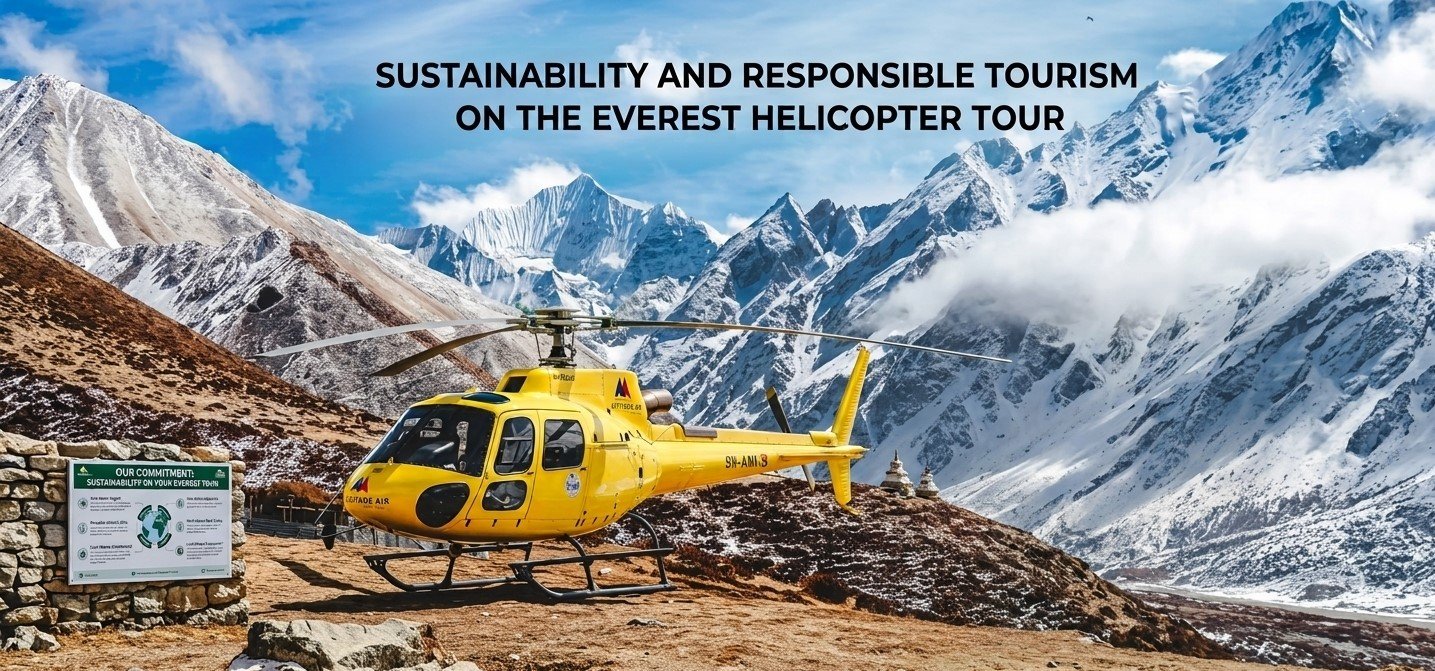
For helicopter operators, this regulatory structure means real, enforceable limits: park entry and landing permissions are required for operations inside Sagarmatha National Park, certain zones including the airspace directly above Everest Base Camp require special clearance, and flight activity is subject to ongoing oversight rather than being left to individual operators to self police. A responsible company treats these rules as the baseline for how it operates, not as an obstacle to work around, and coordinates directly with park authorities, the Civil Aviation Authority of Nepal, and the local rural municipality on routes, permits, and landing zones.
What Responsible Helicopter Operators Are Expected to Do
Given everything above, it is worth being specific about what “responsible” actually looks like in practice for a company running helicopter tours in this region, rather than leaving it as a vague claim.
- Hold and maintain all required permits from the Civil Aviation Authority of Nepal, Sagarmatha National Park, and the relevant local municipality, rather than treating landing and flight permissions as optional.
- Fly established, altitude appropriate corridors rather than low routes through side valleys, to reduce noise exposure over villages, wildlife habitat, and trekking trails.
- Respect current restrictions on landing zones, including limits on operations at sensitive sites like the airspace above Everest Base Camp and the shuttle style procedures now used at Kala Patthar.
- Keep ground time at high altitude stops brief, both for passenger safety given the lack of acclimatization and to limit disturbance at fragile sites.
- Use well maintained, appropriately powered aircraft such as the Airbus H125, which is built for high altitude performance and is also used for mountain rescue work, meaning it is flown and maintained to a standard that has to hold up in the harshest conditions in the range.
- Work with, rather than around, community organizations like the Sagarmatha Pollution Control Committee on waste handling for any ground stops, including the breakfast stop at Hotel Everest View.
- Fill shared flights with full passenger loads where possible rather than running additional partially empty flights, reducing total aircraft movements for the same number of travelers.
- Be transparent with travelers about what the flight does and does not include, what the environmental and community tradeoffs are, and how the trip fits alongside trekking as one option among several rather than a replacement for the whole experience.
None of this eliminates the impact of flying a helicopter into a UNESCO World Heritage Site. It reduces it, and it keeps the activity operating inside a framework designed by people who know the region, rather than outside it. Travelers deciding between a helicopter tour, a trek, or a combination of the two might also find our comparison of the Everest helicopter tour versus a fixed wing mountain flight useful, since a mountain flight from Kathmandu is a lower impact, lower cost option for travelers who want mountain views without a landing at all.
What Travelers Can Do to Make Their Visit More Responsible
Whether you choose a helicopter tour, a trek, or both, there are concrete things you can do as a visitor that make a real difference to the environmental and community impact of your trip.
On the Helicopter Tour
Book with an operator that is transparent about its permits, its aircraft, and its route, and ask questions if that information is not readily available. Choose a shared group departure over a private charter when your schedule allows it, since filling an aircraft to capacity means fewer total flights are needed to move the same number of travelers, which is part of why our shared Everest Base Camp helicopter tour departures exist alongside private charter options. Spend time and money at the ground stop at Hotel Everest View rather than treating it as a photo break, since that is where your visit translates most directly into local income. If you are drawn to the idea of landing at the highest point a tourist can reach in Nepal, consider that the Kala Patthar landing upgrade now operates under tighter safety and environmental protocols than it did before 2023, and booking it through an operator that follows those protocols, rather than one that treats them loosely, matters.
If you can build extra days into your trip, consider a hybrid itinerary that trades part of the flight for time on the trail, spending a few days trekking through Namche Bazaar or Tengboche before or after flying, which spreads more of your spending into the villages along the route. And if reducing your personal carbon footprint matters to you, it is reasonable to treat a short helicopter tour the way you would any other flight, by being mindful of how often you fly overall and, if it matters to you personally, looking into reputable carbon offset programs, while recognizing that offsetting does not erase an impact so much as attempt to balance it elsewhere.
Beyond the Helicopter Tour, in Nepal More Broadly
Choose locally owned teahouses, guides, and porters rather than routing every dollar through a foreign booking platform, and tip fairly for the genuinely hard physical work that guiding and portering in this terrain requires. Carry out what you carry in, and support the Sagarmatha Pollution Control Committee’s waste programs rather than assuming someone else will deal with your trash at 5,000 meters. Buy handicrafts, food, and gear from shops in Kathmandu and in the Khumbu rather than only from big international brands, since that spending stays closer to the people who live in the places you are visiting. Respect monasteries, prayer wheels, and religious sites by following local customs rather than treating them purely as photo backdrops, and take the time to learn a little about Sherpa culture and Buddhist practice in the region rather than passing through it. None of these steps require giving up the trip you want to take. They just make the trip you take a better one for the place you are visiting.
Frequently Asked Questions
Does a helicopter tour to Everest Base Camp harm the environment?
A helicopter flight does have an environmental footprint, primarily from aviation fuel and from noise, and it is honest to acknowledge that rather than deny it. That said, a single four to five hour tour generates far less cumulative demand for firewood, ground infrastructure, and repeated foot and pack animal traffic than a two week trek does, so the two activities have different kinds of impact rather than one being simply worse than the other across the board.
Is trekking to Everest Base Camp more sustainable than flying?
In some ways yes, since trekking spreads economic benefit widely through the villages along the route and does not require the fuel burn of a helicopter. In other ways it carries its own costs, including the firewood and kerosene used at teahouses over many nights, the waste generated by a much larger number of people passing through the same trail system, and the fact that most trekkers also fly, into and out of Lukla, at the start and end of the trip. Neither option is impact free.
Why was helicopter tourism restricted in the Khumbu, and is it still restricted now?
Local authorities introduced significant restrictions on commercial helicopter flights beyond Lukla starting in January 2025, in response to concerns from Sherpa communities and trekking businesses about noise and about tourism revenue shifting away from trail based villages. Operations above 4,000 meters resumed in February 2025 under a more structured framework that limits landings to designated zones and requires special permission for sensitive areas. Shared landings at Kala Patthar were separately suspended for nearly three years after a 2023 crash before reopening in 2026 with tighter weather minimums and shorter ground time. Flights continue today, but under a more regulated system than existed a few years ago.
Does helicopter noise actually affect wildlife in Sagarmatha National Park?
Repeated low altitude aircraft noise can disturb wildlife including snow leopards and their prey species, along with domestic yaks that Sherpa families rely on, particularly during sensitive periods like feeding or calving. This is one of the clearest, most documented concerns raised about helicopter tourism in the region, which is part of why route planning, altitude, and flight timing matter so much for a responsible operator.
Does flying to Everest Base Camp by helicopter take money away from Sherpa communities?
It changes where the money goes rather than eliminating it. A helicopter passenger spends far less time, and therefore far less money, in trail villages like Namche Bazaar and Tengboche than a trekker does, and this has genuinely affected porters and small lodges along the route. At the same time, helicopter tourism supports Sherpa connected businesses like Hotel Everest View directly, along with Nepali pilots, ground crews, and park revenue that funds community programs. A hybrid trip that combines trekking time with a helicopter return spreads the benefit more evenly.
What role does Sagarmatha National Park play in regulating helicopter tours?
As a UNESCO World Heritage Site managed under Nepal’s national park framework, Sagarmatha National Park requires entry and landing permissions for operations within its boundaries, restricts activity in sensitive zones including the airspace above Everest Base Camp, and works alongside the Civil Aviation Authority of Nepal and the local rural municipality to set the rules operators must follow. A share of park revenue is directed back into community programs in the surrounding buffer zone.
Is the Kala Patthar helicopter landing safe and currently allowed?
Yes, shared landings at Kala Patthar resumed in 2026 after a nearly three year suspension that followed a fatal 2023 crash. The current system uses tighter weather minimums, a two passenger shuttle process rather than full aircraft loads, and limits ground time at the summit to around ten to fifteen minutes, all aimed at managing both flight safety and the acclimatization risk of ascending to 5,545 meters without gradual altitude adjustment.
What can I personally do to make my Everest helicopter tour more responsible?
Book with an operator that is open about its permits, aircraft, and routes, choose a shared departure over a private charter when you can, spend time and money at the Hotel Everest View stop rather than rushing through it, and if it matters to you, be thoughtful about your overall flying and consider a reputable carbon offset. If your schedule allows, adding a few days of trekking before or after the flight puts more of your spending directly into Khumbu villages.
Booking a Trip That Takes This Seriously
There is no version of travel to Everest, on foot or in the air, that has zero footprint. What is realistic, and what we try to practice, is flying within the rules that Sagarmatha National Park, the Civil Aviation Authority of Nepal, and local communities have put in place, keeping ground stops meaningful for the Sherpa businesses that host them, filling shared flights rather than running empty ones, and being straightforward with travelers about what the tradeoffs actually are. If that sounds like the kind of trip you want to take, our Everest Base Camp helicopter tour runs shared group departures from 1,250 dollars per person, group packages from 1,100 dollars per person, private charters for around 4,800 dollars for the whole aircraft, and a honeymoon couple package at 2,800 dollars, with the Kala Patthar landing upgrade available for travelers who want to reach the highest point a helicopter can take you in Nepal. Get in touch and we will help you plan a flight that is worth both the money and the impact it carries.