Most travelers who fly into Kathmandu are not planning a single activity trip. They want to see Everest without spending two weeks walking to it, they want a few relaxed days beside a lake with a mountain backdrop, and they want at least one morning spent quietly in a dugout canoe watching a one horned rhinoceros graze on a riverbank. The good news is that all three of these experiences fit comfortably into one Nepal trip, and none of them requires more than a single day to complete on its own. The Everest helicopter tour takes a morning. Pokhara rewards two or three unhurried days. Chitwan National Park does its best work in two nights and three days. Put together with sensible domestic flight connections, that adds up to a genuinely satisfying trip of anywhere from about a week to twelve days.
This guide is written specifically for travelers who want to combine an Everest helicopter tour with Pokhara and Chitwan National Park in one itinerary, rather than choosing only one of Nepal’s headline experiences. We will walk through what each destination actually offers, how long you realistically need in each place, the flight and road options that connect Kathmandu, Pokhara, and Bharatpur (the airport that serves Chitwan), and then lay out three sample itineraries of different lengths so you can see exactly how the pieces fit together day by day.
Everest Helicopter Tour is based in Kathmandu and flies the Airbus H125, a single engine helicopter built for the kind of high altitude performance that mountain flying in Nepal demands. Because our signature Everest Base Camp helicopter tour returns you to your Kathmandu hotel in about four to five hours from pickup, it slots neatly into almost any itinerary as a single morning activity, leaving the rest of your trip free for Pokhara’s lakes and peaks or Chitwan’s jungle trails. Below, we researched real flight schedules and road travel times between the three cities so the itineraries here are grounded in how Nepal actually works, not a fantasy version of it.
Why Combine the Everest Helicopter Tour with Pokhara and Chitwan
Nepal packs an unusual amount of variety into a small country, and the three destinations covered here each represent a completely different side of it. Kathmandu and its surrounding Khumbu region are about altitude and the world’s highest mountains. Pokhara is about lakeside calm, paragliding, and a close up view of the Annapurna range. Chitwan is warm, flat, and full of wildlife, a jungle experience that has nothing in common with either of the other two. Travelers who only see Kathmandu and the mountains often leave feeling they missed the gentler, greener side of the country, while travelers who only relax in Pokhara or safari in Chitwan sometimes regret not getting close to Everest at all.
The practical reason this combination works so well is timing. A trek to Everest Base Camp on foot takes about twelve to fourteen days round trip, which eats an entire vacation on its own. The helicopter tour compresses that same view of Everest, Lhotse, Nuptse, Makalu, and Ama Dablam into a single morning, freeing up the rest of a two week trip for Pokhara and Chitwan. This is the core appeal of pairing a helicopter tour with a broader itinerary rather than a trek: you get the money shot of Everest up close, a breakfast at the highest hotel with a direct Everest view according to Guinness World Records, and then you still have a full week left to enjoy the rest of Nepal.
There is also a comfort argument. Trekking to Base Camp demands real fitness, gradual altitude acclimatization, and tolerance for basic teahouse lodging at high elevation for close to two weeks. A combined trip built around the helicopter tour lets you experience the same mountains while sleeping in comfortable hotels in Kathmandu, Pokhara, and Chitwan every night, which matters a great deal to travelers with limited vacation time, older travelers, families with children, or anyone who simply prefers not to sleep in a sleeping bag at 4,000 meters for a week and a half. Our guide to the Everest helicopter tour for families goes into more detail on why this format suits multi generational groups so well.
Understanding the Three Destinations
Kathmandu and the Everest Helicopter Tour
Kathmandu is where every international flight into Nepal lands, and it is also home base for the helicopter tour itself. Most travelers spend one or two nights in Kathmandu before the helicopter flight, partly to recover from jet lag and partly to build in a buffer day in case of weather. Mountain flying in the Khumbu depends on clear morning skies, and while cancellations are far less common than the well known delays affecting fixed wing flights to Lukla, an unplanned weather day is always a possibility during the trip planning stage that thoughtful travelers should allow for.
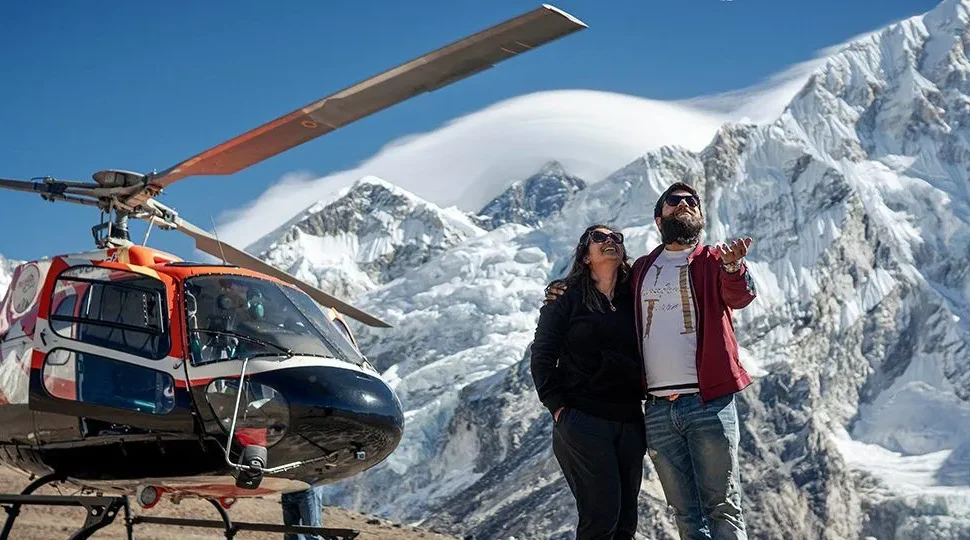
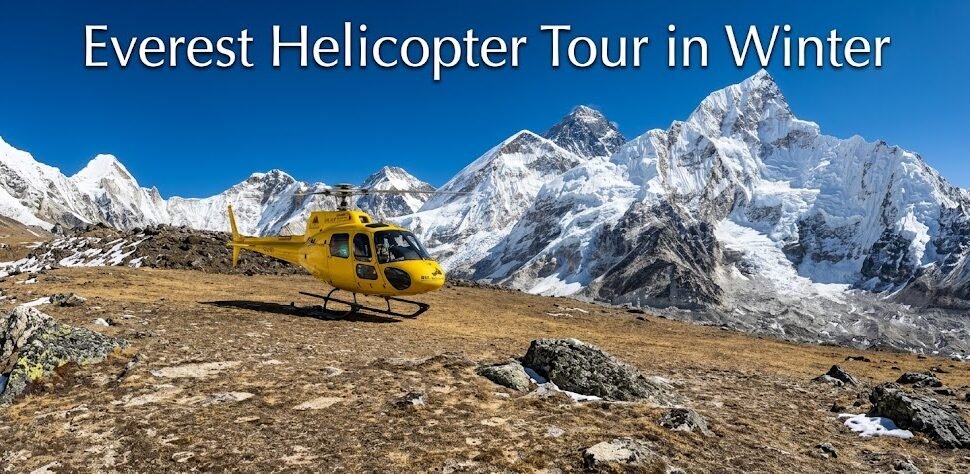
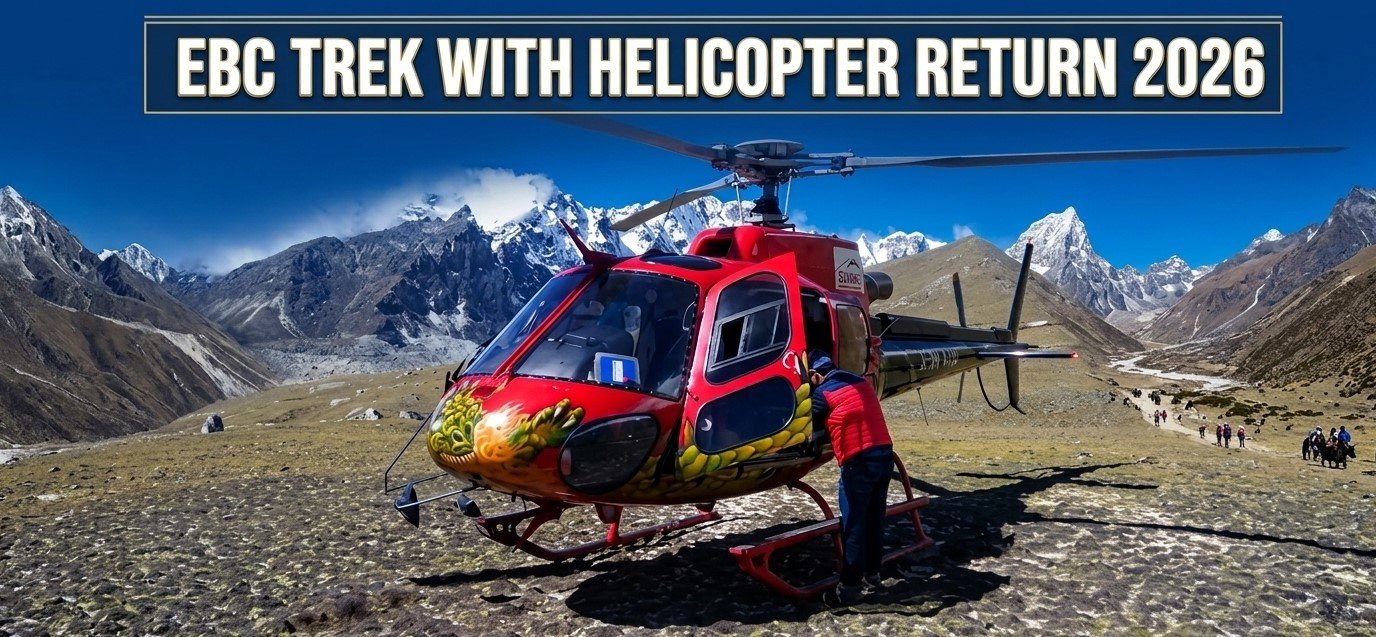
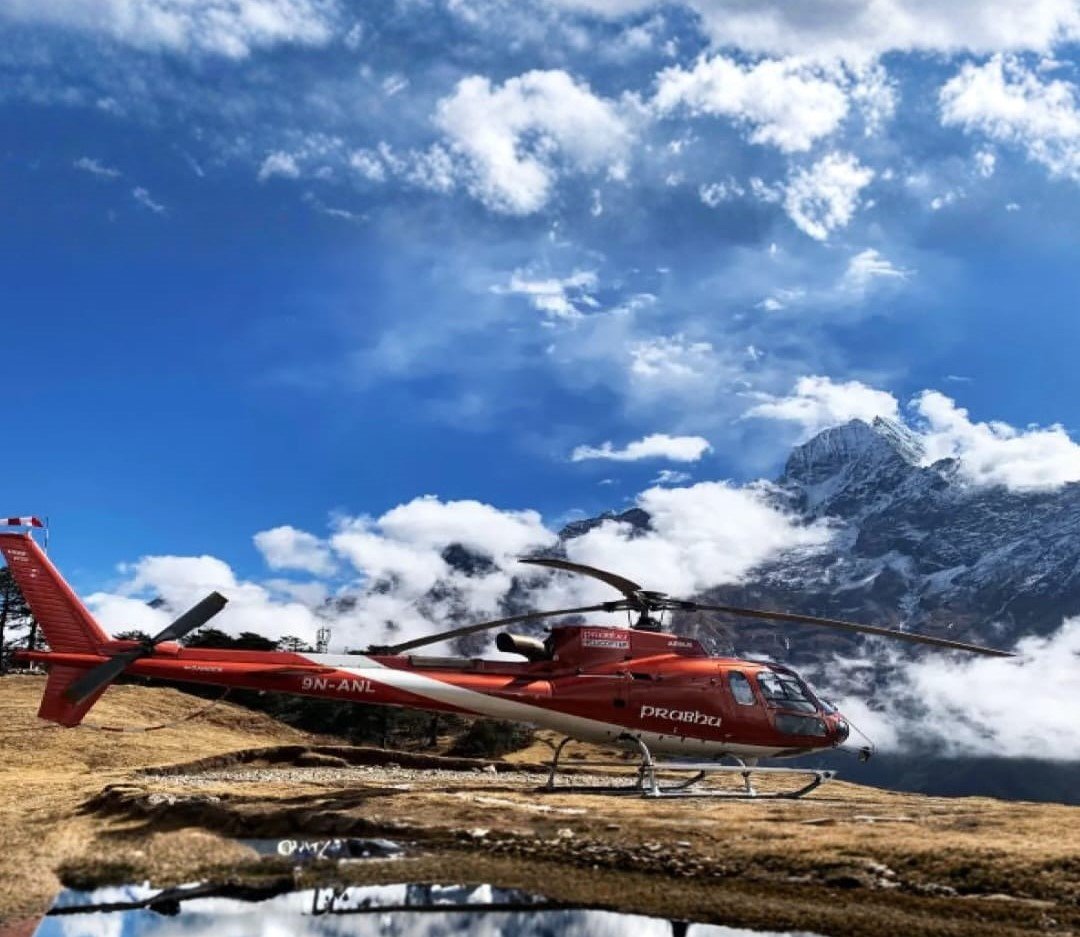
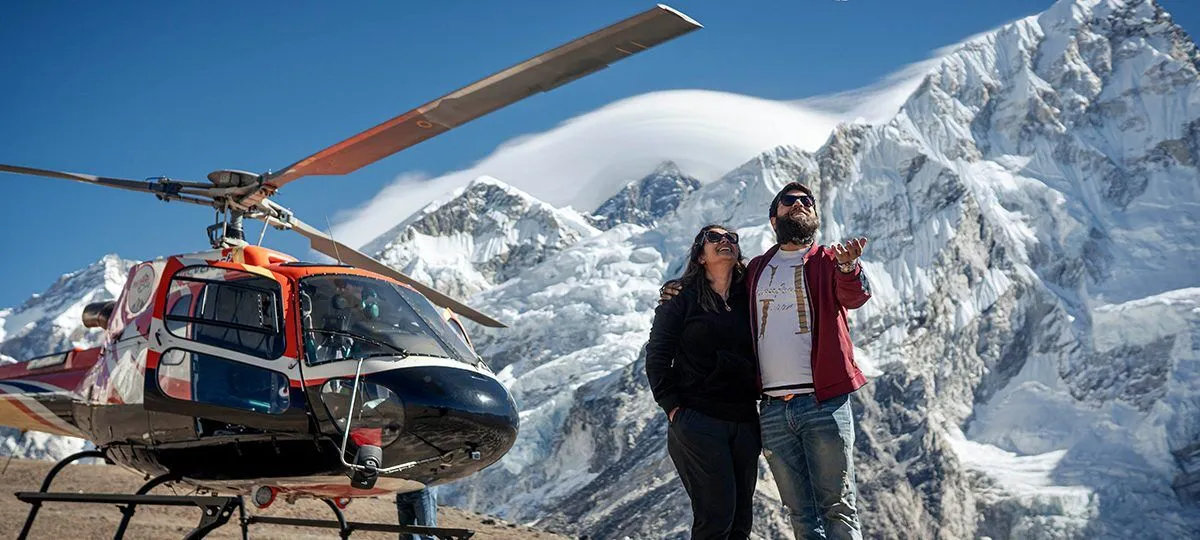
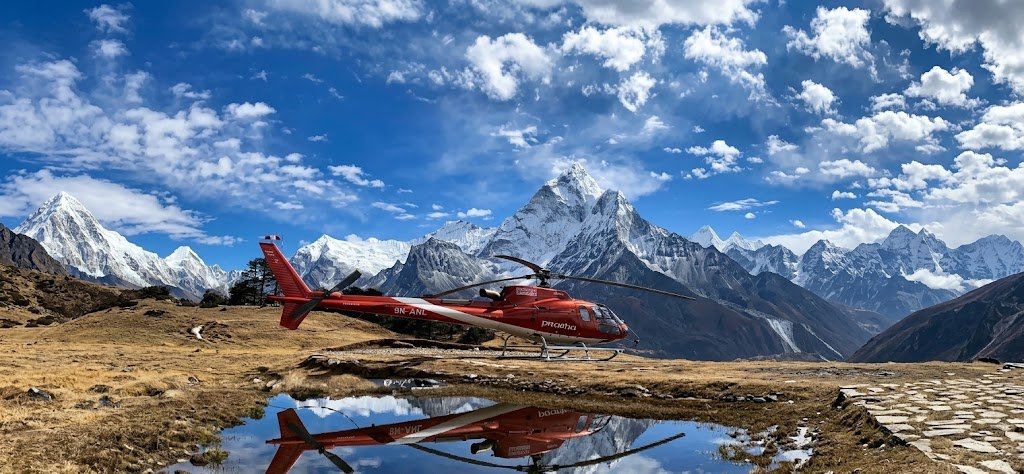
The Everest Base Camp helicopter tour itself begins with a hotel pickup in Kathmandu at roughly 1,400 meters elevation. The Airbus H125 climbs up through the Khumbu Valley, passing near Lukla at about 2,860 meters, then continues toward the aerial pass above Everest Base Camp at around 5,364 meters, giving you a close view over the Khumbu Glacier and the Khumbu Icefall from the air. From there the helicopter descends to Syangboche at about 3,780 meters for a landing and a mountain breakfast at Hotel Everest View, the highest placed hotel with a direct view of Everest according to Guinness World Records. The full experience, door to door, runs about four to five hours, which is why it fits so easily into the first or second morning of a longer Nepal trip. You can read the complete flight breakdown, along with route maps and timing, on the Everest Base Camp helicopter tour page.
Pokhara: Lakes, Peaks, and Adventure
Pokhara sits about 200 kilometers west of Kathmandu and functions as Nepal’s second major tourism hub, and the gateway city for the Annapurna range. The centerpiece is Phewa Lake, ringed by cafes, guest houses, and small boat docks, with the Annapurna massif visible on clear mornings rising directly behind it. Unlike Kathmandu, which is a working capital city with heavy traffic and constant noise, Pokhara has a slower, resort like feel that most travelers find a welcome contrast after a busy first few days in Nepal.
Pokhara is best known internationally as one of the world’s premier paragliding destinations, with tandem flights launching from Sarangkot that drift down over the lake with the Annapurna and Machhapuchhre peaks in the background. Beyond paragliding, the city offers boating on Phewa Lake, a cable car and sunrise viewpoint at Sarangkot, the International Mountain Museum, Davis Falls, and short scenic flights that give aerial views of both the Annapurna range and Dhaulagiri, the seventh highest mountain in the world. Travelers who want an Everest style helicopter experience focused instead on the Annapurna side of the country can combine their trip with the option covered in our Annapurna helicopter tour complete guide, which explains how that flight compares to the Everest route in terms of scenery, cost, and duration.
Most travelers need two to three full days in Pokhara to see the highlights without rushing, including one sunrise or sunset at a viewpoint, a paragliding session if weather allows, and a relaxed morning or afternoon on the lake. Travelers with more time sometimes add a short hike toward Australian Camp or Poon Hill, though those additions push the required time closer to four or five days and are not necessary for a first visit focused on the lake, the views, and the adventure activities.
Chitwan National Park: Jungle and Wildlife
Chitwan National Park, in the lowland Terai region south of Pokhara, is Nepal’s oldest national park and a UNESCO World Heritage Site, established specifically to protect habitat for the one horned rhinoceros, the Bengal tiger, and dozens of other species including gharial crocodiles, sloth bears, and more than 500 recorded bird species. The climate here is completely different from the mountains: warm, humid, and green year round, with the park’s grasslands and riverine forest feeling more like classic African savanna than anything most visitors associate with Nepal.
The main gateway town is Sauraha, on the eastern edge of the park, reached by road or by a short flight into Bharatpur airport followed by a transfer. Typical activities include jeep safaris deep into the park in search of rhinos and, with luck, a tiger sighting, canoe rides along the Rapti River to spot crocodiles and birdlife, guided nature walks with a park naturalist, a visit to the elephant breeding center, and an evening of Tharu cultural dance performed by the region’s indigenous community. Because wildlife sightings depend on chance and timing, most lodges recommend at least two full days of activities inside the park to give guests a realistic chance of seeing a rhino or tiger, which in practice means a stay of two nights and three days is the sensible minimum, with three nights allowing a more relaxed pace and better odds.
Getting Between Kathmandu, Pokhara, and Chitwan
Nepal’s domestic travel network connects all three cities by both air and road, and the right choice usually depends on how much of your limited vacation time you want to spend traveling versus doing things. Flights are short, frequent, and reasonably priced by international standards, while road travel is cheaper but takes considerably longer than a quick look at the map distance would suggest, since Nepal’s highways wind through hills and are often affected by construction or landslide clearing.
Flight Options
Kathmandu to Pokhara is one of Nepal’s busiest domestic routes, with airlines including Buddha Air, Yeti Airlines, and Shree Airlines operating well over a dozen flights a day between the two cities. The flight itself takes only about twenty five to thirty minutes in the air, though airport arrival and check in procedures mean you should budget roughly two hours from hotel to hotel including transfer time on each end.
Kathmandu to Bharatpur, the airport serving Chitwan, is a shorter hop covering roughly 90 kilometers, with scheduled flight time of about twenty five to thirty minutes and several flights operated daily by Buddha Air. From Bharatpur airport, most hotels arrange a road transfer of around thirty to forty five minutes into Sauraha.
Pokhara to Bharatpur is also served by short daily flights, typically around twenty to twenty five minutes in the air, making it possible to fly directly between the two rather than backtracking through Kathmandu. This route is particularly useful for itineraries that visit Pokhara before Chitwan, since it avoids a full day lost to road travel.
Road Options
All three cities are also connected by paved highway, and private car or tourist bus remains the most economical way to travel between them if you have time to spare. Kathmandu to Pokhara by road covers about 200 kilometers and takes roughly six to seven hours by tourist bus, or about five to six hours by private car with a reasonably direct run, longer if you stop for photos or meals along the scenic Trishuli River valley. Pokhara to Chitwan covers a shorter distance of about 145 kilometers, but tourist buses typically take six to seven hours because of the winding hill roads, while a private car can sometimes complete the same run in about four to five hours depending on conditions. Kathmandu to Chitwan by road is roughly five to six hours by private car along the same general highway corridor used for Pokhara traffic.
The table below summarizes typical travel times for planning purposes. Treat road timings as approximate, since traffic, road works, and seasonal landslide clearing in the hills can add real delays, particularly during and just after the monsoon months.
| Route | By Air | By Road | Best For |
|---|---|---|---|
| Kathmandu to Pokhara | About 25 to 30 minutes | About 6 to 7 hours | Flying saves a full day; road suits budget travelers with time to spare |
| Kathmandu to Bharatpur (Chitwan) | About 25 to 30 minutes | About 5 to 6 hours | Flying recommended for short trips; road is fine for overland travelers |
| Pokhara to Bharatpur (Chitwan) | About 20 to 25 minutes | About 4 to 7 hours | A direct flight avoids backtracking through Kathmandu entirely |
For most combined itineraries of ten days or fewer, we recommend flying at least one, and ideally two, of these three legs, simply because road travel days consume an entire day that could otherwise be spent enjoying Pokhara’s lake or Chitwan’s jungle trails. Domestic flights in Nepal are inexpensive relative to most countries, and the time saved is almost always worth the modest extra cost, especially since these flights themselves offer wonderful views of the hills and, on a clear day, the mountains, turning a transfer into a small scenic experience of its own.
How the Everest Helicopter Tour Fits into a Longer Nepal Itinerary
Because the Everest helicopter tour takes only about four to five hours from hotel pickup to hotel drop off, it is best scheduled early in your Kathmandu stay, ideally on your second morning in the country once you have recovered from any jet lag and are alert enough to fully enjoy what is, for most travelers, the highlight of the entire trip. Flights depart early, generally around sunrise or shortly after, since mountain visibility and air conditions are almost always best before the afternoon cloud buildup that is common in the Khumbu.
Scheduling the tour early in the trip also builds in a natural weather buffer. If unexpected cloud cover forces a short delay or reschedule to the following morning, having a spare day still ahead of your onward flight to Pokhara means the rest of your itinerary is not thrown off course. This is one of the most important pieces of practical advice in this entire guide: never schedule your helicopter tour for the same morning as an onward domestic flight, and if your schedule allows it, build in one buffer day in Kathmandu before moving on. Our month by month weather and visibility guide breaks down which months offer the most reliable clear morning conditions, which is worth reading closely while you are picking your travel dates.
Once the helicopter tour is complete, the remainder of the afternoon in Kathmandu is free for sightseeing at sites such as Boudhanath Stupa, Pashupatinath Temple, or Kathmandu Durbar Square, before you fly onward to Pokhara the following morning. This is the rhythm that all three of the sample itineraries below are built around: arrive in Kathmandu, fly the helicopter tour on day two or three, then move on to Pokhara and finally Chitwan, before returning to Kathmandu for your international departure.
Sample Combined Itineraries
Below are three sample itineraries built around the Everest helicopter tour plus Pokhara and Chitwan, covering seven days, ten days, and twelve days. These are starting frameworks rather than rigid schedules. Every group’s pace, budget, and interests differ, and our team can adjust any of these to fit your dates, add extra nights in a particular destination, or swap in a private helicopter charter or a Kala Patthar landing upgrade if that suits your travel style better.
Seven Day Nepal Trip: Everest, Pokhara, and a Quick Chitwan Visit
A seven day trip is tight but genuinely workable if you fly rather than drive between cities and accept a shorter, two night stay in Chitwan rather than a more relaxed three nights.
- Day 1: Arrive in Kathmandu, transfer to your hotel, rest and recover from the flight.
- Day 2: Morning Everest Base Camp helicopter tour with breakfast at Hotel Everest View, afternoon sightseeing in Kathmandu.
- Day 3: Morning flight to Pokhara, afternoon boating on Phewa Lake and a sunset viewpoint at Sarangkot.
- Day 4: Paragliding over Phewa Lake in the morning if weather allows, free afternoon around the lakeside, or a short scenic mountain flight for Annapurna and Dhaulagiri views.
- Day 5: Morning flight from Pokhara to Bharatpur, afternoon jeep safari or canoe ride in Chitwan National Park.
- Day 6: Full day of Chitwan activities, including a nature walk, elephant breeding center visit, and evening Tharu cultural show, then a short flight or road transfer back toward Kathmandu.
- Day 7: Final sightseeing or shopping in Kathmandu, departure transfer to the international airport.
This pace works well for travelers who are comfortable moving somewhat quickly and who prioritize the Everest helicopter tour and Pokhara over an extended jungle stay. If flexibility allows even one extra day, we strongly recommend adding it to Chitwan rather than anywhere else, since wildlife sightings genuinely improve with a second full day inside the park.
Ten Day Nepal Trip: The Balanced Option
Ten days is, in our experience booking this type of trip regularly, the sweet spot for combining the Everest helicopter tour with a proper two to three day Pokhara stay and a full two night Chitwan safari, plus a comfortable buffer day for weather.
| Day | Location | Activities |
|---|---|---|
| Day 1 | Kathmandu | Arrival, transfer to hotel, rest and orientation |
| Day 2 | Kathmandu | Everest Base Camp helicopter tour with breakfast at Hotel Everest View |
| Day 3 | Kathmandu | Buffer day for weather, or sightseeing at Boudhanath, Pashupatinath, and Durbar Square |
| Day 4 | Pokhara | Morning flight to Pokhara, afternoon at Phewa Lake and Sarangkot sunset |
| Day 5 | Pokhara | Paragliding, boating, or a scenic mountain flight over the Annapurna range |
| Day 6 | Pokhara | Visit to the International Mountain Museum and Davis Falls, or a short hike toward Australian Camp |
| Day 7 | Chitwan | Morning flight to Bharatpur, afternoon jeep safari inside the national park |
| Day 8 | Chitwan | Canoe ride on the Rapti River, guided nature walk, evening Tharu cultural performance |
| Day 9 | Kathmandu | Morning flight or road transfer back to Kathmandu, afternoon free for shopping at Thamel |
| Day 10 | Kathmandu | Departure transfer to the international airport |
This version gives real breathing room to each destination without wasting time. The buffer day on day three is optional and can be swapped for a day trip to Nagarkot or Bhaktapur if the helicopter tour goes ahead as planned on day two, but we still recommend keeping it in the schedule rather than removing it, since weather in the Khumbu is genuinely unpredictable and a reschedule to day three is far less disruptive than one that pushes into your Pokhara flight.
Twelve Day Nepal Trip: The Complete Experience
For travelers who want the fullest possible version of this combination, including time for a short Annapurna area hike, a more relaxed jungle stay, and a genuine cushion against weather delays, twelve days is the ideal length.
- Day 1: Arrive in Kathmandu, rest and recover.
- Day 2: Everest Base Camp helicopter tour, afternoon free.
- Day 3: Buffer day, or sightseeing across Kathmandu’s UNESCO World Heritage sites.
- Day 4: Morning flight to Pokhara, afternoon at Phewa Lake.
- Day 5: Paragliding over the lake and Sarangkot sunset viewpoint.
- Day 6: Short day hike toward Australian Camp or Dhampus for closer Annapurna views.
- Day 7: Free morning in Pokhara for shopping or a boat ride, afternoon scenic mountain flight.
- Day 8: Morning flight to Bharatpur, afternoon jeep safari in Chitwan National Park.
- Day 9: Canoe ride, nature walk, and elephant breeding center visit inside the park.
- Day 10: Optional second safari activity or a relaxed morning at your jungle lodge, afternoon flight back to Kathmandu.
- Day 11: Full free day in Kathmandu for last minute shopping, a day trip to Bhaktapur, or simply resting before your flight home.
- Day 12: Departure transfer to the international airport.
This longer version also leaves room to upgrade the helicopter portion itself. Travelers with an extra day to spare sometimes choose the Everest Base Camp with Gokyo helicopter tour, which adds the turquoise Gokyo Lakes and Gokyo Ri viewpoint to the standard route, or add the Kala Patthar landing described below for an even closer vantage point on Everest itself.
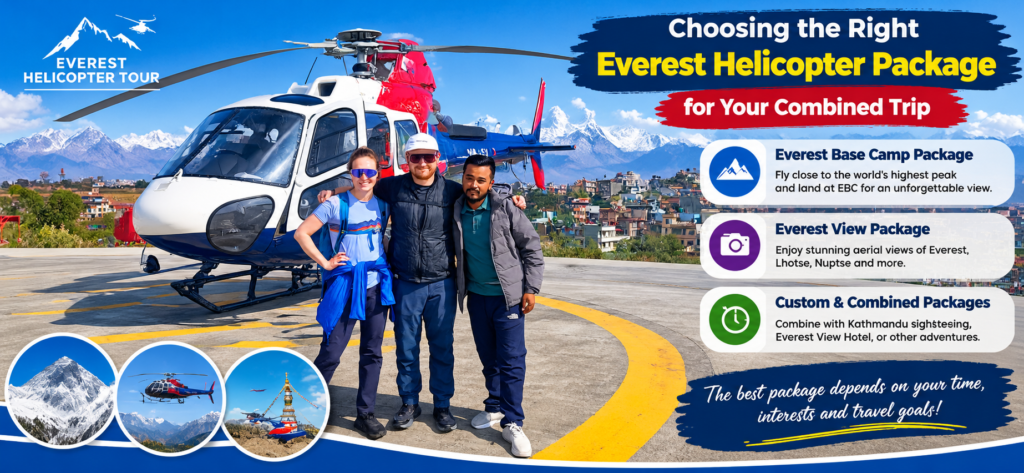
Choosing the Right Everest Helicopter Package for Your Combined Trip
Because the helicopter portion of your trip is booked separately from your Pokhara and Chitwan arrangements, it is worth understanding the different package options before you lock in your dates, since price and group size affect how flexible your booking will be.
Shared Group Tour
Our shared group tour fills a helicopter with five or more travelers and is priced at around 1,250 dollars per person, while our standard group package option runs about 1,100 dollars per person for larger group bookings. This is the most economical way to experience the Everest Base Camp helicopter tour and works well for solo travelers, couples, and small groups who are comfortable sharing the aircraft with other travelers on the same departure date.
Private Helicopter Charter
Travelers who prefer to fly with only their own party can charter the entire aircraft, which carries about five passengers, for a total price of around 4,800 dollars. This option offers complete control over departure timing on the morning of the flight, which can be valuable for families with young children, photographers who want to direct the pilot toward specific angles, or groups who simply prefer privacy for what is often a very emotional, once in a lifetime experience.
Honeymoon Package
For couples celebrating a honeymoon or anniversary, we offer a private couple package priced at around 2,800 dollars, which provides the intimacy of a private charter without the cost of booking the full five seat aircraft.
Kala Patthar Landing Upgrade
Travelers who want to get even closer to Everest than the standard route allows can add the Kala Patthar landing upgrade, which brings the helicopter down at around 5,545 meters, the highest tourist accessible helicopter landing point in Nepal. This upgrade is priced at around 1,250 dollars per person on a shared seat basis and is detailed fully on our Everest Base Camp helicopter tour with Kala Patthar landing page.
If you are still deciding between these options, our full Everest helicopter tour cost and price guide breaks down exactly what is included at each price point, and our comparison of Nepal’s helicopter tours across Everest, Annapurna, Langtang, and Muktinath is useful if you are weighing whether Everest or one of the other ranges best suits your itinerary and interests.
Budgeting for a Combined Nepal Trip
Travelers planning this kind of itinerary often ask how the helicopter tour cost fits into the overall trip budget, since the helicopter portion is usually the single largest line item. As a rough guide, a shared seat on the Everest Base Camp helicopter tour runs around 1,250 dollars per person, while hotel nights in Kathmandu and Pokhara typically range from about 40 to 150 dollars per night depending on comfort level, and a two night jungle lodge package in Chitwan, including meals and guided safari activities, commonly falls somewhere between 150 and 400 dollars per person depending on the property. Domestic flights between Kathmandu, Pokhara, and Bharatpur generally cost between 90 and 140 dollars per person per leg for foreign visitors.
Putting these pieces together, a solo or small group traveler on the ten day itinerary described above should expect a total trip cost, excluding the international flight to Nepal, of roughly 2,200 to 2,800 dollars per person when booking the shared group helicopter tour and mid range hotels, with the exact figure depending heavily on hotel category, whether you choose a private helicopter charter instead of a shared seat, and how many extra activities such as paragliding or an Annapurna area hike you add along the way. Couples celebrating a honeymoon who choose the private couple helicopter package at around 2,800 dollars total should budget accordingly higher for that portion of the trip, though many find the added privacy and flexibility of a private flight well worth the difference for a once in a lifetime celebration.
None of these figures include Nepal’s tourist visa, which is available on arrival at Tribhuvan International Airport for most nationalities, travel insurance, which we strongly recommend for any trip involving mountain flying or jungle activities, or personal spending on souvenirs, meals outside of package inclusions, and tips for guides and drivers, all of which are customary in Nepal and worth budgeting a modest additional amount for.
Practical Tips for Planning Your Combined Trip
Book the Helicopter Tour First
Because the Everest helicopter tour is weather dependent and operates on limited daily departure slots, we recommend confirming this booking before finalizing your Pokhara and Chitwan hotel and flight reservations. Our step by step booking guide walks through the reservation process, required documents, and payment details in full.
Book Domestic Flights Early, Especially in Peak Season
October, November, March, and April are Nepal’s busiest tourism months, and domestic flights between Kathmandu, Pokhara, and Bharatpur can sell out on popular morning departure times during these windows. Booking your Kathmandu to Pokhara and Pokhara to Chitwan flights at the same time you confirm your helicopter tour avoids the scramble of finding seats a week before you travel.
Pack for Three Different Climates
A combined itinerary moves you from the cool mountain air on the helicopter tour, to Pokhara’s mild lakeside climate, to Chitwan’s warm and humid lowland conditions, sometimes within the same week. Bring a warm layer for the early morning helicopter departure, comfortable clothing for Pokhara’s outdoor activities, and light, breathable clothing along with mosquito repellent for Chitwan, where evenings can be quite warm regardless of season.
Build in at Least One Buffer Day
As mentioned earlier, weather can occasionally delay the helicopter tour by a day. A ten or twelve day itinerary has enough natural flexibility to absorb this without disrupting Pokhara or Chitwan plans, while a tightly packed seven day trip has very little room to spare. If your schedule is fixed and cannot flex, consider booking your international flight home with at least one spare day beyond your planned departure date.
Frequently Asked Questions
Can I really combine the Everest helicopter tour with Pokhara and Chitwan in one trip?
Yes. This is one of the most popular ways to structure a Nepal itinerary, precisely because the helicopter tour takes only about four to five hours and fits into a single morning, leaving the rest of a seven to twelve day trip free for Pokhara and Chitwan National Park.
How many days should I budget for the whole combined trip?
Seven days is the practical minimum if you fly rather than drive between cities. Ten days gives a comfortable, well paced experience with time to spare in each destination, and twelve days allows for extra activities such as a short Annapurna area hike or a more relaxed jungle stay in Chitwan.
Should I fly or drive between Kathmandu, Pokhara, and Chitwan?
Flying is faster and, for most travelers on a limited schedule, the better choice. Domestic flights between these cities take only twenty to thirty minutes in the air compared to road journeys of five to seven hours. Road travel is cheaper and offers scenic countryside views, so it suits travelers with extra time who want to see rural Nepal along the way.
When during my trip should I schedule the Everest helicopter tour?
We recommend scheduling it early, ideally on your second morning in Kathmandu, so that if weather forces a one day delay, the rest of your itinerary to Pokhara and Chitwan is not disrupted. Never schedule it for the same morning as an onward domestic flight.
How many days do I actually need in Chitwan to see wildlife?
Most lodges and guides recommend at least two full days of safari activities, meaning a stay of two nights and three days, since sightings of the one horned rhinoceros and Bengal tiger depend on chance and a single short visit reduces your odds. Three nights allows a more relaxed pace with better overall chances.
What is the difference between the shared group tour and a private helicopter charter?
The shared group tour places you with other travelers in a helicopter carrying five or more passengers and is priced at around 1,250 dollars per person. A private charter reserves the entire aircraft for your own party for a flat total of around 4,800 dollars, giving you full control over timing and privacy for the flight.
Is the Kala Patthar landing upgrade worth adding to a combined itinerary?
If getting as physically close to Everest as possible matters to you, yes. The Kala Patthar landing brings the helicopter down at around 5,545 meters, the highest tourist accessible helicopter landing point in Nepal, for around 1,250 dollars per person on a shared seat basis, and it adds only a modest amount of time to the standard tour.
What is the best time of year to do this combined trip?
Autumn, from roughly October through November, and spring, from March through April, offer the clearest mountain visibility for the helicopter tour and comfortable weather in both Pokhara and Chitwan. Our month by month weather and visibility guide covers this in more detail if you want to pick exact dates.
Roughly how much should I budget for a full ten day combined trip?
Excluding your international flight to Nepal, a solo or small group traveler on the ten day itinerary described in this guide should plan on roughly 2,200 to 2,800 dollars per person when booking the shared group helicopter tour, mid range hotels in Kathmandu and Pokhara, and a two night Chitwan lodge package, plus a modest amount for the visa on arrival, travel insurance, and personal spending.
Combining the Everest helicopter tour with Pokhara and Chitwan turns a single bucket list flight into a complete Nepal vacation, one that covers the highest mountains on earth, a lakeside adventure hub, and a genuine jungle safari, all without the two weeks of walking that a full Everest Base Camp trek would demand. Whether you have seven days or twelve, the logistics described in this guide work, and our team books this exact combination for travelers regularly. Start planning your trip by reserving your spot on the Everest Base Camp helicopter tour, and we will help you build the Pokhara and Chitwan portions of your itinerary around it.
Related Reading
- Everest Helicopter Tour Experience: What Past Travelers Wish They Knew Before Booking
- Everest Helicopter Tour Safety: Pilots, Maintenance and CAAN Standards Explained
- Last Minute Everest Helicopter Tour Booking: Availability, Pricing and What to Know
- Everest Helicopter Tour for First Time Visitors to Nepal: Planning Your Trip From Arrival to Departure