Most Everest helicopter tour guides tell you to go in October or March. They are not wrong about those months. But they are leaving out something important: December, January, and February are genuinely excellent months for the Everest helicopter tour and offer advantages that neither peak season window provides. Lower prices, quieter helipad, empty Khumbu valleys below, and in many years the clearest mountain visibility of the entire year.
Here is what you actually need to know about doing the Everest helicopter tour in winter: what the weather is like, how cold it gets at Kala Patthar, which months within winter are best, what to wear, and whether the experience is meaningfully different from the spring and autumn version in ways that should affect your decision to go.
Why Winter Gets Overlooked for Everest Helicopter Tours
The conventional Nepal travel advice pushes spring (March to May) and autumn (September to November) for good reason. Those seasons deliver reliable weather, excellent visibility, and the widest range of trekking conditions. October in particular has the combination of post monsoon clarity, warm temperatures at lower altitudes, and stable Himalayan weather that makes it the single best month for Everest visibility across all categories of visitor.
Winter gets overlooked because the conditions that make winter excellent for views also make it less comfortable for multi week trekking. Temperatures on the EBC trail in January drop to minus 20 degrees Celsius at night at Gorak Shep. The trails above Namche Bazaar can be snow covered and cold. For trekkers, these conditions require significant gear investment and experience.
For helicopter tours, the winter condition picture is completely different. You spend the cold portion of the tour (15 to 20 minutes at Kala Patthar) in full winter clothing with gloves, hat, and down jacket. You do not spend multiple nights at high altitude in the cold. You are not walking through snow for hours. The temperature at Kala Patthar in January is between minus ten and minus twenty degrees Celsius, which is cold but entirely manageable for a 20 minute stop with proper clothing. And the mountain views from Kala Patthar in winter are consistently among the clearest of the year.
Month by Month: What Winter Actually Looks Like
December, January, and February each have distinct characteristics worth separating.
December is the transition month. The autumn season ends in mid to late November and December arrives with progressively colder temperatures in the Khumbu but still very good visibility. The early part of December often retains the clarity of late autumn. Tourist numbers drop sharply after the November trekking season ends, which means fewer people competing for hotel rooms in Kathmandu and fewer helicopters on the Kala Patthar helipad on any given morning. Prices for both accommodation and tours are 15 to 25 percent lower than peak season. The second half of December can bring stronger winds at Kala Patthar and the occasional snowfall, but clear days are common and the morning flying window is typically reliable.
January is the coldest month but produces some of the year’s clearest visibility. The Himalayan atmosphere in January is exceptionally dry. The monsoon is five months behind you and five months ahead. No atmospheric moisture, no haze, no dust. On a clear January morning from Kala Patthar, the summit pyramid of Everest stands against a sky that is almost impossibly blue, a darker blue than you would see at lower altitude, with a quality that veteran photographers describe as the best light of the year. The trade is temperature: Kala Patthar in January can be minus fifteen to minus twenty with wind. With a down jacket, thermal underlayer, hat, gloves, and face protection, this is manageable. Without proper clothing, it is genuinely dangerous.
February is the hidden gem of the winter window. Temperatures at Kala Patthar begin to moderate in February (minus five to minus fifteen degrees rather than the January extremes), visibility remains excellent, and tourist numbers are still well below the spring peak. February also marks the beginning of the rhododendron season at lower altitudes, with the first blooms appearing on the hillsides between Kathmandu and the Khumbu by mid February. The flight out in February passes over hillsides beginning to show colour at the lower elevations, which adds a visual dimension the purely mountain focused seasons do not have. February has historically been one of the most reliable months for completing the Kala Patthar landing on the first scheduled date.
Winter Weather Patterns and Flight Operations
Himalayan weather in winter follows a distinct pattern that is important for understanding when and why helicopter tours fly or do not fly.
The winter jet stream sits over the Himalayas from December through February. Periodically, this jet stream brings high winds to the upper Everest range, creating the famous Everest plume, the banner of cloud and snow visible streaming horizontally from the summit. This is not cloud generated by atmospheric moisture but jet stream winds strong enough to scour snow from the summit and create a visible trail downwind. On days when the jet stream directly affects the Khumbu, wind speeds at Kala Patthar can be too high for safe helicopter operations. These windows typically last one to three days.
Between jet stream pulses, the Khumbu in winter has stable, clear, calm conditions that are excellent for flying. The morning window (6:00am to 10:00am) when Himalayan weather is most stable is typically reliable in winter on non jet stream days. Most January and February days that are not directly affected by the jet stream offer flyable conditions for the morning window.
The practical implication for booking is that the winter helicopter tour has slightly higher weather cancellation rates than October or March, but not dramatically so. Having two to three days of schedule flexibility when booking in winter protects against the most likely reason for rescheduling. Reputable operators offer free rescheduling for weather cancellations in all seasons, so the financial risk of a weather delay is zero if you book correctly.
What Kala Patthar Looks Like in Winter: An Honest Description
In winter, Kala Patthar looks different from its autumn or spring version in ways that some people find more dramatic and others find starker.
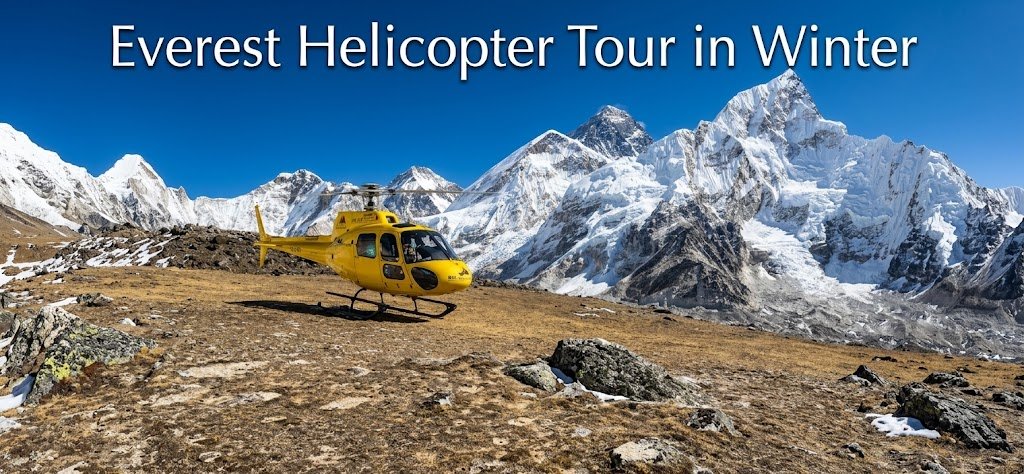
The snow line in winter extends further down the mountain slopes than in October or April. Kala Patthar’s rocky ridge may have patches of snow and ice between the rocks, making the ground more slippery and requiring more careful footing. The helipad area is kept as clear as possible but some ice is normal in January. Wear boots with some grip or ankle support, not trainers or casual footwear.
The sky. The winter sky over the Khumbu is a deeper, colder blue than in any other season. The atmosphere is drier and clearer. Looking at Everest from Kala Patthar in January or February, the mountain’s definition is extraordinary. Every ridge, couloir, and rock band on the southwest face is visible without haze. The summit plume, when present, streams horizontally in a way that gives a visceral sense of the wind speeds that make Everest nearly unclimbable in winter. This visual drama is specific to the season.
No trekkers. In winter, the Kala Patthar ridge that is crowded with trekkers and their guides during October and April is empty. The helipad stop in winter puts you on the ridge as one of perhaps a handful of people who have been there that morning. For many visitors, this quietness is more than just comfort. It changes the relationship to the place. There is no queue for the best viewpoint, no other passengers jostling for the same photographic angle, no sound other than wind and your own breathing.
What to Wear for the Winter Helicopter Tour
Winter clothing for the Kala Patthar landing is the single most important preparation decision for a winter helicopter tour. Underdressing at minus fifteen degrees Celsius in strong wind is genuinely dangerous for a 20 minute outdoor stop.
The core principle is layering. A thin thermal base layer against the skin, a mid layer of fleece or down, and an outer layer that blocks wind is the standard mountain cold approach. For the Kala Patthar landing in January, you need all three layers plus specific attention to extremities: hands, feet, head, and face.
Hands: Thin liner gloves under heavier outer gloves or mittens. At minus fifteen you cannot operate a camera with bare hands for more than two to three minutes without pain. Liner gloves allow you to remove the outer layer briefly for fine adjustments while keeping your hands protected. Carry hand warmers as backup.
Feet: Warm socks (wool or synthetic), not cotton. Insulated boots if you have them. Trainers are inadequate for a January landing at 5,545m. The cold transfers through the ground and through the boots rapidly. Your feet will be cold regardless of what you wear, but good insulation slows the process enough to make the stop comfortable rather than painful.
Head and face: A hat covering the ears is essential. A balaclava or face gaiter for wind protection at the ridge is highly recommended in January and February. The ridge wind at Kala Patthar hits exposed skin within seconds. Full face coverage makes the difference between comfort and misery on a windy winter morning.
Down jacket: A good quality down jacket is the most important single item. Not a regular winter coat but a proper mountaineering or expedition grade down jacket rated to minus ten or colder. Rental is available in Kathmandu’s Thamel district for $5 to $15 per day if you do not own one.
Prices and Availability in Winter
The financial case for winter is strong. Prices for the Everest helicopter tour in December through February run 10 to 20 percent below the peak season (October, April) equivalents. Hotel accommodation in Kathmandu is 20 to 40 percent cheaper in winter than in autumn peak. Restaurants and shops in Thamel operate with shorter queues and more personal service. Flights to Kathmandu from most international hubs are cheaper in winter than in spring or autumn.
Availability on preferred dates is much better in winter. In October, the best Everest helicopter tour operators fill their dates weeks in advance. In January, you can typically book with a week’s notice and have a good choice of dates and times. For travellers who decide late or who have flexible travel dates, winter is the season where last minute planning is most practical.
Combining the Winter Tour with Kathmandu and Nepal
Kathmandu in winter (December to February) is genuinely pleasant. Daytime temperatures sit around 12 to 18 degrees Celsius, the sky is clear, and the city’s temples, markets, and restaurants operate normally without the dust of the dry season or the humidity of the monsoon. The annual Tong Tong Fair in Bhaktapur, which celebrates Nepali craft traditions, typically falls in January and is one of the best times to see traditional woodcarving, metalwork, and fabric demonstrations. The Indra Jatra festival, one of Kathmandu’s most dramatic religious celebrations, falls in September, but winter brings its own quieter festivals worth seeking out.
For travellers combining the Nepal winter trip with other Asian destinations, December and January are excellent months for Southeast Asia (Thailand, Vietnam, Cambodia) where winter is the dry season. A two to three week trip combining Kathmandu and the Everest helicopter tour in early January with a week in Chiang Mai or Hoi An in mid January is a genuinely attractive winter itinerary.
Book the Winter Everest Helicopter Tour
The Kala Patthar Landing Tour is available throughout winter with free rescheduling for weather delays. The Group Tour offers the best winter pricing for solo travellers and couples. For those wanting a private aircraft experience with the flexibility of self determined timing at the landing site, the private couples package gives you the Kala Patthar landing with exclusive aircraft use, particularly valuable in winter when landing site conditions can vary and the ability to adjust timing on the day matters.