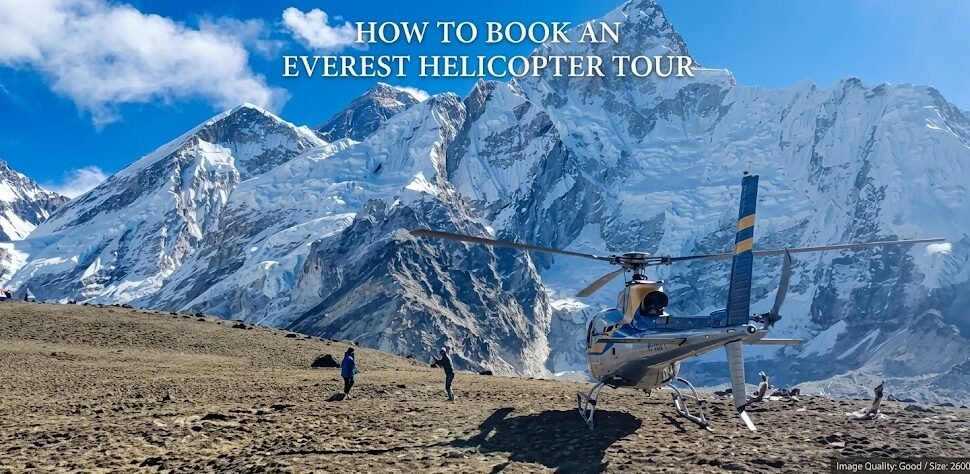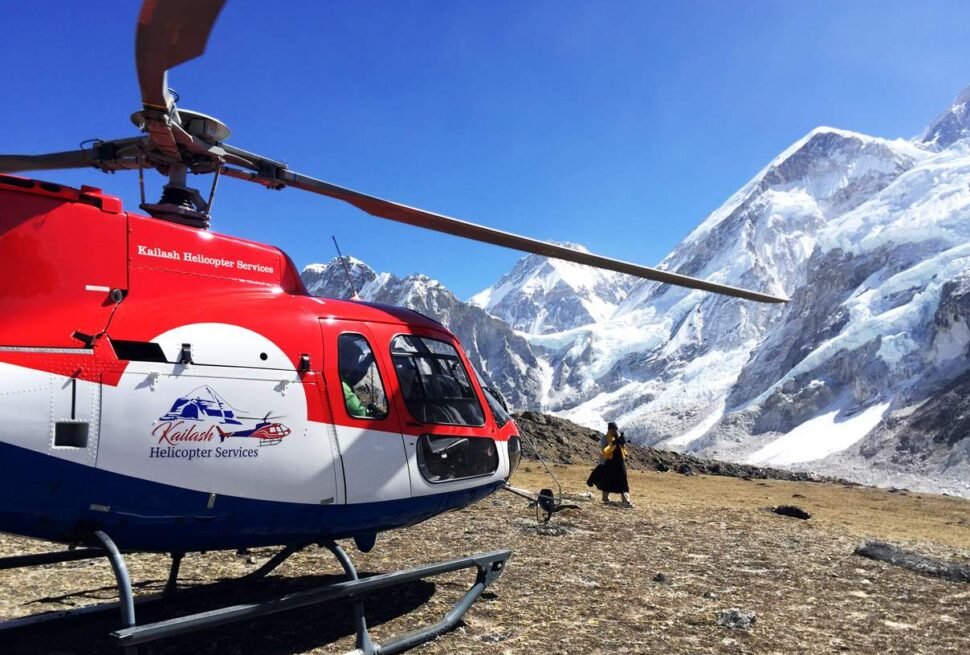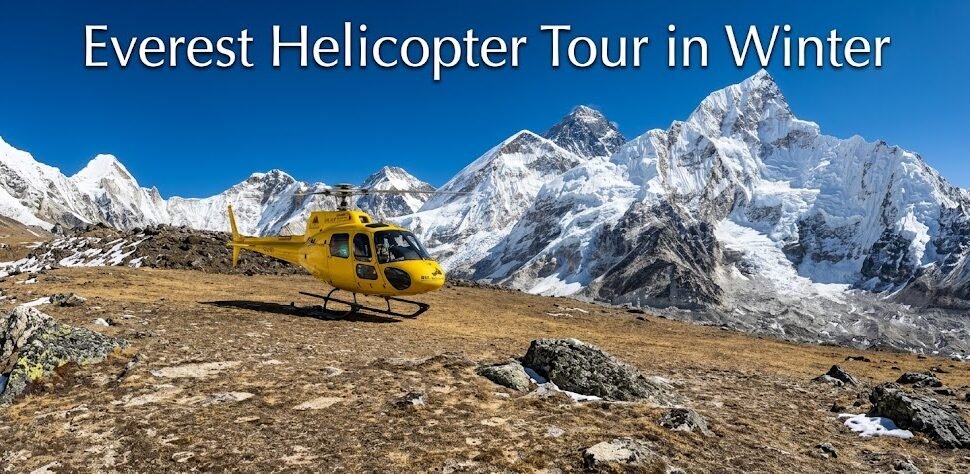
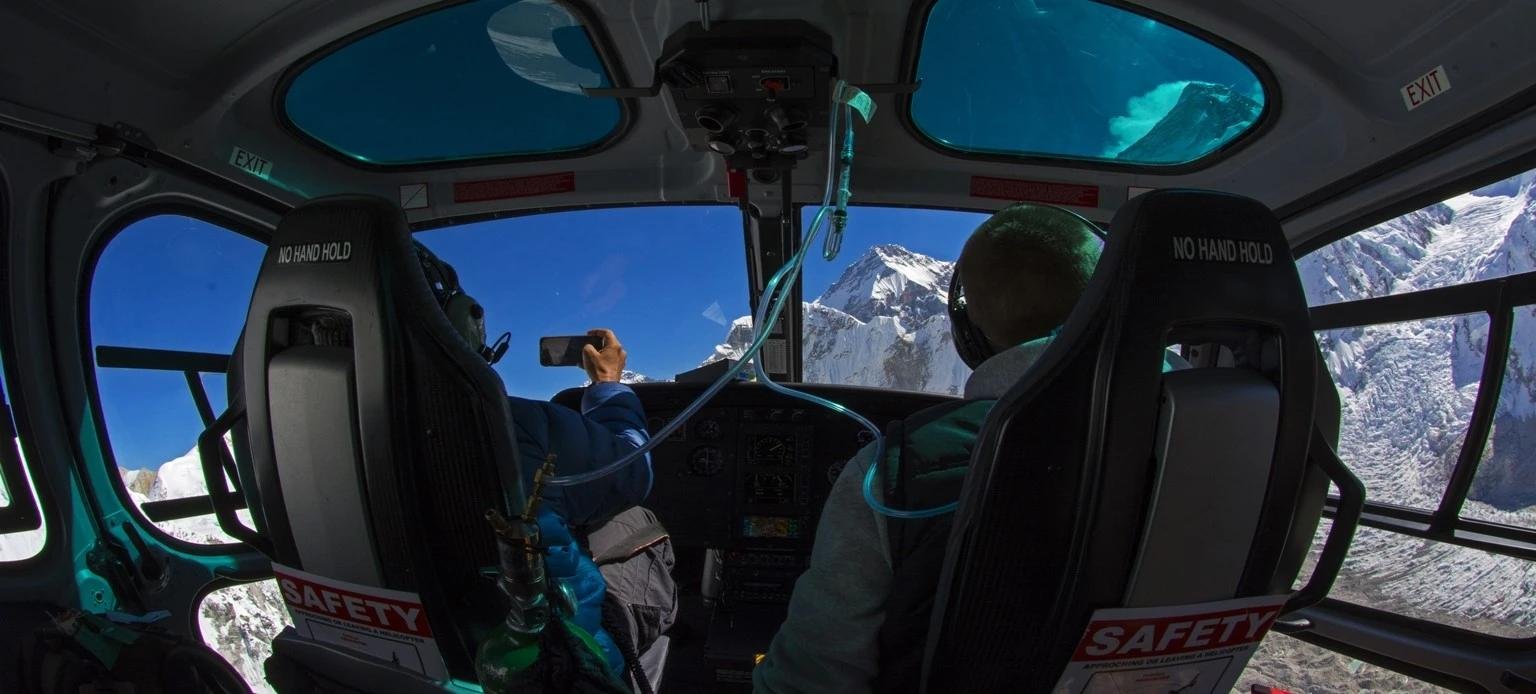
You landed in Kathmandu ten days ago with a trekking permit, a duffel bag, and a plan that did not include a helicopter. Now you have three days left before your flight home, the trek either happened or did not, and someone in your hostel just showed you a photo of the Khumbu Icefall taken from a cockpit window forty minutes after breakfast. Suddenly the Everest Base Camp Helicopter Tour is the thing you actually want to do, and you want to know one thing above all else: can this still happen for me, this week, without months of planning?
The honest answer is yes, more often than most travelers assume, but the reasons it works and the reasons it sometimes does not have almost nothing to do with how far ahead you booked and almost everything to do with weather, seat math, and how Kathmandu’s helicopter operators actually run their mornings. This guide walks through what really determines whether a late booking succeeds, how pricing behaves under time pressure, when last minute seats tend to open up, and how the walk in and same week booking process works on the ground in Kathmandu, so you can make a smart call in your final days rather than a hopeful guess.
We will also be direct about pricing and packages, because this is a real decision with real dollars attached, not just a logistics puzzle. If you want to skip ahead and lock in a seat while you read, you can look at the Everest Base Camp Helicopter Tour now and come back to the details below.
Can You Really Book an Everest Helicopter Tour on One or Two Days Notice?
Yes, and it happens constantly, especially in the busier travel months when Kathmandu is full of trekkers whose plans have shifted. A trekker who got altitude sick and turned back at Namche Bazaar, a group whose Lukla flight got cancelled for four days straight and who now have zero days left for the actual trek, a couple who decided halfway through their honeymoon that they want the aerial view of Everest instead of ten more days of walking uphill: these are the people filling last minute seats on any given morning in Kathmandu, and operators are set up to handle exactly this kind of demand.
What makes it possible is that a helicopter tour is a single morning commitment rather than a multi day itinerary with permits, porters, and lodge bookings stacked in sequence. There is no trail to walk, no teahouse to reserve two weeks out, no acclimatization schedule to protect. The whole experience, from hotel pickup in Kathmandu to hotel drop off, runs about four to five hours. That short, self contained format is exactly why it can be arranged quickly when a trek cannot be.
What makes it uncertain is that the tour depends on a single engine helicopter flying by sight through mountain corridors, and that kind of flying only happens when visibility and wind cooperate. Nepal’s Civil Aviation Authority requires clear ground visibility and safe separation from cloud along the flight route before a helicopter is cleared into the mountains, because there is no radar guidance or instrument approach system covering the Khumbu corridor. Pilots need to see the terrain the entire way. That single fact, more than seat inventory, is what actually decides whether your last minute booking flies on the morning you hoped for.
So the real question is not “can I book this late,” which is almost always yes, but “will the mountain let this flight happen on my particular morning,” which nobody can promise from three days out. Understanding that distinction is the single most useful thing a rushed traveler can learn before calling an operator.
Why Weather, Not Availability, Is the Real Gatekeeper
Most travelers assume that booking early buys them a guaranteed slot and booking late means competing for scraps. In practice, weather affects everyone equally, whether they booked six months ago or six hours ago. A helicopter that was fully booked and confirmed a month in advance still will not fly into the Khumbu Icefall through fog, and a traveler who called an operator’s office at eight that same morning can sometimes get a seat on a flight that a planned booking group just cancelled because two of its passengers came down with a stomach bug. Weather is the great equalizer of Everest helicopter scheduling, and it cuts both ways for last minute travelers.
The mountains around Everest generate their own weather almost independently of what Kathmandu looks like at sunrise. Clear skies over the city are not a reliable sign that Lukla, Syangboche, or the approach to Everest Base Camp are equally clear. Cloud can build quickly in a narrow valley while a neighboring ridge stays open, which is part of why operators do not commit to a route until the morning of the flight itself. If you want a deeper explanation of how these cancellations and rebookings actually play out for travelers who already had a confirmed date, our article on weather cancellations, refunds, and rebooking covers it in detail, and the same logic applies whether you booked in January or three days ago.
How the Morning Confirmation Call Actually Works
Here is what typically happens behind the scenes, whether your booking is six months old or six hours old. Operators check conditions the evening before a scheduled flight and again in the very early hours of flight day, often before dawn, using pilot reports, satellite imagery, and radio checks with contacts in the Khumbu. Based on that, they call or message passengers with one of three outcomes: a confirmed go ahead, sometimes with the departure time shifted earlier or later by thirty minutes to catch a clearer window, a short hold while they wait for conditions to firm up, or a cancellation with an offer to rebook the next available morning.
For a last minute traveler, this means your booking confirmation on day one is never really the final word. Even if an operator tells you at seven in the evening that tomorrow’s flight is on, that answer can still shift by five in the morning if a cloud bank moves in overnight. This is true for every passenger on every departure, not a special catch reserved for rushed bookings, but it matters more to you specifically because you likely do not have three or four spare days left in Nepal to absorb a delay. If your remaining time in Kathmandu is genuinely down to your last day or two, ask directly whether the operator can offer any flexibility on your return flight date, and be honest with yourself that a short weather hold is a real possibility you should plan around rather than be surprised by.
Why the Dawn Departure Window Matters Even More When You Booked Late
Every Everest helicopter tour departs early, generally around dawn, because cooler morning air is denser and gives the helicopter better lift, and because wind and thermal turbulence in the high valleys build steadily through the morning and become unworkable by midday. Our detailed explanation of this is in why Everest helicopter tours depart at dawn, but the short version for a last minute traveler is this: there is normally only one usable departure window in the morning, not a menu of flights spread across the day. That means if today’s dawn slot fills up or gets weathered out, your realistic backup is tomorrow’s dawn slot, not a flight later this afternoon. Build that into your thinking before you assume you can simply try again a few hours later on the same day.
How Seat Sharing Works When You Book at the Last Minute
The Everest Base Camp Helicopter Tour is most affordably sold as a shared seat on a group departure, where the cost of the aircraft is split among the passengers aboard. This is where last minute booking logistics get genuinely interesting, because shared departures depend on enough people committing to the same morning, and that math changes hour by hour as other travelers book, cancel, or reschedule around the weather.
When you call an operator with two days notice asking for a shared seat, you are essentially asking to join whatever group is already forming for that date. Sometimes that group already has four confirmed passengers and your booking is the one that completes a full aircraft, in which case you get a seat immediately and probably at the standard rate. Other times a group only has one or two travelers signed up so far, and the operator has to decide whether to run a smaller paying group, wait another day to see if more bookings come in, or offer you a private charter instead at a different price point. This uncertainty is normal, and it is the main reason phone calls and messages, not just website forms, are how last minute shared bookings usually get resolved in Kathmandu.
If you are traveling solo and hoping to join a shared flight on short notice, it helps to know how operators typically group solo travelers together, which we cover in more depth in our piece on solo travelers and shared flight booking. The short version is that solo bookings are the easiest kind of seat for an operator to slot into an existing group, since one seat is a much smaller gap to fill than four, which is often good news for a solo traveler booking at the last minute.
Shared Group Tour vs Private Charter When Time Is Short
This is the point where a private charter earns serious consideration if you are on a tight last minute deadline. A shared group departure at 1250 dollars per person, or 1100 dollars per person on the standard group package, is excellent value, but it is dependent on other people’s schedules lining up with yours. A private charter of the whole aircraft, seating about five passengers, runs around 4800 dollars total and does not depend on anyone else at all. If you are traveling with three or four companions, splitting a private charter can land close to the per person cost of a shared seat while giving you complete control over the exact morning and time, with no waiting on other passengers to confirm.
For a solo traveler or a couple on a short timeline, the honeymoon private package at 2800 dollars is another route to the same certainty: no shared group to coordinate with, just your own party and the operator’s weather call. Our comparison article on choosing between private and group packages goes into the tradeoffs in more depth, but for last minute travelers specifically, the private option’s main value is removing one entire layer of uncertainty from an already tight schedule.
Booking Windows and Flexibility Compared
The table below lays out how different booking situations and package types typically behave when time is short, based on how these bookings actually move through an operator’s schedule in Kathmandu.
| Booking situation | Typical lead time needed | How flexible it is on short notice |
|---|---|---|
| Shared Group Tour, 5 or more per helicopter (1250 dollars per person) | Same day to two days, subject to a group forming | Depends on other travelers booking the same morning; strongest in peak season |
| Everest Helicopter Tour Group package (1100 dollars per person) | Same day to two days, subject to a group forming | Similar to above; often the first option an operator offers a walk in traveler |
| Private helicopter charter (about 4800 dollars total) | Often bookable same day if weather allows | The most flexible option; does not depend on filling shared seats |
| Honeymoon private couple package (2800 dollars) | Often bookable same day to next day | High flexibility since it is a private booking for two |
| Kala Patthar landing upgrade, shared seat (around 1250 dollars per person) | A few days recommended | Slightly less flexible since it needs a compatible group and clear high altitude weather at 5545m |
The pattern across every row is the same: private bookings compress the time needed because they remove the group forming step, while shared bookings can still work fast, but only when enough other travelers happen to be booking around the same date, which is exactly why season and week matter so much, covered further down.
Does Booking Late Cost More? Pricing for Rush Bookings
This is one of the more reassuring parts of the answer. There is no separate rush fee or last minute surcharge built into Everest helicopter tour pricing, and the published rates for the shared group tour, the group package, the private charter, the honeymoon package, and the Kala Patthar landing upgrade stay the same whether you booked six months ago or this morning. The company facts above list the standard figures: 1250 dollars per person on the shared group tour, 1100 dollars per person on the group package, 4800 dollars total for a private charter carrying about five passengers, 2800 dollars for the honeymoon private couple package, and around 1250 dollars per person for the Kala Patthar landing upgrade on a shared seat. Those numbers do not move because your booking window shrank.
What can change your effective cost is not a surcharge but which package category you end up in. If you are hoping for a shared seat at 1250 or 1100 dollars per person and no group is currently forming for your preferred morning, an operator may present the private charter at 4800 dollars total as the only same day option. That is not price gouging; it is simply that a private charter is priced for the whole aircraft regardless of how many seats you personally need, and it becomes the fallback whenever shared seats cannot be assembled in time. Travelers on a strict budget who have some flexibility in their remaining days are often better served by holding out one more day for a shared seat to open up than by defaulting straight to a private charter out of impatience.
For a full breakdown of how these packages compare on cost across the board, including seasonal notes and add ons, our cost and price guide for 2026 is worth reading alongside this article, especially if you are trying to decide between paying more for certainty versus waiting a day to see if a shared group fills.
When Last Minute Seats Are Easiest, and Hardest, to Find
Season Matters More Than Almost Anything Else
Spring, roughly March through May, and autumn, roughly late September through November, are Nepal’s stable weather windows and also its busiest tourist seasons. That combination cuts both ways for last minute travelers. On one hand, stable high pressure systems mean fewer weather cancellations, so a flight you book with two days notice is statistically more likely to actually depart on schedule. On the other hand, these are also the months when the largest number of trekkers and tourists are in Kathmandu at once, which means shared group departures fill up faster and a last minute shared seat request has more competition. In peak weeks of October and April in particular, it is common for shared group slots on a given morning to be fully booked by early evening the day before, pushing late arrivals toward the private charter or the following day.
Winter, December through February, sees fewer tourists overall, which paradoxically can make shared seats easier to find on short notice simply because fewer people are competing for them, but cold temperatures and occasional snow around Syangboche and the high passes can also ground flights for a day or two at a stretch. The monsoon months of June through August bring the least reliable flying conditions of the year, with afternoon cloud building fast and morning windows sometimes closing early; this is the hardest season for any booking, last minute or planned months out, because cancellations and rescheduling become the norm rather than the exception. If your trip happens to fall in the monsoon window, build at least one buffer day into your remaining schedule if you possibly can.
Day of Week and Time of Day
Within any season, midweek mornings, particularly Tuesday through Thursday, tend to have more available shared seats than weekend departures, since a meaningful share of bookings cluster around weekend availability for both domestic and international travelers passing through Kathmandu. If your remaining days in Nepal give you any choice at all, asking about a Tuesday or Wednesday morning rather than a Saturday can genuinely improve your odds of finding an open shared seat without waiting.
As for time of day, this is simpler: there effectively is no meaningful choice, because every departure happens in the same early morning window for the safety and visibility reasons already covered. Do not plan around trying an afternoon flight as a backup if the morning slot is full; that option generally does not exist for this particular tour. What you can do is ask whether the operator runs more than one aircraft or more than one grouped departure on a busy morning, since some operators do stagger two or three group departures across the dawn window on high demand days, which occasionally opens a seat that a quick glance at a single time slot would miss.
How Walk In and Same Week Bookings Actually Work in Kathmandu
If you are already in Kathmandu with a handful of days left, the mechanics of arranging a last minute helicopter tour are pretty different from browsing a website weeks in advance from home. Here is how it typically plays out on the ground.
Contacting Operators Directly
A website contact form is fine when you have time to wait for a reply, but it is rarely the fastest path when you have forty eight hours to work with. Calling or messaging an operator’s office directly, by phone or through WhatsApp, is the standard way locals and experienced repeat travelers handle same week bookings in Kathmandu, and it is what most operators actually expect from a rushed traveler. A live conversation lets the operator check real time seat availability for tomorrow’s group departure, quote you the private charter option if the shared seat is not available, and start the paperwork, which mainly means collecting passport details and body weight for the manifest, all within the same call. Our step by step booking guide walks through this entire process, including what documents to have ready, at how to book an Everest helicopter tour step by step, and the same steps apply whether you are booking from another country months ahead or from your Kathmandu hotel room tonight, just compressed into hours instead of weeks.
Hotel Concierge and Travel Desk Bookings
Many hotels and guesthouses in Thamel and around Kathmandu have existing relationships with helicopter and trekking operators, and a concierge or front desk travel counter can often make a call on your behalf and get a same day or next day answer faster than a first time visitor cold calling on their own. This can be genuinely useful, particularly if there is a language gap, but it is worth being a little careful here: a hotel desk sometimes adds its own booking commission on top of the operator’s rate, and the person taking your request may not fully understand which specific package, shared seat, private charter, or Kala Patthar landing upgrade, you actually want. If you go this route, confirm the exact package name, the per person or total price, and the pickup time in writing, whether that is a printed receipt, an email, or a screenshot of a message, before you hand over any payment. Booking directly with the operator removes that middle layer entirely and tends to be the more reliable option when you already know which tour you want.
Same Day Weather Confirmation Calls
Once you have a booking in place for the next morning, expect a call, text, or WhatsApp message from the operator either the evening before or very early on the morning of the flight itself, confirming whether conditions look good to fly, whether the pickup time has shifted, or whether the flight needs to be pushed to a standby status while conditions are monitored. This is completely normal and is not a sign that anything has gone wrong with your specific booking; it is simply how every Everest helicopter tour departure is managed, last minute or not. Keep your phone charged and reachable that evening and the following morning, make sure the operator has a working number for you in Nepal, and confirm with your hotel that a knock on the door or a call to the room will actually reach you if that is how the operator plans to notify you. Missing that early call because your phone was off is a completely avoidable way to lose a hard won last minute seat.
Does Your Group Size Change Your Last Minute Odds?
Group size matters more for a rushed booking than most travelers expect, and it works in a slightly counterintuitive way. A solo traveler asking for one shared seat is usually the easiest request an operator can fulfill on short notice, because a single open seat is a small gap to close in an already forming group, and operators actively look for solo passengers to round out a departure that is one or two seats short of full. A couple asking for two seats is only slightly harder, and is often the exact size that completes a group departure that already has three confirmed travelers.
Where it gets trickier is a group of three or four friends traveling together who all want to fly on the same shared departure. That is a bigger block of seats to place into an existing group at once, and if no group happens to be forming with exactly that many open spots, the operator will often suggest either splitting across two different shared departures on different mornings, which few groups want to do, or moving straight to a private charter. This is actually good news financially in many cases, since four friends splitting a 4800 dollar private charter works out to roughly 1200 dollars per person, which sits close to the standard shared seat rate of 1250 dollars per person while guaranteeing your whole group flies together at a time you control rather than waiting on strangers to fill the remaining seats.
A group of five is the cleanest last minute scenario of all, since five is roughly the seating capacity the private charter is built around. If your travel party happens to be five people, ask directly about the private charter first rather than trying to book five separate shared seats, since it will likely be both faster to confirm and comparable in price per person.
What to Do While You Wait for Confirmation
Once you have made your call, sent your passport details, and paid a deposit or full amount, there is usually a waiting period between booking and the actual confirmation of tomorrow’s weather. This gap makes some travelers nervous, particularly those with very little slack left in their Nepal itinerary, but it is a completely normal part of how every Everest helicopter tour is scheduled, not a sign that your last minute booking is somehow less secure than a booking made months ago.
Use that waiting window productively rather than anxiously. Confirm your pickup address and room number with the front desk so there is no confusion if the operator calls the hotel directly instead of your personal phone. Set an alarm for slightly before the typical early confirmation call time so you are alert and reachable rather than asleep when the message comes through. If you have any flexibility left in your schedule at all, mentally prepare for the possibility of a one day shift, since knowing in advance that this is a normal outcome, rather than a failure of your booking, makes the actual experience far less stressful if it happens. Most last minute bookings in Kathmandu that fail to fly on the first attempted morning do succeed on the very next one, so a short delay is rarely the end of the plan, just a one day postponement of it.
Practical Tips for Travelers Who Did Not Plan Ahead
A short, honest list, based on how last minute bookings actually succeed or fail in Kathmandu:
- Call or message operators directly rather than relying only on a website form; a real time conversation moves faster and gets you an honest answer about tonight’s seat availability.
- Ask about tomorrow morning first, not today. Same day bookings are possible but leave almost no room for a weather hold, while tomorrow gives the operator a full evening and early morning to plan around conditions properly.
- If a shared seat is not available for your preferred morning, ask directly what a private charter would cost for your group size before assuming it is out of reach; split three or four ways it is sometimes closer to the shared seat price than travelers expect.
- Keep at least one buffer day free before your international flight home if your schedule allows it at all, particularly outside spring and autumn. A single weather hold is common enough that planning your very last day in Nepal around this tour is genuinely risky.
- Have your passport and an accurate body weight ready to give the operator immediately; this single detail slows down more last minute bookings than anything else because it has to be collected before the flight manifest can be finalized.
- Pay by a method that gives you a clear receipt, and get the pickup time and hotel address confirmed in writing, even if the whole booking happened over a phone call the night before.
- If you are solo, say so clearly when you call, since solo travelers are usually the easiest single seat for an operator to slot into an already forming group, and this can be your fastest path to a confirmed spot.
- Ask whether the Kala Patthar landing upgrade is running that week if you are interested in it; because it depends on clear weather at 5545m, it can be the first add on paused on a marginal weather day, so a plain Everest Base Camp flight without the higher landing may be the more realistic ask on short notice.
Frequently Asked Questions
Can I book an Everest helicopter tour the same day I want to fly?
Sometimes, yes, particularly for a private charter, but a same day request leaves very little time for the operator’s weather planning process to work properly. Booking the evening before for the next morning gives the operator a full night and early morning window to assess conditions and confirm your seat, and it is generally the more realistic version of a last minute booking than asking to fly within hours of calling.
Is it harder to get a shared seat than a private charter on short notice?
Usually yes, because a shared seat depends on enough other travelers booking the same morning to fill the aircraft, while a private charter only depends on your own group and the weather. If a shared seat is not currently available for your preferred date, most operators will offer the private charter as the immediate alternative.
Do prices go up for last minute bookings?
No, the published package prices, including the 1250 dollars per person shared group tour, the 1100 dollars per person group package, the 4800 dollars private charter, the 2800 dollars honeymoon package, and the roughly 1250 dollars per person Kala Patthar landing upgrade, stay the same regardless of how far ahead you book. What can change is which package is actually available on short notice, since a shared seat might not be open while a private charter is.
What happens if weather cancels my last minute flight and I have no days left in Nepal?
Operators typically offer a full refund or a free reschedule when weather causes a cancellation. If you genuinely have no remaining days, a refund is the realistic outcome, so it is worth asking about the operator’s specific weather cancellation policy at the time you book, and our guide to weather cancellations, refunds, and rebooking explains what to expect in more detail.
Should I ask my hotel to book the helicopter tour for me?
A hotel concierge or travel desk can help, especially with language barriers, but confirm the exact package, price, and pickup time in writing before paying anything, since a booking made through a third party can sometimes carry an added commission or a mismatch between what you asked for and what gets booked. Contacting the operator directly is usually the more reliable route once you know which package you want.
Which season gives me the best chance of a successful last minute booking?
Spring and autumn have the most stable weather, which lowers the risk of a cancellation, but they are also the busiest months, which makes shared seats fill up faster. Winter often has more open shared seats simply due to lower demand, though cold weather can occasionally ground flights for a day or two. Monsoon season, June through August, is the least reliable for any booking, last minute or otherwise.
Can I add the Kala Patthar landing if I am booking at the last minute?
It depends on both weather at 5545m and whether a compatible group is forming, so it can be harder to secure on very short notice than the standard Everest Base Camp flight. It is worth asking directly when you call, since availability for this upgrade changes day to day more than the base tour does.
What documents or information do I need ready to book quickly?
Your passport details and an accurate body weight for every traveler are the two pieces of information operators need immediately to finalize a flight manifest, so having these ready before you call or message an operator will noticeably speed up a rushed booking.
Book Now, Not Later
If you have a few days left in Kathmandu and the Everest Base Camp Helicopter Tour is on your mind, the single most useful thing you can do right now is start the conversation with an operator today rather than tomorrow. Weather, seat sharing, and group formation all move faster than most travelers expect, and every extra day you wait to make the first call is a day you are not giving the process room to work in your favor. Reach out now and look at the Everest Base Camp Helicopter Tour to check what is realistically available for your remaining days in Nepal, and let the team help you find the fastest honest path to a confirmed seat over Everest before you fly home.
Related Reading
- Everest Helicopter Tour Experience: What Past Travelers Wish They Knew Before Booking
- Everest Helicopter Tour Plus Pokhara and Chitwan: Best Multi Day Nepal Packages
- Everest Helicopter Tour Safety: Pilots, Maintenance and CAAN Standards Explained
- Everest Helicopter Tour for First Time Visitors to Nepal: Planning Your Trip From Arrival to Departure