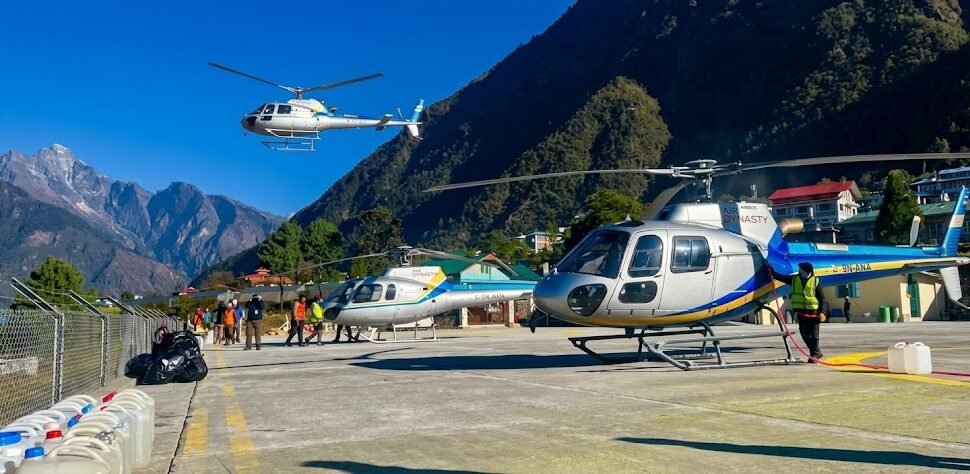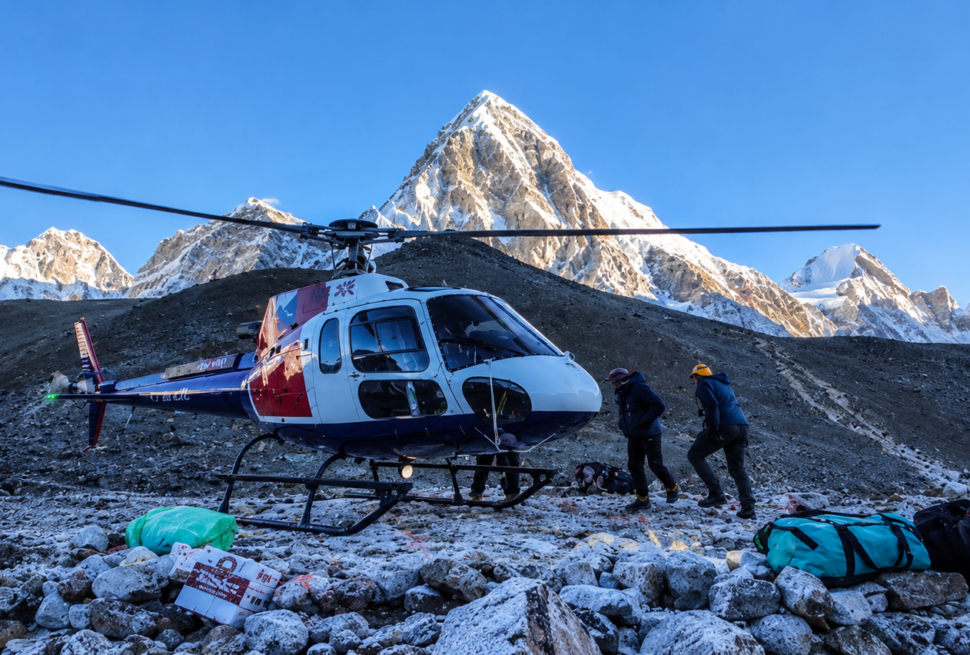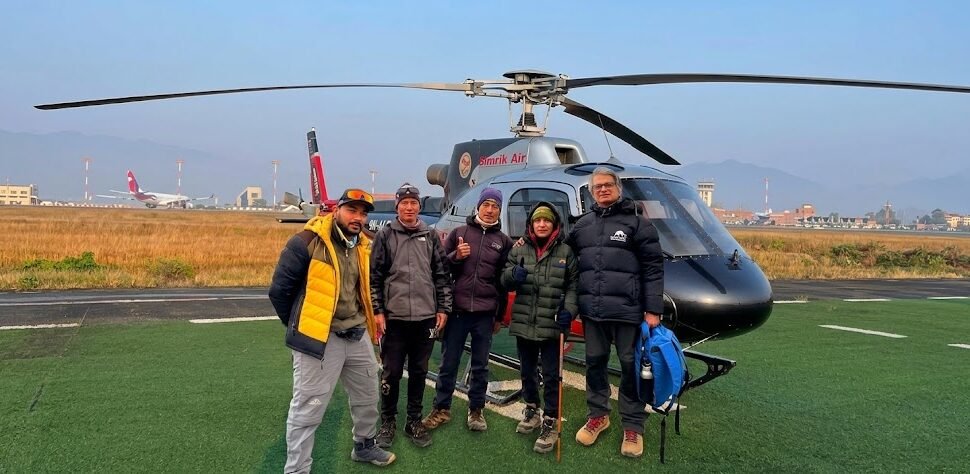
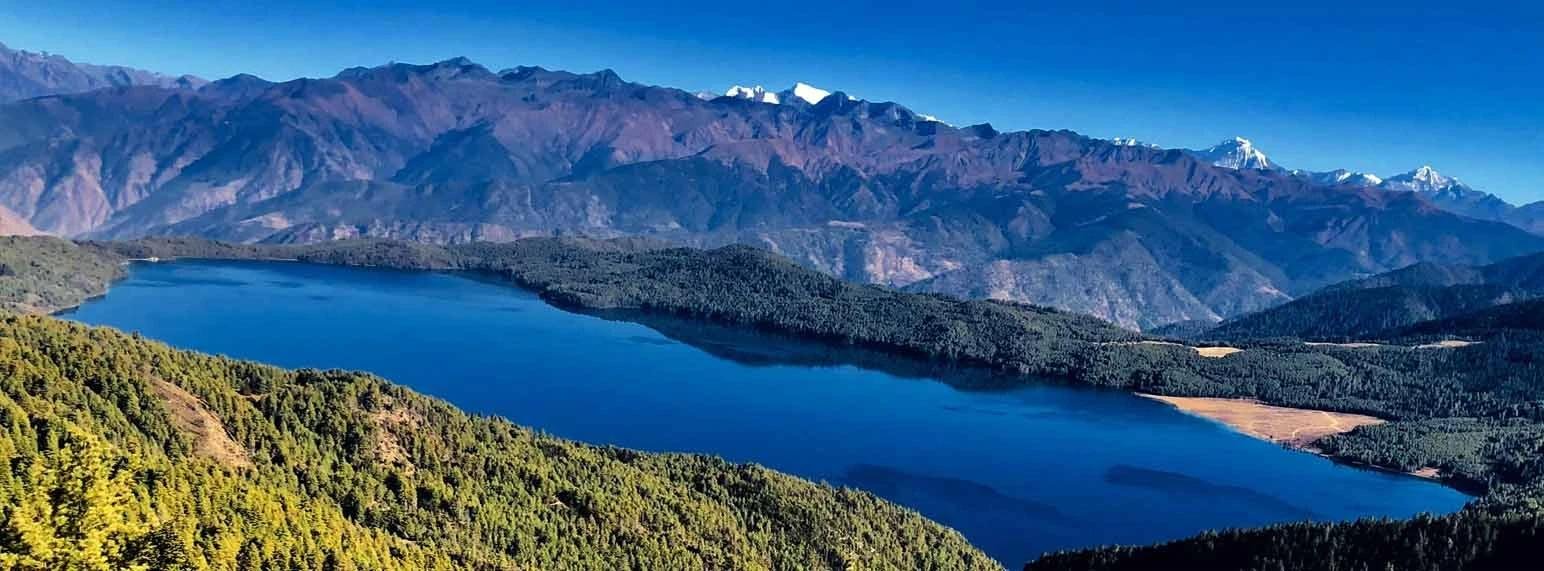
Langtang is the Himalayan region that most visitors to Nepal have never heard of. The Everest trek has become a bucket-list brand. Annapurna is well established on the tourist circuit. But Langtang, Nepal’s nearest major mountain area to Kathmandu, a valley that leads directly to glaciers and peaks above 7,000 metres within 60 kilometres of the capital, remains genuinely undervisited. And by helicopter, it is one of the most accessible and dramatically beautiful short mountain flights in all of Nepal.
Here is the Langtang helicopter tour completely: the route, what you see, what it costs, when to go, how it compares to the Langtang trek, and how to book. If you are visiting Nepal and want a Himalayan helicopter experience that is different from the Everest crowd, Langtang deserves serious consideration.
Where Is Langtang?
Langtang National Park occupies the area north of Kathmandu between the Himalayan main range and the Tibetan border. The Langtang Valley runs roughly east-west, with the Langtang River draining south into the Trisuli. The valley is flanked by peaks including Langtang Lirung (7,227 metres), Langtang RI (7,205 metres), Dorje Lakpa (6,966 metres), and Yala Peak (5,520 metres). The Gosaikunda Lakes, a sacred Hindu and Buddhist pilgrimage site, sit at 4,380 metres on the southern edge of the range.
What makes Langtang remarkable for helicopter access is the proximity to Kathmandu. The straight line flight distance from Kathmandu to Kyanjin Gompa, the main high altitude settlement in the Langtang Valley at 3,870 metres, is under 60 kilometres. By helicopter, this translates to a 30 to 40 minute flight. You can be standing in an alpine valley ringed by 7,000-metre peaks, watching yaks graze on glacier-fed meadows, in 40 minutes from your Kathmandu hotel rooftop.
What the Langtang Helicopter Tour Actually Covers
The standard Langtang helicopter tour route from Kathmandu typically includes some combination of the following:
Kyanjin Gompa (3,870 metres)
The main landing destination for most Langtang helicopter tours. Kyanjin Gompa is a cluster of stone buildings, a small gompa (monastery), a cheese factory operating since the 1950s, teahouses, and a few dozen permanent resident families, set in a wide glacial valley at 3,870 metres. The surrounding scenery is extraordinary: Langtang Lirung rises 3,357 metres above the valley floor in a single sweep of ice and rock; the Langtang Glacier extends east from the valley head; the meadows immediately around Kyanjin are home to grazing yaks year round. The gompa itself is active and houses monks who will often emerge to greet helicopter arrivals.
Gosaikunda Lakes (4,380 metres)
A cluster of sacred alpine lakes at 4,380 metres on the southern flank of the Langtang range, below Lauribina Yak peak. Gosaikunda is a major Hindu pilgrimage site, the main lake is believed to be sacred to Shiva, and during Janai Purnima (August) tens of thousands of Hindu pilgrims make the journey on foot. The lake at this altitude is typically frozen or semi-frozen from November through March, intensely blue in spring and autumn. Some helicopter tour itineraries include a low level fly-over or a brief landing at Gosaikunda as an extension of the Kyanjin tour.
Langtang Valley Fly-Over
On the approach and return, the flight through the Langtang Valley provides aerial views of the entire valley system, the river braiding through the meadows, the lateral moraines of the glacier, the terraced fields of Langtang Village below, and the distinctive triangular profile of Langtang Lirung from the east. Many passengers consider the in-flight views as compelling as the landing stop itself.
The Langtang 2015 Earthquake and the Valley’s Recovery
This section is important for understanding what you are visiting and why it matters. On 25 April 2015, the Gorkha Earthquake struck Nepal. The following day, a secondary earthquake triggered an avalanche and ice collapse from Langtang Lirung that completely destroyed Langtang Village, a settlement of several hundred people, under metres of ice, rock, and snow. It was one of the single deadliest events of the 2015 earthquake sequence, killing over 200 people in a matter of seconds.
The Langtang Valley recovered slowly. Kyanjin Gompa, located above the avalanche path, survived relatively intact. Langtang Village was rebuilt on a slightly different alignment. The Langtang trekking route reopened and has gradually rebuilt its visitor numbers, though it remains significantly below pre-earthquake levels.
When you visit Langtang by helicopter, you are visiting a community that went through something catastrophic and has rebuilt with remarkable resilience. The teahouse families at Kyanjin Gompa welcome visitors, their livelihoods depend on them. The cheese factory has continued operating through the recovery. Visiting Langtang is not just tourism; it is part of the region’s economic recovery. Many visitors who do the helicopter tour leave a meaningful tip for the community and buy locally made yak cheese before departure.
Langtang Helicopter Tour Cost (2026)
| Tour Type | Price Per Person (Shared) | Private Charter (Total) | Duration |
|---|---|---|---|
| Kyanjin Gompa Landing | $250, $380 | $1,200, $1,800 | 2 3 hours |
| Kyanjin + Gosaikunda Fly-Over | $350, $500 | $1,600, $2,400 | 3 4 hours |
| Kyanjin + Gosaikunda Landing | $450, $600 | $2,000, $3,000 | 4 5 hours |
| Langtang Full Valley Tour | $350, $450 | $1,500, $2,200 | 3 hours |
Langtang is the most affordable of Nepal’s major helicopter tour routes. Its proximity to Kathmandu (short flight time = less fuel) and lower landing fees keep costs below Everest and Annapurna tours. Price comparison with Everest: Everest Helicopter Tour Cost 2026.
Best Time for a Langtang Helicopter Tour
Langtang has the same broad seasonal pattern as the rest of Nepal’s Himalayan regions, with a few characteristics specific to this valley.
October and November (Best)
post monsoon clarity is consistently excellent. Langtang Lirung and the surrounding peaks are freshly snow-dusted, the rhododendron and birch forests in the lower valley are turning autumn colours, and the valley air is crisp and clean. The combination of the autumn palette in the valley and the white peaks above makes this the most photogenic time to fly Langtang.
March to May (Excellent)
Spring is characterized by rhododendron bloom in the lower valley, particularly dramatic between 2,500 and 3,500 metres on the approach. By May, the monsoon’s approach can reduce visibility, so March and April are the sweet spot within this window. The Gosaikunda Lakes are partly thawed and accessible in April and May.
December to February (Possible with Caveats)
The Langtang Valley is significantly colder in winter than Everest’s Khumbu due to its different aspect and less sun exposure in the narrow valley. Kyanjin Gompa at 3,870 metres can be -20°C at night in January. Daytime helicopter operations are still possible on clear days, but wind conditions in the valley can be challenging. February improves steadily. If you are visiting in winter and insist on a Langtang tour, February is significantly safer and more reliable than December or January.
Monsoon, June to September (Avoid)
The approach to Langtang involves flying north from Kathmandu through the Helambu foothills, an area that becomes heavily clouded during monsoon. Cancellation rates for Langtang helicopter tours during June through August are very high. The visual payoff of the tour depends entirely on mountain clarity, which monsoon eliminates for weeks at a time.
Langtang Helicopter Tour vs Langtang Trek: A Real Comparison
The Langtang trek from the road head at Syabrubesi to Kyanjin Gompa takes 3 to 5 days depending on pace, fitness, and how many acclimatisation stops you build in. The return takes another 2 to 3 days. Total: 5 to 8 days minimum, or 7 to 9 for a comfortable itinerary that includes Kyanjin Ri for the valley panorama. This is among the shortest of Nepal’s major trek routes, which is part of why it is popular with visitors who have less time than the EBC or Annapurna Circuit requires.
The helicopter tour compresses this to a morning. The question of which is “better” comes down to what you are trying to experience:
| Factor | Helicopter Tour | Langtang Trek |
|---|---|---|
| Time required | Half a day from Kathmandu | 5 8 days minimum |
| Cost | $250 $600 per person | $300 $800 (guide, permits, accommodation) |
| Physical requirement | None | Moderate fitness, altitude acclimatisation |
| What you miss | The forest, village life, gradual altitude gain | The aerial perspective, dramatic valley views from above |
| Altitude at destination | 3,870 metres (Kyanjin) | 3,870 metres (Kyanjin), plus optional 5,000m ridges |
| Best for | Limited time, mixed fitness groups, elderly travellers | Trekkers wanting a shorter Nepal trek with high reward |
The Yak Cheese of Kyanjin: One of Nepal’s Best Kept Secrets
This might seem like an odd section in a helicopter tour guide, but bear with us. The Kyanjin Cheese Factory has been producing yak milk cheese since 1955, established with Swiss technical assistance in the early decades of Nepal’s development programs. The cheese is genuine alpine-style yak cheese: firm, slightly pungent, deeply flavoured, not easily confused with mass-produced dairy. It is only available in Kyanjin itself, and most people who know about it are trekkers who have walked there.
Helicopter tour passengers have a unique advantage: you can arrive at Kyanjin Gompa at 8:00 AM, walk 200 metres to the cheese factory, buy a wheel of yak cheese to take home, photograph Langtang Lirung for 15 minutes, board the helicopter, and have lunch in Kathmandu at noon. Very few people think to do this, which means the cheese they arrive with is, in addition to being genuinely delicious, a legitimate conversation piece.
Budget 1,000 to 1,500 NPR ($7 to $11) for a small wheel. Bring a cloth bag or a ziplock, the factory’s packaging is basic.
What to Bring for the Langtang Helicopter Tour
At 3,870 metres, lower than the Everest and Annapurna Base Camp landing points, the temperature at Kyanjin Gompa in October is typically between -5 and +5°C in the early morning. Layers are still essential. Full packing guide: What to Pack for an Everest Helicopter Tour.
Specific notes for Langtang:
- Thermal base layer and mid-layer (down jacket or heavy fleece) are essential for October November and winter tours
- The valley is narrower than the Khumbu, wind can funnel through the valley head and make the landing area significantly colder than the air temperature suggests
- UV protection is essential even at 3,870 metres, the Gosaikunda Lakes stop if included can involve open, high-UV snowfield terrain
- Camera with full battery, the aerial approach through the valley is particularly photogenic from both sides of the aircraft
Safety and Altitude on the Langtang Tour
At 3,870 metres, Kyanjin Gompa is significantly lower than the Everest Base Camp landing (5,364 metres). Altitude effects are milder, most healthy adults experience mild breathlessness and no headache at this elevation, particularly on a brief visit. The altitude concern is more relevant to the Gosaikunda extension (4,380 metres), which is still well below the EBC altitude.
The main safety consideration specific to Langtang is the valley’s terrain. The approach involves flying through a relatively narrow valley with high walls on both sides. Weather deterioration in the valley, particularly afternoon cloud build, can close the visual approach quickly. Experienced operators know this valley’s specific weather patterns and make conservative turnaround decisions. For general guidance: Is Everest Helicopter Tour Safe? and Altitude Sickness Guide.
Can I Combine Langtang with an Everest Helicopter Tour?
Yes, and for some visitors, this combination offers the most efficient way to experience two completely different Himalayan landscapes in two mornings. Day 1: Everest helicopter tour (EBC or Kala Patthar). Day 2: Langtang helicopter tour (Kyanjin Gompa). Both depart from Kathmandu. Both return by midday. Both cost well under what a two week trek to either destination would cost. And between them, they show you the Khumbu’s stark, high altitude alpine world and Langtang’s greener, more enclosed valley scenery, genuinely different Himalayan environments.
For the Everest side of this combination: Standard EBC Tour | EBC with Kala Patthar | EBC with Gokyo Lakes.
Langtang Helicopter Tour: Frequently Asked Questions
How long is the Langtang helicopter tour?
From Kathmandu: the flight to Kyanjin Gompa takes 30 to 40 minutes each way. Add 20 to 30 minutes on the ground. Total from hotel pickup to return: 2.5 to 4 hours depending on the specific itinerary and whether Gosaikunda is included.
Is the Langtang valley safe to visit after the 2015 earthquake?
Yes. The valley has been open and safe for visitors since 2016. The rebuilt Langtang Village and the intact Kyanjin Gompa are both welcoming visitors, and the teahouse network along the trek route has largely been restored. Visiting the valley is safe, and doing so directly supports the local economy that suffered so severely in 2015.
Can I visit the Langtang Valley by helicopter if I have limited mobility?
Yes, this is actually one of the strongest use cases for the Langtang helicopter tour. The landing at Kyanjin Gompa is on relatively flat terrain compared to some of the more rocky EBC landing zones. Walking from the helicopter to the gompa and the cheese factory involves minimal uneven ground. For elderly passengers or those with limited mobility who want to experience a high Himalayan valley, Langtang by helicopter is an excellent option.
Is Langtang worth visiting if I have already done the Everest helicopter tour?
Genuinely yes, the two tours are complementary rather than repetitive. The Khumbu’s high, stark terrain and Langtang’s greener, more enclosed valley are visually completely different. The lower altitude at Langtang makes it accessible to people who found the EBC altitude challenging. And the novelty factor, seeing a part of Nepal that very few helicopter tourists visit, has its own appeal.
What is the best landing point in Langtang?
Kyanjin Gompa. The views from the landing area are excellent, the cultural interest of the gompa and cheese factory makes the ground time meaningful, and the altitude (3,870 metres) is accessible to virtually all healthy adults. The Gosaikunda extension adds altitude and dramatic lake scenery but is most valuable if you have the time and interest in the pilgrimage site context.
Why Langtang Deserves More Attention Than It Gets
Nepal tourism is heavily concentrated: Everest, Annapurna, and Pokhara absorb the vast majority of visitors. Langtang, despite being closer to Kathmandu than either of the other two major mountain regions, sees a fraction of the tourist numbers. The reason is partly the 2015 earthquake damage to its infrastructure and reputation, and partly simple awareness: Everest has a brand. Langtang does not, yet.
The practical consequence for visitors is that Langtang offers a richer, less crowded experience of a Himalayan valley than either of the more famous destinations. There are no souvenir stalls. The teahouses are modest and genuine. The community welcomes visitors in a way that feels authentic rather than industrialized. And by helicopter, the entire experience is accessible from Kathmandu in a morning, at a price point below the Everest tour.
If you are visiting Nepal and want to experience something memorable, something that most visitors completely miss, the Langtang helicopter tour is it.
Contact us to arrange a Langtang helicopter tour, or combine it with one of our Everest packages:
The 2015 Earthquake and the Langtang Memorial
On 25 April 2015, the Gorkha Earthquake struck Nepal at magnitude 7.8. The following day, a 7.3 magnitude aftershock triggered a massive ice and rock avalanche from the southwest face of Langtang Lirung. The avalanche carried an estimated 25 to 30 million cubic metres of ice, rock, and compressed air blast into Langtang Village, which stood on a narrow terrace directly below the slope.
The village was destroyed within seconds. The death toll is estimated at over 200 people, including most of the permanent village residents, a number of trekkers and their guides who were sleeping in the guesthouses, and seasonal workers. Bodies and structures were buried under metres of debris. Recovery and identification efforts continued for many months.
Today, Langtang Village has been partially rebuilt approximately 400 metres from the original location, on ground assessed as safer from future avalanche exposure. A memorial garden marks the edge of the debris field, with a chorten (stupa) and stone memorials bearing the names of those who died. The memorial is maintained by the Tamang community and by the trekking organisations who work in the valley.
When you land at Kyanjin Gompa and look south down the valley on a clear day, the debris field from the 2015 event is still visible as a flat expanse of grey rock extending across what was once a village terrace. The valley itself is healing. The teahouses operate. The cheese factory runs. The monks at Kyanjin Gompa conduct daily prayers. Visiting the valley, spending money at the teahouses, buying the cheese, leaving a proper tip for the community, is a genuine act of support for people who survived something catastrophic and chose to rebuild. That context matters when you step off the helicopter at Kyanjin.
Tamang Culture: What Visitors Should Know About the Langtang Community
The Langtang Valley has been inhabited by the Tamang people for generations. The Tamang are a Tibeto-Burman ethnic group who migrated south from Tibet. They share religious and cultural traditions with Tibetan Buddhism while developing distinct local language, music, and customs. Tamang is a separate language from Nepali. The older generation of residents at Kyanjin Gompa speak Tamang as their first language, Nepali as a second.
The Kyanjin Gompa is a functioning Buddhist monastery. Monks conduct daily rituals in the early morning and late afternoon. Visitors are generally welcome in the monastery grounds but should follow basic customs: remove shoes before entering any shrine building; do not photograph monks or active rituals without asking permission first; walk clockwise around any chorten or mani wall (the correct Buddhist direction of circumambulation); speak quietly near the gompa during prayer hours.
The Tamang community’s livelihood depends on tourism and has since long before 2015. Their decision to rebuild after the earthquake and continue operating in the valley is an act of considerable resilience and community attachment to their ancestral land. A visitor who treats the community with genuine curiosity, buys local products, and engages respectfully contributes to something more meaningful than typical tourism. The helicopter brings you there in 40 minutes. What you choose to do with the 20 minutes on the ground reflects the kind of traveller you are.
Kyanjin Gompa Yak Cheese: One of Nepal’s Most Unusual Souvenirs
The Kyanjin Cheese Factory was established in 1955 with technical assistance from a Swiss development program. It produces genuine alpine-style yak cheese: firm, pungent, deeply flavoured, and available nowhere else except at the factory itself. No airport shop sells it. No Kathmandu supermarket carries it. The only way to buy Kyanjin yak cheese is to be at Kyanjin.
Helicopter passengers have an advantage that trekkers who walk the route do not fully appreciate: you arrive at Kyanjin at 8:00 AM, when the factory is open and selling. A small wheel costs NPR 1,000 to 1,500 (approximately $7 to $11). Bring a cloth bag or a small ziplock. The factory packaging is basic.
The cheese travels well in your pack and keeps for several days at room temperature. If you are continuing to other destinations in Nepal or returning home within a week, it arrives in excellent condition. It is, beyond question, the most memorable and least replaceable thing you can bring back from the Langtang helicopter tour.
Related reading: Annapurna Helicopter Tour Guide | Everest Tour Cost 2026 | What to Pack | Best Time to Visit Nepal