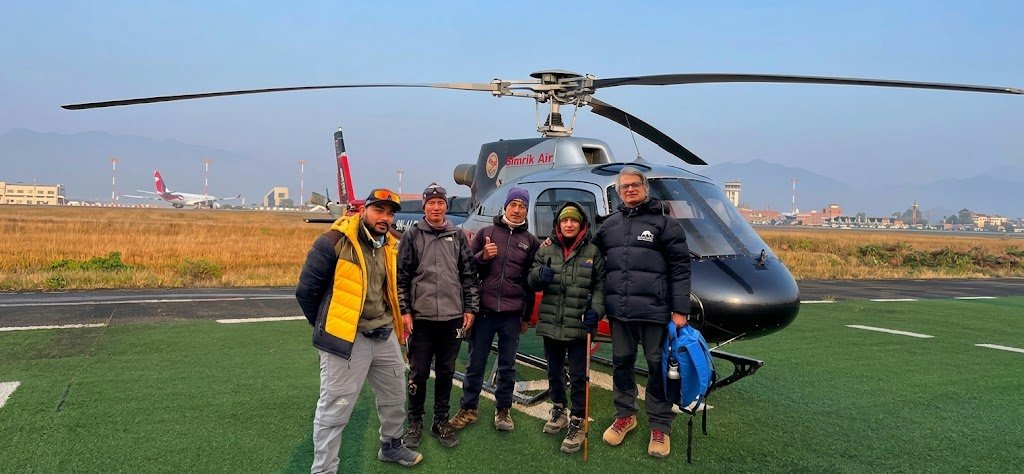
There is no upper age limit for the Everest Base Camp helicopter tour. The Civil Aviation Authority of Nepal sets no maximum age restriction for helicopter passengers, and operators do not apply one as a company policy. Passengers in their 70s and 80s fly to Everest Base Camp regularly. What varies with age is not eligibility but the set of health considerations that should be assessed honestly before booking, and the precautions that make the experience safer and more comfortable for older travelers.
What the Research Says About Altitude and Age
The relationship between age and altitude sickness is not straightforward. Studies published in high altitude medicine journals have found no consistent evidence that older adults are at higher risk of acute mountain sickness (AMS) than younger adults when ascent rate and maximum elevation are held constant. Some research suggests older adults may adapt more slowly to altitude changes, while other studies find no significant difference.
What is consistently true is that pre-existing cardiovascular and pulmonary conditions become more significant at altitude regardless of age, and these conditions are more prevalent in older adults than younger ones. A 70-year-old with well-controlled hypertension and no cardiac history faces a different risk profile than a 70-year-old with a recent cardiac event or untreated hypertension. Age is a proxy for health condition prevalence, not a direct risk factor in itself.
The practical implication: age alone should not stop you from booking an Everest helicopter tour. Your current cardiovascular and pulmonary health, assessed by a physician who knows you, should inform the decision.
Health Conditions That Warrant Medical Consultation Before Booking
If you have any of the following conditions, speak with your physician specifically about the Everest helicopter tour before booking. Be specific: tell your doctor you will be at 5,364 to 5,644 metres for 10 to 15 minutes, arriving by helicopter from Kathmandu with a 15 to 20 minute stop at 3,780 metres on the way up.
Coronary artery disease or a history of heart attack, heart failure of any grade, chronic obstructive pulmonary disease (COPD) or severe asthma, untreated or poorly controlled hypertension (blood pressure), a history of stroke or transient ischaemic attack (TIA), severe anaemia, and sickle cell disease are all conditions where the reduced oxygen environment of 5,000 metres creates meaningful additional cardiovascular and pulmonary load.
Conditions that are well-managed and stable (controlled hypertension, mild asthma, type 2 diabetes, a history of cardiac event more than 6 months ago with current good function) do not categorically exclude you from the tour, but do require a conversation with your doctor rather than a self-assessment.
The Specific Altitude Exposure on the Helicopter Tour
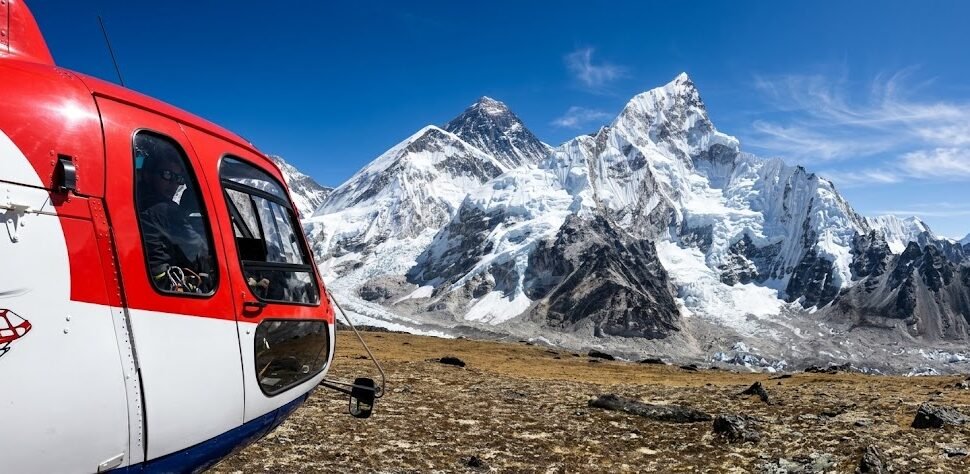
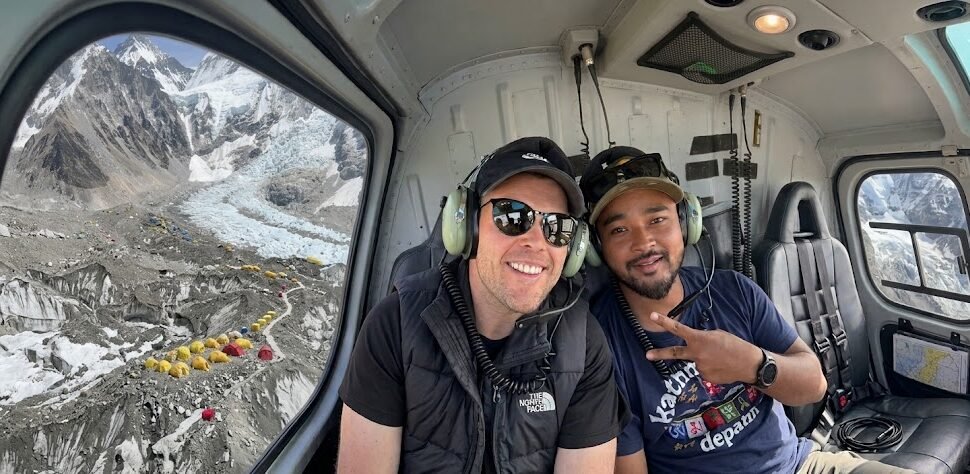
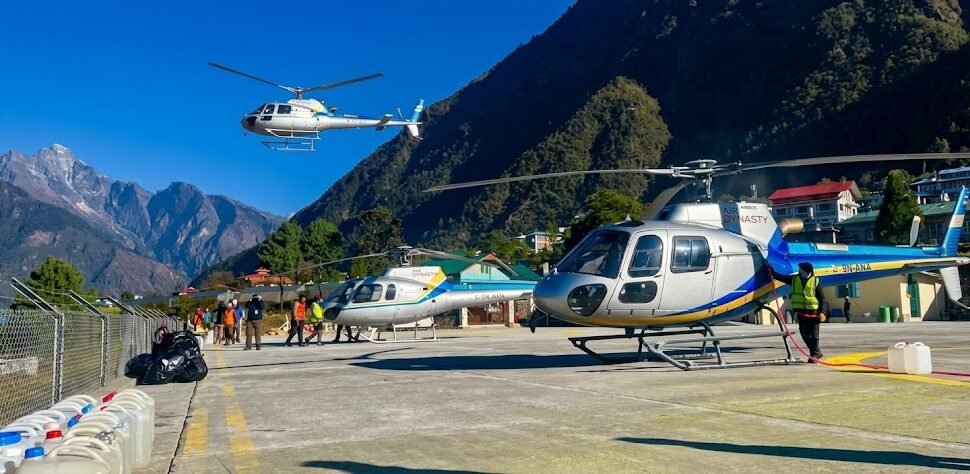
The Everest helicopter tour exposes passengers to high altitude in a specific pattern that is important to understand. You spend approximately 15 to 20 minutes at Syangboche (3,780 metres), then fly to Everest Base Camp (5,364 metres) or Kala Patthar (5,644 metres), where you spend 10 to 15 minutes on the ground before returning. Total time above 5,000 metres is roughly 15 to 25 minutes.
This is very different from a trekking ascent. Trekkers who develop altitude sickness typically do so after spending hours or days at elevation, where the physiological adaptation processes either succeed or fail over time. Helicopter tour passengers are at maximum elevation for a short window and then descend. Most altitude sickness symptoms on short-duration helicopter tours appear at the landing site and resolve on descent.
The brief exposure means that the tour is generally manageable for older adults with no significant cardiorespiratory disease. It also means that if symptoms develop at the landing site (headache, nausea, shortness of breath beyond normal exertion in thin air), the remedy is simple: get back in the helicopter and begin the descent. Symptoms at 5,000 metres typically resolve within 30 to 45 minutes of returning to lower elevation.
Physical Demands of the Tour
The Everest helicopter tour has minimal physical demands compared to any walking approach to the Khumbu. You sit in the helicopter for the flight. At the Syangboche stop, you get out and walk on level or gently sloping ground. The optional walk from Syangboche airstrip to Hotel Everest View is 300 metres of elevation gain on a dirt path, and passengers who find it strenuous can remain at the airstrip or return to the helicopter.
At Everest Base Camp or Kala Patthar, the landing area is on moraine or rock terrain that is uneven but not technically demanding. You step out, stand, walk short distances, photograph, and return to the helicopter. There is no requirement to hike, scramble, or carry weight. For passengers with mobility limitations, the landing surface at base camp is manageable for anyone who can walk on uneven ground for 10 to 15 minutes.
Cold tolerance is a more significant factor than fitness level. The temperature at Kala Patthar in October is typically between minus 5 and minus 15 degrees Celsius. In April it is between minus 5 and 5 degrees Celsius depending on sun exposure. Wind chill at exposed landings can make it feel significantly colder than the air temperature. Older adults who have reduced cold tolerance should dress in more layers than younger passengers and consider hand and foot warmers as additional precautions.
Medications and Altitude
Acetazolamide (brand name Diamox) is the primary medication used to prevent and treat acute mountain sickness. For older adults who wish to take a precautionary approach to the Everest helicopter tour, a low dose (125 mg twice daily starting 24 hours before the tour) has been shown in studies to reduce the incidence and severity of AMS symptoms. Acetazolamide requires a prescription in most countries, is a sulfa-class drug (contraindicated if you have a sulfa allergy), and has mild diuretic effects that can interact with certain blood pressure medications. Discuss it with your physician before deciding to use it.
Dexamethasone is a corticosteroid used in the treatment of severe altitude sickness. It is not appropriate for routine prophylactic use in healthy older adults but is worth knowing about in the context of a medical plan: if you develop severe symptoms at altitude, the helicopter pilot and any medical personnel on the ground at base camp should know if you carry it.
Common medications for older adults that interact with altitude: diuretics (increase dehydration risk in dry mountain air), beta-blockers (blunt the heart rate response to exertion and reduced oxygen), and anticoagulants (no direct altitude interaction but for any emergency protocol). If you take any of these, mention them to your physician when discussing the tour.
What to Expect on the Day
Arrive at the helipad having slept well, eaten a light breakfast, and hydrated adequately the evening before and morning of the tour. The early departure (typically 5:30 to 7:00 AM) means these preparations happen before dawn. Having confirmed transportation to the helipad the night before removes one source of morning stress.
During the flight, breathe normally and consciously. Some passengers hold their breath inadvertently in moments of wonder at the views, which reduces oxygen saturation. Breathe at your normal rate throughout the flight. At the landing sites, move at a pace that keeps you comfortable. There is no schedule pressure at the landing: 10 to 15 minutes is the window, and you spend it however you choose within that window.
If you carry a pulse oximeter (a small device that clips on the finger and reads blood oxygen saturation), bring it. At Kathmandu, your oxygen saturation should read between 95 and 99 percent. At Syangboche it will typically read 88 to 93 percent. At Everest Base Camp it will typically read 80 to 88 percent depending on the individual. These numbers look alarming if you are not familiar with high altitude physiology but are expected at these elevations. If your reading at base camp falls below 75 percent and you are symptomatic (severe headache, confusion, or difficulty breathing), inform the pilot. If you are asymptomatic, the reading is informational rather than alarming.
Insurance Considerations for Senior Travelers
Standard travel insurance age caps apply to different tiers of coverage. Some insurers cap evacuation coverage at 70, 75, or 80 depending on the policy tier. When purchasing travel insurance for a Nepal trip that includes the Everest helicopter tour, confirm that your policy covers: medical evacuation from high altitude, pre-existing condition coverage (or waiver), and repatriation. Age-appropriate policies exist for travelers over 70; companies specializing in senior travel insurance or high-adventure policies include World Nomads, Battleface, and IMG Global.
Related reading: Everest Base Camp Helicopter Tour | Altitude Sickness Guide | Is Everest Helicopter Tour Safe? | What to Pack