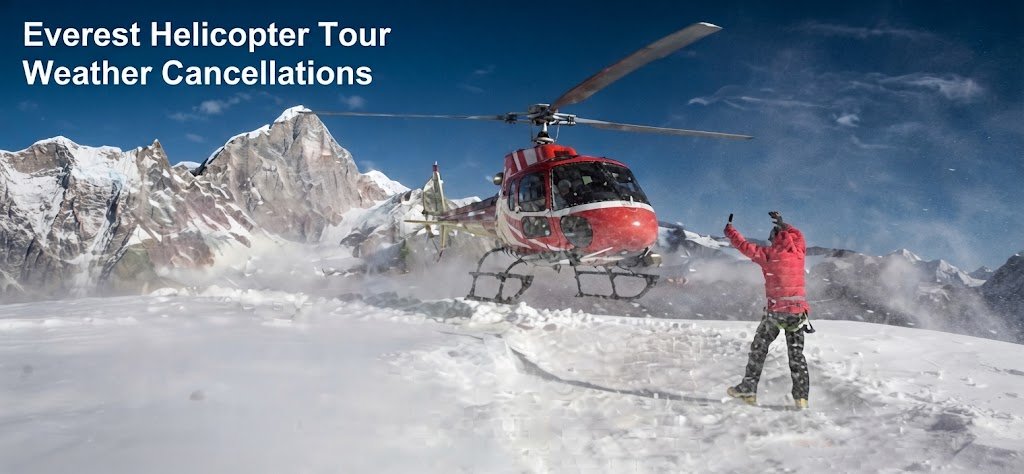
Weather cancellations are the single most common complication in Everest helicopter tour travel, and almost nobody books one expecting it to happen to them. Here is what you need to know about this: exactly how the cancellation and rebooking process works, what your rights are as a passenger, and what the practical steps are when your flight does not go ahead as planned.
Why Everest Helicopter Tours Cancel So Frequently
The Everest region sits at the edge of two competing weather systems. From the south, the Indian Ocean monsoon drives warm, moisture-laden air toward the Himalaya from June through September, building the dense cloud layers that make flying in the Khumbu impossible for months at a time. From the north, cold dry air descends from the Tibetan Plateau, bringing clear skies but also powerful jet stream winds that can pin against the upper slopes of Everest and Lhotse at speeds exceeding 150 kilometres per hour in winter.
The practical result is that helicopter flying in the Khumbu works reliably in two windows: the pre-monsoon spring season (March through May) and the post monsoon autumn season (October through November). Within those windows, individual days and individual mornings vary enormously. A helicopter tour operator in Kathmandu is making a weather decision based on reports from multiple sources, including pilots on the ground at Lukla, visual observation from helicopters already in the area, and weather forecasts from the Nepal Department of Hydrology and Meteorology.
The decision to cancel or proceed is made on the morning of the flight, typically between 4:30 and 6:00 AM. Passengers who have been briefed the night before are contacted by phone or WhatsApp when the call is made.
The Most Common Cancellation Scenarios
Cloud buildup in the Khumbu Valley is the most frequent reason tours do not run. The Khumbu Valley clouds over from the valley floor upward as the morning progresses, which is why all Everest helicopter tours depart as early as possible. When forecasters or pilots report that the valley is already socked in at 6:00 AM, the tour cancels because there is no useful window.
High winds at altitude, particularly above 5,000 metres, are the second most common cause. The helicopter can fly through moderate winds at lower elevations, but landing at Kala Patthar (5,644 metres) or Everest Base Camp (5,364 metres) in strong wind is not safe. Pilots use their own judgment on acceptable landing conditions, and that judgment is conservative by necessity.
Mechanical issues, while less common, also occur. A helicopter that needs an unscheduled inspection or a part replacement will ground a tour with little warning. Reputable operators have arrangements with other companies to cover passengers in these situations, but the process takes time.
Occasionally, tours cancel partway through. A helicopter that departs Kathmandu in clear conditions may encounter unexpected cloud or wind as it approaches the upper Khumbu, turn back to Lukla or even to Kathmandu, and the passengers never reach base camp. How this partial flight is handled varies by operator.
What Happens When Your Tour Is Cancelled
When a reputable operator cancels your Everest helicopter tour due to weather, the standard procedure is rebooking for the next available day at no additional cost to you. This is true whether the cancellation happens the night before, the morning of, or during the flight. You retain your booking, retain the same pricing, and move to the next slot in the schedule.
The challenge for passengers is that the next available day may not be the next calendar day. In busy seasons (April and October particularly), helicopters fly full slates every morning and adding a rescheduled group to the existing bookings requires finding a gap. Operators generally manage this by maintaining a rescheduling queue: cancelled passengers take the next available slot, which may be one day later or, in very busy periods, three to five days later.
If you are at the end of your Nepal trip and cannot extend your stay, most reputable operators will offer a partial refund rather than a rebook. The specific refund amount depends on the operator’s cancellation policy, which should be confirmed in writing at the time of booking. A standard policy returns a high percentage of the tour cost for weather cancellations that the operator controls, retaining a small administrative fee.
What Is Not Covered by Standard Cancellation Policy
Flights that cancel because of a passenger’s own schedule change, last minute illness (unless medical documentation is provided), or simply changing one’s mind are handled differently than weather cancellations. Operators typically treat these as passenger-side cancellations and apply their standard cancellation fee structure, which commonly charges the full deposit amount for cancellations inside 48 hours and a percentage of the total cost for cancellations inside 7 days.
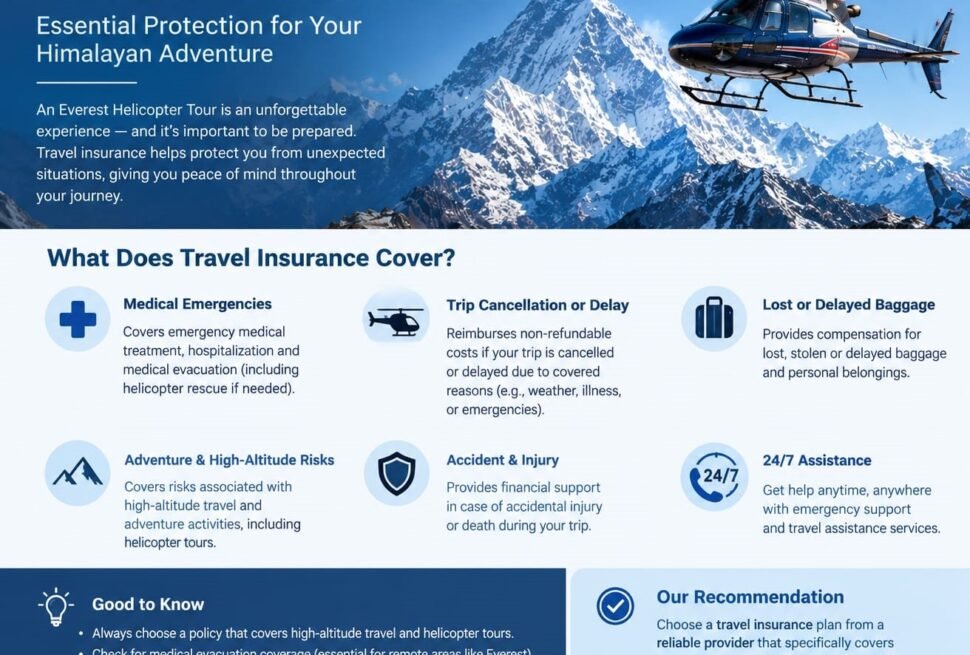
If you purchase travel insurance for your Nepal trip, a good policy will cover non refundable tour costs in cases of documented illness or injury. Some policies also cover weather related cancellations if the tour operator cannot offer a rebook within a defined window, though this varies significantly by insurer and policy tier. Check your specific policy before traveling.
How to Protect Yourself When Booking
The single most important step is confirming the cancellation policy in writing before you pay a deposit. Ask specifically: what happens if weather cancels my tour? What happens if I cannot rebook before my departure? How many days does the operator hold rebooking open? Do they have a written policy or is this verbal?
Operators who refuse to commit these terms to writing, or who give vague answers like “we always take care of our customers,” are operators to approach with caution. A legitimate company that cancels flights regularly (because weather is unpredictable in the Himalaya) will have clear, practiced procedures for handling cancellations because they deal with them constantly.
Book your Everest helicopter tour with enough buffer days in your Nepal itinerary to absorb at least one rebooking. If your flight is booked for the morning before your international departure, and it cancels, you will have no recourse. If your flight is booked with two days to spare before your departure, a single rebook is usually manageable.
Partial Flight Situations: Turned Back Mid-Route
A partial flight, where the helicopter departs but turns back before reaching Everest Base Camp or Kala Patthar, is handled differently by different operators. Some treat any departure as a completed service and offer no refund or rebook for partial flights. Others will rebook you at no charge if the helicopter did not reach the advertised destination, regardless of how far it got. A third group offers partial refunds calibrated to how far the flight progressed.
Before booking, ask specifically about this scenario: if your helicopter departs Kathmandu but turns back at Lukla without reaching base camp, what happens? The answer tells you a great deal about the operator’s approach to customer outcomes.
In 2026, this question has become easier to answer for passengers because most major operators now have written policy available either on their website or on request. The lack of a written policy for this scenario is a meaningful signal.
Travel Insurance and Helicopter Tour Cancellations
Standard travel insurance covers trip cancellation and interruption but usually does not cover operator-side weather cancellations if the operator offers a rebook. The insurer’s position is that since you have not permanently lost the tour (just the specific date), there is no covered loss as long as you have the option to rebook.
Where insurance becomes important is when you genuinely cannot rebook: your visa expires, your international flight departs, you have a work or family commitment that prevents extension. In those cases, a travel insurance claim for the non refundable portion of the tour cost is generally viable if you have the right policy tier and can document why rebooking was not possible.
When purchasing travel insurance for a Nepal trip that includes an Everest helicopter tour, read the fine print on: what counts as a covered cancellation event; whether operator-side cancellations with a rebook offer are covered; whether altitude related illness (which can prevent flying even on clear-weather days) is covered as a cancellation reason.
The Kathmandu Waiting Game
Many passengers who experience a cancellation describe the experience of waiting in Kathmandu for a weather window in surprisingly positive terms. The city has excellent food, good accommodation at every price point, and is itself worth a day or two of attention regardless of the reason for the extra time. The Boudhanath Stupa, Pashupatinath Temple, and Swayambhunath (the Monkey Temple) are all within easy reach of the central hotel district and provide genuine cultural depth if you engage with them rather than simply photographing them.
The psychological challenge is the uncertainty: you know a window will come, but you do not know if it will come tomorrow or in three days. Operators with good communication systems send daily morning updates to rescheduled passengers so they are not left wondering whether to arrange other activities or stay on standby.
Ask your operator at booking time: how will I be notified about my rescheduled flight? By WhatsApp? By email? By what time in the morning? Knowing the communication method in advance removes a significant source of anxiety from the waiting period.
Cancellation Rates by Season
In spring (March to May), cancellation rates for Everest helicopter tours run at roughly 15 to 25 percent of scheduled flights, varying year by year. April is generally the most reliable month, with long pre-monsoon stable weather periods. May becomes increasingly unpredictable as the monsoon approaches from the Bay of Bengal, and the last two weeks of May see significantly higher cancellation rates than the first two weeks.
In autumn (October to November), cancellation rates are similar to spring but for different reasons. October typically offers the most reliable flying of the year, with clear skies and moderate winds following the monsoon’s withdrawal. November is reliable but progressively cooler and windier, particularly in the second half of the month. By December, flying is still possible but wind cancellations become more frequent.
These figures are general patterns. Individual years diverge substantially. Operators who have been flying the EBC route for multiple seasons can give you a realistic picture of what to expect in the specific month you plan to travel.
Related reading: Everest Base Camp Helicopter Tour | Is Everest Helicopter Tour Safe? | How to Book | Best Time to Go